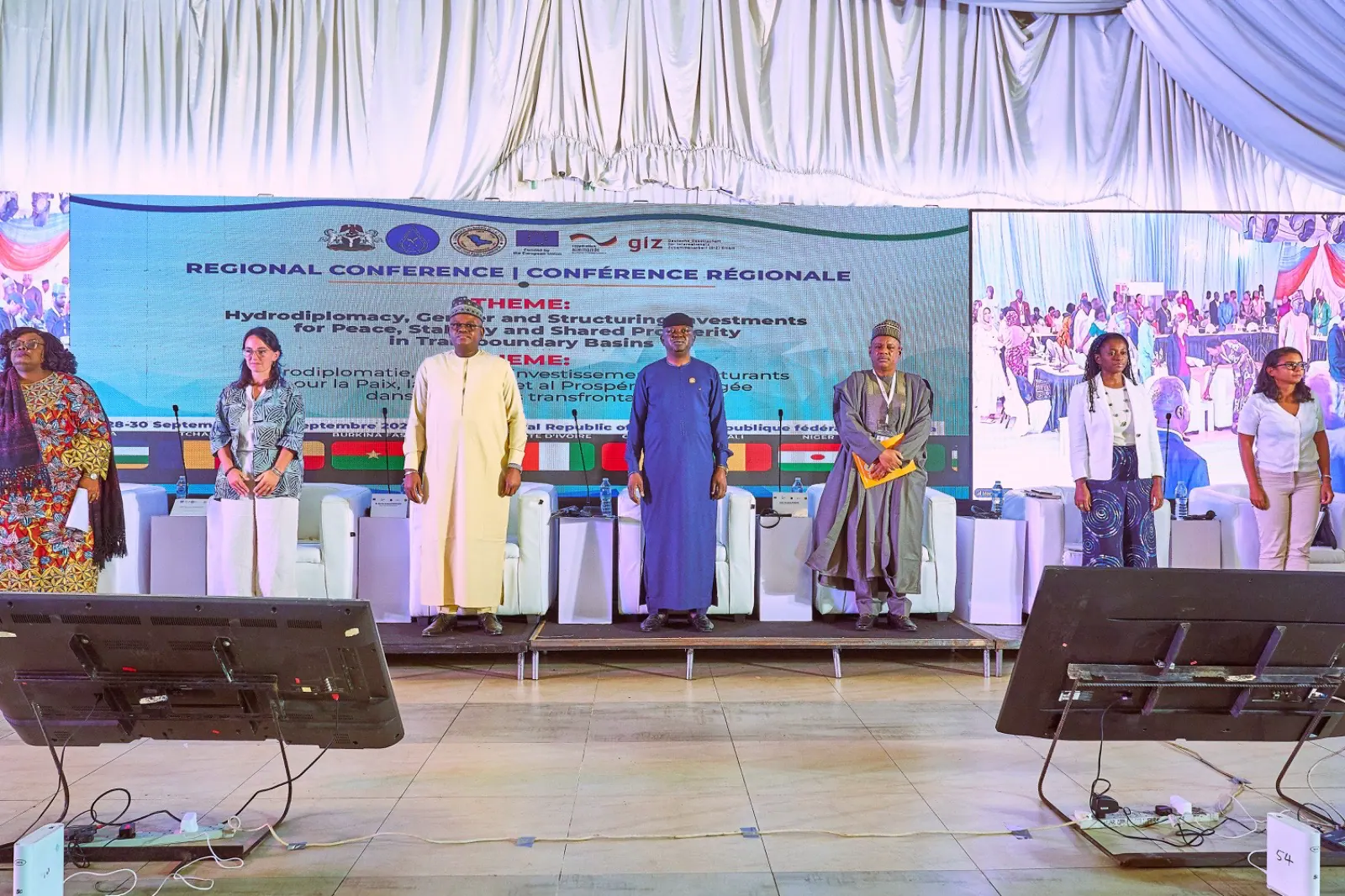
The Federal Government of Nigeria has emphasized the need for stronger water diplomacy, regional cooperation, and strategic investments to address shared water, climate, environmental, and development challenges in the Niger and Lake Chad Basins. This call was made by the Minister of Water Resources and Sanitation, Prof. Joseph Utsev, at the Regional Conference on Hydrodiplomacy, Gender and Strategic Investments for Peace, Stability and Shared Prosperity in Transboundary Basins in Abuja. The conference aimed to advance sustainable water resources management, climate resilience, and peaceful development across the region.
Prof. Utsev reaffirmed Nigeria's commitment to strengthening partnerships with the Niger Basin Authority (NBA), Lake Chad Basin Commission (LCBC), ECOWAS, development partners, financial institutions, civil society organizations, and communities. The collaboration will focus on water supply and sanitation, ecosystem restoration, and climate adaptation. He also stressed the need for stronger cooperation between the NBA and LCBC, emphasizing the importance of translating the conference's resolutions into concrete actions that promote peace, stability, resilience, and shared prosperity.
The Executive Secretary of the NBA, Kocou Houanye, stated that the conference would deepen regional cooperation in tackling climate change, insecurity, and natural-resource conflicts, while promoting regional integration and strategic investments. He disclosed that the physical implementation of the Integrated Development and Climate Change Adaptation Programme in the Niger Basin (PIDACC) had reached 48.3 percent, while financial implementation stood at 57 percent. This program aims to address the region's development and climate change adaptation needs.
The Executive Secretary of the LCBC, Amb. Ibrahim Babani, emphasized the commission's efforts to strengthen evidence-based water management. He stressed the need for greater participation of women and youths in water diplomacy, peacebuilding, and innovation. This is crucial for promoting sustainable development and addressing the region's challenges. The LCBC is working to ensure that its member states are actively involved in decision-making processes.
The representative of German Cooperation (GIZ), Hanna Albrecht, noted that climate change, pressure on natural resources, insecurity, and threats to livelihoods require coordinated and community-focused responses. She reaffirmed GIZ's readiness to support the basin organizations and member states through technical expertise, institutional cooperation, and community participation. This support aims to enhance the region's capacity to address its challenges.
The representative of Germany and the European Union, Dr. Karin Jansen, reaffirmed support for the LCBC and NBA. She emphasized the importance of strong institutions, reliable information, community participation, and member-state ownership in promoting transboundary cooperation and sustainable development. This support is crucial for ensuring the long-term success of the region's development initiatives.
The National Focal Structure of the NBA in Nigeria, represented by Angela Keyede, noted that the conference offered an opportunity to strengthen cooperation on water resources management, climate resilience, peace and security, population movement, and sustainable development. The conference provided a platform for stakeholders to discuss and address the region's challenges, promoting peace, stability, and shared prosperity.
Key points
- Nigeria calls for stronger water diplomacy and regional cooperation to tackle shared water, climate, and environmental challenges.
- The conference aimed to advance sustainable water resources management, climate resilience, and peaceful development across the region.
- Stronger cooperation between the NBA and LCBC is necessary to translate the conference's resolutions into concrete actions.