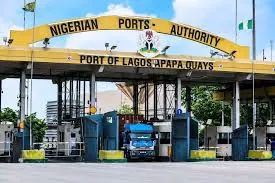
The Federal Government of Nigeria has secured a £746 million facility to rehabilitate and modernise the Apapa and Tin-Can Island ports. This was disclosed by maritime expert Capt. Iheanacho Ebubeogu, Chairman of the Ports Operations and Security Committee, Nigerian Ports Consultative Council (NPCC). Ebubeogu stated that the facility would support the transformation of the ports to green and smart standards through automation and digital technologies.
The modernisation programme aims to provide improved cargo-handling equipment, reduce vessel turnaround and cargo dwell times, enhance competitiveness and environmental sustainability, and increase port revenue. Ebubeogu also mentioned that the Federal Government had awarded contracts for the rehabilitation of the Escravos breakwaters and Terminals A and C. Furthermore, the Federal Executive Council (FEC) had approved a channel management consortium for the maintenance and deepening of channels serving Delta ports.
The modernisation programme also includes attention for Rivers Port Terminal 1, operated by PTOL, with berths one to three being upgraded to improve operational efficiency and safety. Calabar Port will benefit from increased maintenance dredging, while McKaiva and Malero jetties will receive attention to improve operations and facilitate trade along the eastern corridor. Ebubeogu highlighted that the oversight of inland dry ports had been redesigned, with the Nigerian Ports Authority (NPA) assuming responsibility for their administration.
Ebubeogu also noted that the Nigerian Shippers’ Council had transitioned to the Nigerian Port Economy Regulatory Agency, which will regulate tariffs, charges, and rates of shipping companies and terminal operators. Site clearing has commenced at the Snake Island concession area as part of efforts to expand port capacity, attract investment, and improve competitiveness. A logistics plan includes the construction of a standard-gauge, single-track freight railway from Apapa Bulk Terminal (ABTL) to Tin-Can Island Port.
The railway project will include junction works, an elevated urban section, a bay crossing, and signalling facilities. When completed, the railway will reduce vehicular traffic along the Apapa corridor and facilitate cargo movement by rail and water. Ebubeogu emphasised that seaports facilitate the African Continental Free Trade Area (AfCFTA) by providing high-capacity corridors for the movement of goods at lower costs. To benefit from AfCFTA, it is imperative to upgrade port infrastructure, digitalise operations, reform customs procedures, develop the fleet, and implement an integrated master plan.
Ebubeogu mentioned that stakeholders participated in a National Single Window awareness forum for chief executives and personnel. A Port Clearance Audit workshop held on September 10 sensitised stakeholders on compliance and collaboration. He also stressed the importance of port security, particularly against piracy and cargo theft in the Gulf of Guinea. The Deep Blue Project has contributed to a 60 per cent reduction in insurance premiums, while sustained inter-agency collaboration and surveillance remain necessary to safeguard maritime operations.
Port managers from Calabar Port and Delta Ports highlighted challenges affecting port operations, including draft limitation and the need for new tugboats and pilot quarters. They noted that continued engagement among stakeholders would help address existing challenges, improve collaboration, and strengthen the development of Nigeria’s port system. The modernisation programme is expected to improve the efficiency and competitiveness of Nigeria's ports.
Key points
- The Federal Government secures £746m to modernise Apapa and Tin-Can Island ports.
- The modernisation programme aims to provide improved cargo-handling equipment and reduce vessel turnaround times.
- The programme also includes the construction of a standard-gauge freight railway from Apapa Bulk Terminal to Tin-Can Island Port.