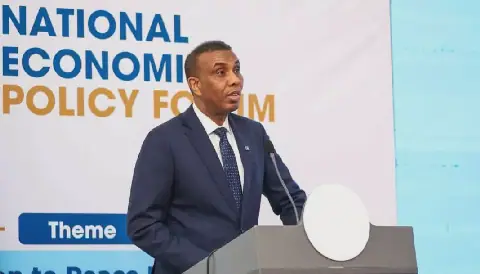
The Nigerian federal government has established a Technical Working Group (TWG) on Labour Force Intelligence to create a national framework for identifying workforce gaps and aligning skills development with industry needs. This initiative aims to bridge the disconnect between the skills produced by educational institutions and those demanded by employers. The TWG was inaugurated after two national skills and industry alignment roundtables held in March and June 2026.
Deputy Chief of Staff to the President, Office of the Vice President, Ibrahim Hadejia, emphasized the importance of understanding emerging employment opportunities and required skills to sustainably create jobs at scale. Despite substantial investments in education and vocational training, businesses continue to face difficulties recruiting skilled personnel. Hadejia noted that the proposed National Labour Force Intelligence architecture will connect fragmented systems and transform available information into actionable intelligence for economic planning.
The National Labour Force Intelligence architecture will integrate federal and state-level labour market information systems and institutional datasets, creating an interoperable labour data exchange. Existing platforms, such as the Labour Market Information System and National Electronic Labour Exchange, will feed into the proposed architecture. Initiatives from the National Board for Technical Education (NBTE) and the Industrial Training Fund (ITF) will also be integrated.
The integrated system will enable policymakers to identify emerging employment trends and help training institutions respond effectively to industry requirements. It will also support employers in workforce planning and provide a basis for directing public and private investments towards skills interventions with measurable employment outcomes. This framework is expected to address the persistent mismatch between workforce supply and industry demand.
Akin Oyebode noted that broadband holds greater potential for mass job creation than power. There are also fears that a skills mismatch may cost the nation 120,000 jobs amid AI threats. Afolabi Imoukhuede stated that employers will drive the new National Labour Intelligence Framework.
The inauguration of the TWG follows concerns that the country’s growing workforce could remain largely unproductive without a reliable mechanism for tracking emerging job opportunities and required competencies. The framework aims to improve the country’s capacity to generate productive employment and address the disconnect between the skills produced by educational institutions and those demanded by employers.
The Nigeria Employers’ Consultative Association and other stakeholders will likely play a crucial role in the implementation of the National Labour Force Intelligence framework. The success of this initiative will depend on the collaboration of government institutions, employers, development partners, and training organisations. The framework is expected to have a positive impact on the country’s labour market and economy.
Key points
- The Nigerian government has established a Technical Working Group on Labour Force Intelligence to develop a national framework for identifying workforce gaps and aligning skills development with industry needs.