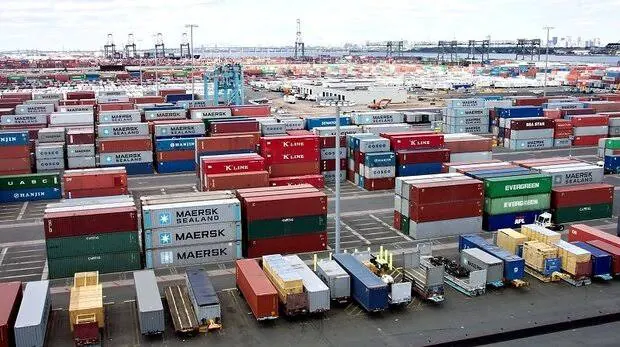
The Federal Government of Nigeria has announced the approval of a modernisation and upgrade programme for four eastern ports, namely Onne, Rivers, Delta, and Calabar. This expansion brings the total number of major ports under the government's port modernisation plan to six. The move aims to reduce the concentration of cargo traffic around Lagos, which has been a concern for industry players and observers.
The Minister of Marine and Blue Economy, Adegboyega Oyetola, disclosed that the investment in the four eastern ports would create additional efficient gateways for international trade. This, he said, would improve cargo handling, vessel turnaround times, and regional connectivity. The upgrades are expected to make the movement of goods more predictable and cost-effective, while strengthening the role of the eastern ports in regional and industrial development.
The government's earlier decision to prioritise the modernisation of the Lagos ports, backed by foreign financing, had raised concerns among industry players and observers. The modernisation programme for the Lagos ports, which includes Apapa and Tin Can Island ports, had secured a £746m facility. The expansion to the eastern ports is seen as a move to address these concerns and promote balanced development across the country's ports.
The ministry did not disclose the value of the approved programme, funding source, procurement status, or timeline for commencement of works. However, the announcement comes as the Federal Government pursues a wider expansion of maritime infrastructure. This includes proposed deep seaports in Akwa Ibom, Cross River, Bayelsa, Ogun, Ondo, and Rivers states.
On Tuesday in France, the government of Ogun state signed a Memorandum of Understanding (MoU) with DP World, a global ports and logistics operator. The MoU aims to develop the Gateway Deep Seaport and a 10,000-hectare Blue Marine Special Economic Zone, envisaging an initial investment of more than $7 billion. This project is part of the government's efforts to expand Nigeria's maritime capacity and create stronger economic corridors across the country.
According to Oyetola, the combination of upgrading existing ports and developing new deep seaports would expand Nigeria's maritime capacity. The government also plans to integrate the ports with roads, rail, and inland waterways to facilitate the movement of cargo. This comprehensive approach aims to modernise existing ports while facilitating the development of new deep seaports.
The upgrade of the eastern ports and development of new deep seaports are expected to have a positive impact on Nigeria's economy. The projects are anticipated to create new opportunities for trade and investment, while promoting regional development. The government's efforts to expand Nigeria's maritime capacity and create stronger economic corridors across the country are seen as a step in the right direction.
Key points
- The Federal Government has approved the modernisation and upgrade of four eastern ports to reduce the concentration of cargo traffic around Lagos.
- The upgrade of the eastern ports is expected to create additional efficient gateways for international trade and improve cargo handling, vessel turnaround times, and regional connectivity.
- The government plans to integrate the ports with roads, rail, and inland waterways to facilitate the movement of cargo.