The Federal Government of Nigeria has initiated a major overhaul of the country's Special Economic Zones (SEZs), warning operators against diverting goods into the domestic market, understating sales, and exploiting tax incentives meant to promote exports. This move aims to restore the original export orientation of the free-zone regime and ensure a level playing field for manufacturers operating outside the zones. The government has expressed concerns that some enterprises are taking advantage of free-zone incentives to sell goods into the Nigerian market, creating an uneven competitive environment.
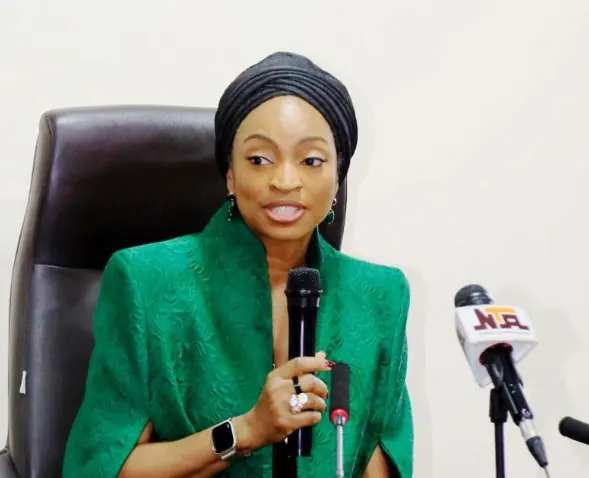
Minister of Industry, Trade and Investment, Dr. Jumoke Oduwole, issued the warning at a stakeholders' meeting on the Special Economic Zones, emphasizing that the government would no longer tolerate practices that undermine the integrity of the scheme. She specifically highlighted the issues of goods diversion, mispricing of related-party transactions, understating domestic sales, and disguising businesses operating in the Nigerian Customs Territory as free-zone enterprises. Oduwole stressed that compliance is a condition precedent and that the Ministry can only defend a clean scheme.
The regulatory reforms are designed to address the concerns and ensure that legitimate investors continue to enjoy lawful incentives. Under the revised framework, the 75% export and 25% domestic-sales structure will be given clearer effect, while goods transferred from a free zone into the Nigerian Customs Territory will be treated in accordance with applicable customs laws. The reforms will also establish clearer institutional responsibilities, with the Nigeria Export Processing Zones Authority (NEPZA) and Oil and Gas Free Zone Authority (OGFZA) retaining responsibility for licensing and operational oversight.
The Nigeria Revenue Service will handle tax administration, and the Nigeria Customs Service will retain responsibility for customs control, valuation, classification, and enforcement. Despite the tougher regulatory stance, Oduwole assured that the government remains committed to protecting legitimate investments in the zones. The free-zone scheme has attracted over $200 billion in foreign investment and over ₦900 billion in domestic investment, generating more than 100,000 direct jobs and over 500,000 jobs when supply chains, logistics networks, and host communities are included.
The government is expanding the free-zone framework to accommodate the digital economy, with revised NEPZA regulations creating Digital Free Zones and Digital Special Economic Zones for the first time in Nigeria. The new framework will support technology-enabled and non-physical businesses and introduce license categories, including an Innovator License for enterprises operating in areas where regulatory frameworks are still developing. This move is part of efforts to reposition the zones as engines of non-oil export growth and support President Bola Tinubu's target of building a $1 trillion economy by 2030.
Oduwole cited recent investments, such as the commencement of production by Health Textiles Nigeria FZE at the Lagos Free Zone, which is expected to produce up to 10 million mosquito nets annually and employ over 600 Nigerians. She also mentioned the Dangote Industries Free Zone, which hosts the Dangote refinery and Africa's largest granulated urea complex, and the Lagos Free Zone, where the International Finance Corporation took an equity position of up to $50 million. These examples demonstrate the type of investment the government wants to attract.
The reforms follow 19 months of consultations involving government agencies, lawmakers, and private-sector stakeholders. Oduwole urged operators to submit further recommendations to the Special Economic Zones Legislative and Regulatory Reform Committee. The government's objective is to make the regulatory environment clearer, more sustainable, and attractive to investors, while protecting the integrity of the scheme and promoting non-oil export growth.
Key points
- The Nigerian government is tightening regulations for Special Economic Zones to prevent tax abuse and goods diversion.
- The reforms aim to restore the original export orientation of the free-zone regime and ensure a level playing field for manufacturers.
- The government has attracted over $200 billion in foreign investment and over ₦900 billion in domestic investment through the free-zone scheme.