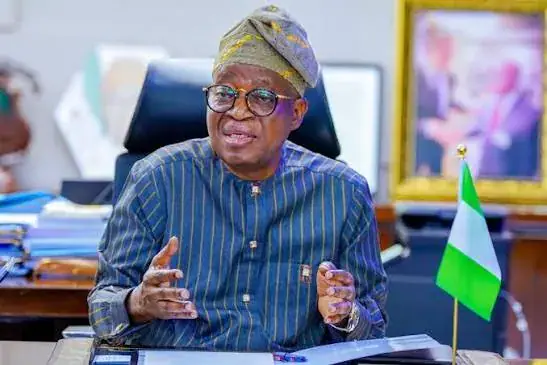
The Federal Government is set to commence a landmark overhaul of the Apapa and Tin-Can Island ports in Lagos on November 25. The Minister of Marine and Blue Economy, Dr. Adegboyega Oyetola, will perform the groundbreaking ceremony for the projects. This modernisation initiative aims to address decades of infrastructure deficits and improve Nigeria's maritime competitiveness. The two ports handle over 70 percent of Nigeria's non-oil export cargo.
The modernisation programme is designed to tackle ageing facilities, operational bottlenecks, and growing pressure on the nation's busiest port corridors. The intervention will transform the facilities into technologically advanced and commercially competitive ports. This will enable them to meet the changing demands of global shipping and international trade. The projects are expected to improve cargo-handling capacity, reduce vessel turnaround time and cargo dwell time, and enhance port access and logistics.
The modernisation of Apapa and Tin-Can Island is part of a national strategy to build a balanced and interconnected port system. Dr. Oyetola disclosed that the government had approved the modernisation and upgrade of four other major seaports outside Lagos, namely Warri, Onne, Calabar, and Rivers ports. The goal is to build a modern, efficient, and interconnected port system that serves every region of the country. This will promote balanced economic development and expand national cargo-handling capacity.
The modernisation programme will also strengthen connections between seaports, road and rail networks, inland waterways, and dry ports. This integrated transportation approach will facilitate the movement of cargo from production centres to domestic and international markets. It will reduce transportation costs and improve the competitiveness of Nigerian goods. The programme is expected to create a more conducive operating environment for port users, investors, and other maritime stakeholders.
The Federal Government's economic diversification agenda relies heavily on modern port infrastructure. An efficient port system will help position Nigeria as a preferred destination for maritime trade and investment. The modernisation of Apapa and Tin-Can Island will complement the Lagos projects and promote balanced economic development. The government aims to increase non-oil exports, strengthen local industries, and improve the ease of doing business.
Meanwhile, the Presidential Initiative on Compressed Natural Gas and Electric Vehicles (Pi-CNG & EV) has projected that Nigeria's Compressed Natural Gas (CNG)-powered vehicle population will nearly double to 273,000 by February 2027. The initiative aims to convert an additional 130,000 vehicles within five months. However, the programme acknowledged that inadequate financing, limited tracking of private-sector conversions, and possible disruptions associated with the election season could affect the ambitious projection.
The Head of Gas Supply and Integration, Pi-CNG & EV, Engr. Tare Mayor Bright, disclosed the projections at a regional town hall and stakeholder dialogue in Abuja. He stressed that the availability of gas must keep pace with the growing number of converted vehicles. The presentation outlined a framework involving Pi-CNG & EV, the Gas Aggregation Company Nigeria (GACN), and the Nigerian Midstream and Downstream Petroleum Regulatory Authority (NMDPRA) to ensure a reliable gas supply.
Key points
- The modernisation of Apapa and Tin-Can Island ports aims to improve cargo-handling capacity and reduce vessel turnaround time.
- The programme will strengthen connections between seaports, road and rail networks, and inland waterways.
- Nigeria's CNG-powered vehicle population is projected to nearly double to 273,000 by February 2027.
Reporting sources
- FG Kicks Off Landmark Overhaul Of Apapa, Tin-Can Ports Nov 25 · Independent Nigeria