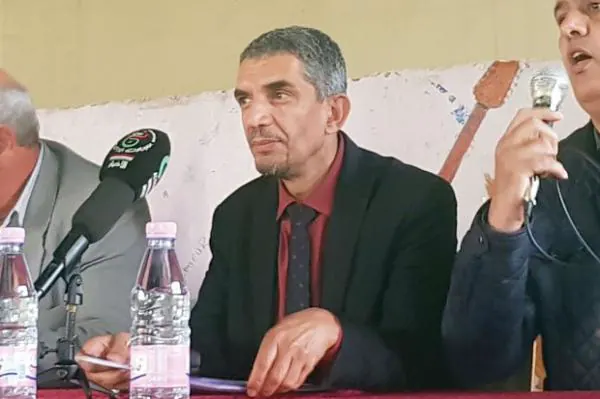
The Algerian opposition party, Front des Forces Socialistes (FFS), is grappling with internal turmoil as two prominent members, Senator Rabah Menaoum and Deputy Klalèche Mohamed, have resigned from the party's national secretariat. This development comes on the heels of similar resignations by other party members, including Dr. Achir, vice-president of the Tizi-Ouzou APW. The resignations are seen as a protest against the party's leadership, particularly the continued presence of Mohammed Hadj Djilani as first secretary.
According to sources, Menaoum and Mohamed cited the party's failure to adhere to its statutes and undemocratic functioning as the reason for their resignation. This sentiment has been echoed by other party members, including Hayat Tayati, a member of the party's presidential instance, who had called for Hadj Djilani's resignation, citing his reconduction as first secretary as anti-statutory. Tayati's stance was later supported by another member of the presidential instance, Yacine Chioukh.
The FFS has been plagued by internal conflicts since Hadj Djilani's reconduction as first secretary. Several national secretaries have resigned in protest, and the party's coordination instance has attempted to downplay the crisis, characterizing Tayati's stance as a diversion. Ali Laskri, the coordinator of the presidential instance, stated that Tayati's reaction was aimed at overshadowing the party's resolutions and boycott of the presidential election.
The crisis within the FFS has taken on a distinctly political dimension, with differing views on the party's stance on the presidential election. Laskri's comments suggest that the party's leadership is divided on the issue, and the boycott of the election has become a contentious topic. The FFS's internal turmoil has sparked concerns among its militants, who are questioning the party's ability to present a united front.
The resignations of Menaoum and Mohamed have sparked intense debate on social media, with many militants calling for the party's leadership to take swift action to address the crisis. Some have expressed concerns that the party's continued infighting could lead to its implosion. A cadre from the Boumerdès federation warned that the party's leadership must take a decision quickly to prevent the situation from deteriorating further.
The FFS's crisis has significant implications for Algerian politics, particularly given the party's role as an opposition force. The party's internal conflicts have raised questions about its ability to present a cohesive alternative to the government. As the party struggles to address its internal divisions, its influence in Algerian politics may be compromised.
The FFS's leadership faces a critical test in addressing the party's internal crisis. With several key members having resigned, the party must find a way to reconcile its differences and present a united front. The continued presence of Hadj Djilani as first secretary remains a contentious issue, and the party's leadership must take decisive action to restore stability and unity to the party.
Key points
- Two key members of the FFS national secretariat, Senator Rabah Menaoum and Deputy Klalèche Mohamed, have resigned, citing the party's undemocratic functioning.
- The FFS's internal crisis has taken on a distinctly political dimension, with differing views on the party's stance on the presidential election.
- The party's leadership faces a critical test in addressing the crisis and restoring stability and unity to the party.