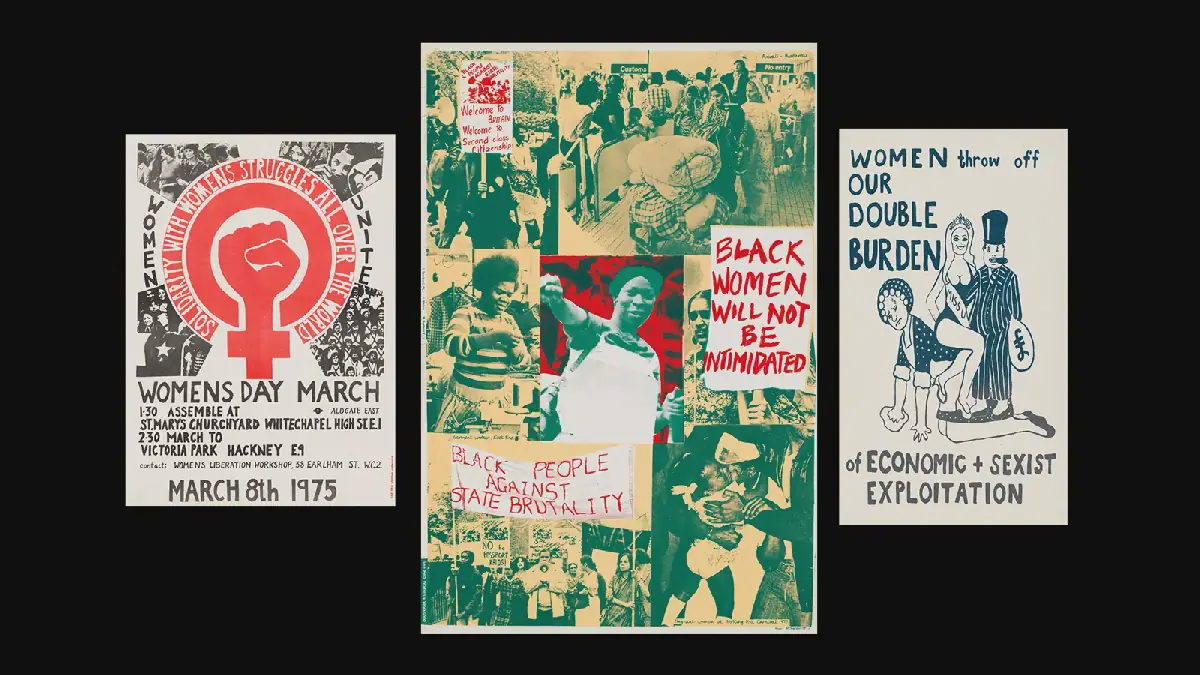
The See Red Women's Workshop was a radical feminist collective founded in 1974 in London. The workshop ran until 1990 and involved around 40 women in creating posters that challenged sexist images and fought for a fairer world. A selection of these posters is now featured in the Beyond the Streets exhibition at the Saatchi Gallery, alongside Big Issue magazine covers from the last 35 years. The exhibition will explore six decades of street culture and its influence.
The posters created by See Red Women's Workshop depicted various scenes, including black women rallying against state brutality, a woman trapped inside a pill bottle, and a Miss World contestant sitting on the back of a housewife, both exploited by men. According to Anne Robinson, a member of the collective since 1978, posters were an effective way to tell a story and make an impact quickly. The workshop distributed the posters to bookshops, community centers, women's centers, and through paper catalogs sent in the post.
The posters were very affordable, with prices starting at around 90p each. Robinson notes that people would actually buy them, and the collective was able to reach a wide audience through their distribution methods. The posters in the exhibition were chosen to show the visual impact of political posters that were on the streets and the range of issues covered. Robinson believes that preserving the legacy of See Red's work is essential to preserving the histories of feminist struggles and recognizing the progress made.
Some of the posters created by See Red Women's Workshop are still painfully relevant today. A 1977 poster, Right on Jane, hits back at a Ladybird children's book for suggesting that "Peter washes the car and Jane does the dishes". Robinson notes that while some posters may be rooted in a specific period, they can still feel relevant due to current protests and situations. The collective's work continues to inspire and influence feminist movements today.
Robinson expresses sadness over how relevant the anti-racist posters are today, stating that the collective wishes it wasn't so relevant and was a thing of the past. She emphasizes that feminism is still relevant, and people can argue about how to express it, but it's essential for issues like equal pay and women's health. The See Red Women's Workshop has worked to distance itself from anti-trans narratives and has always been committed to inclusivity.
The Beyond the Streets exhibition at the Saatchi Gallery will run until May 5, 2027, and features a range of street art and posters that have shaped the movement over the past six decades. The exhibition aims to showcase the visual impact of political posters and the issues they covered. Robinson believes that it's essential to recognize the progress made and the struggles that have continued.
The See Red Women's Workshop's legacy continues to inspire feminist movements today. Robinson emphasizes that while there have been significant changes, such as more women in higher education and training, there is still much work to be done. The collective's work serves as a reminder of the importance of feminism and the need for continued activism.
Key points
- The See Red Women's Workshop was a radical feminist collective that created posters challenging sexist images and fighting for a fairer world from 1974 to 1990.
- A selection of the collective's posters is featured in the Beyond the Streets exhibition at the Saatchi Gallery in London.
- The posters created by See Red Women's Workshop continue to be relevant today, addressing issues such as equal pay, women's health, and anti-racism.