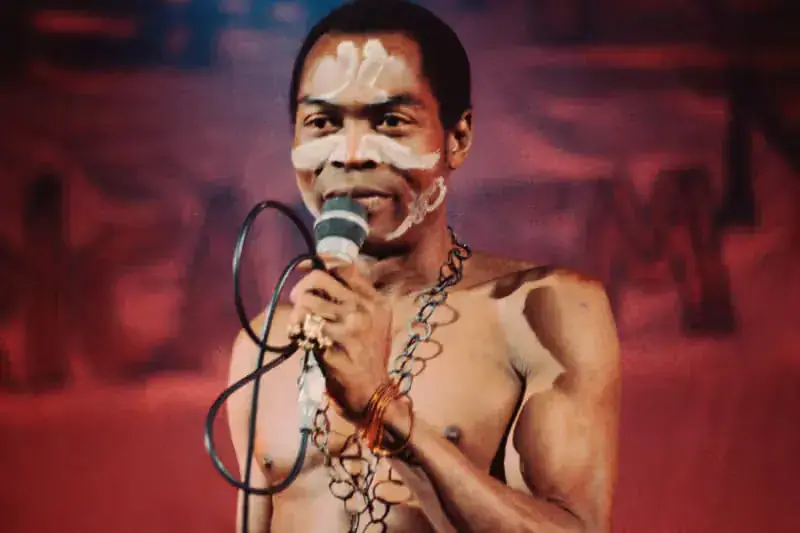
Afrobeat musician Femi Kuti has shared his insights on how his late father, Fela Anikulapo-Kuti, struggled after the death of his mother, Funmilayo Ransome-Kuti, in 1978. In a recent interview with OkayAfrica, Femi revealed that his father's death was a significant blow to Fela, who was already battling government persecution and financial difficulties. Fela's mother died from injuries sustained during a military raid on Fela's Kalakuta Republic compound in Lagos on February 18, 1977.
The military raid on Kalakuta Republic was a pivotal moment in Fela's life, leading to his imprisonment under the regime of former Nigerian Head of State Muhammadu Buhari. Femi recalled that his father suffered significant setbacks after the raid, including financial struggles. At one point, Fela was accommodating about 150 people in a three-bedroom apartment. Femi believes that his father's financial struggles were a direct result of the government's efforts to break him.
Fela was eventually released from prison under Buhari's successor, Ibrahim Babangida, but emerged financially impoverished. However, he regained financial stability after resuming international tours with his band. Femi noted that his father was very rich and famous, but the government did everything to break him. Despite Fela's eventual financial recovery, Femi believes that his father never fully recovered from the death of his mother.
Funmilayo Ransome-Kuti's death on April 13, 1978, was a devastating blow to Fela, who released a protest song, Coffin for Head of State, condemning the raid and his mother's death. Femi reflected on the recognition Fela is receiving posthumously from major international institutions, including the Grammy Awards and the Rock & Roll Hall of Fame. He suggested that his father would have found some satisfaction in the recognition, although Fela was not particularly interested in awards during his lifetime.
Femi's reflections on his father's life and struggles highlight the challenges Fela faced under Nigeria's military government. The government's efforts to silence Fela through persecution and financial struggles ultimately failed, as his music and legacy continue to inspire new generations. Fela's story serves as a testament to the power of music as a tool for social commentary and change.
The impact of Funmilayo Ransome-Kuti's death on Fela's life and music cannot be overstated. Her legacy continues to inspire women's rights activism in Nigeria and beyond. Femi's comments offer a poignant reminder of the personal costs of activism and the importance of preserving the legacies of those who fought for social justice.
Today, Fela's music and legacy continue to inspire new generations of musicians and activists. His story serves as a powerful reminder of the importance of standing up against oppression and fighting for social justice. Femi's reflections on his father's life and struggles offer a unique perspective on the challenges and triumphs of one of Africa's most iconic musicians.
Key points
- Fela Anikulapo-Kuti struggled with financial difficulties and government persecution after his mother's death in 1978.