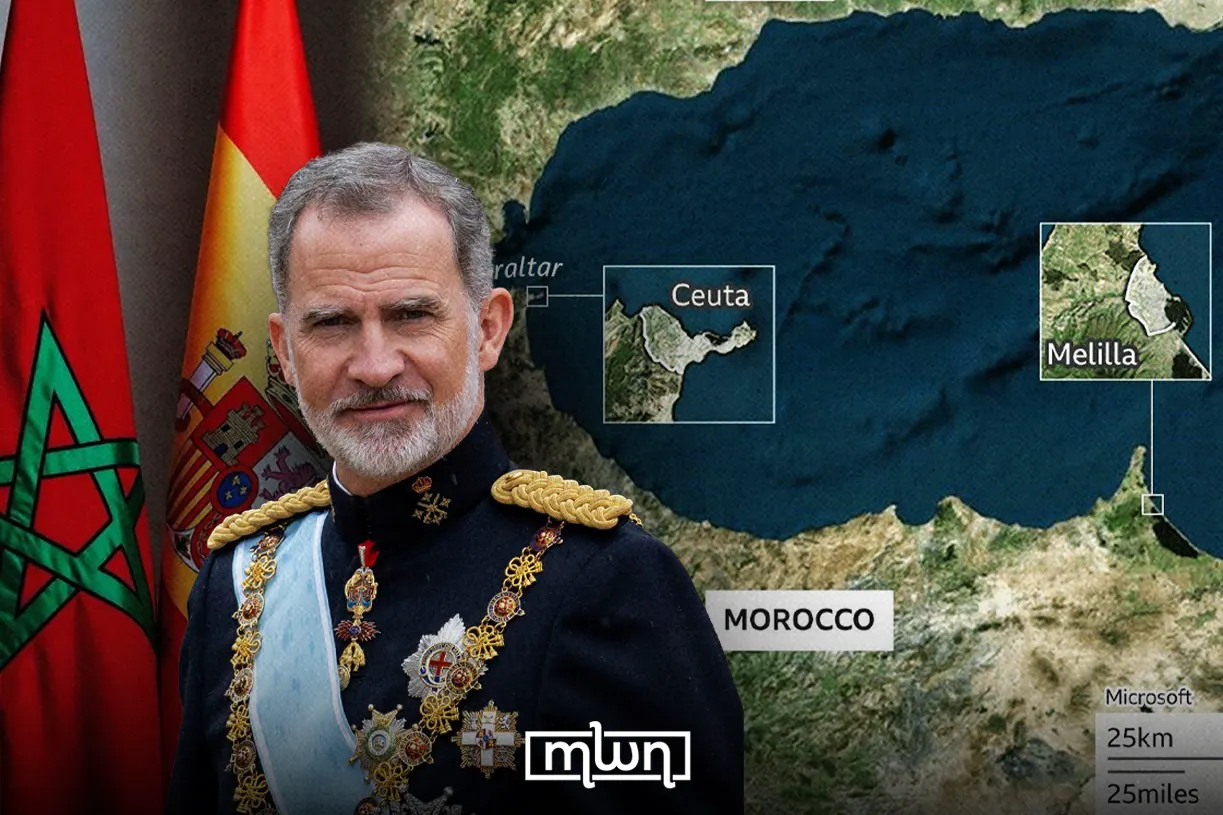
King Felipe VI and Queen Letizia of Spain are set to visit the occupied cities of Ceuta and Melilla, sparking concerns from Moroccan officials and analysts. The visit, scheduled for October 13 and 14, is the first by a Spanish sovereign to the two cities since 2007. Moroccan author and political analyst Samir Bennis has warned that the visit is "very untimely and, above all, very inopportune," and may ignite a crisis between the two nations.
The visit has been seen as a highly risky gesture by Madrid, which has been engaged in an anti-Moroccan campaign in the media. Bennis noted that while there is no diplomatic crisis between Rabat and Madrid, there is an unmistakable tension visible in the Spanish media and in the declarations of Spanish Prime Minister Pedro Sánchez and his foreign minister, José Manuel Albares. The visit may rupture a relationship that has been years in the rebuilding.
An unwritten understanding between Morocco and Spain has restrained each side from gestures that could muddy bilateral relations, particularly in moments of friction. However, a monarch's visit to the occupied cities shatters that restraint. From the Moroccan perspective, such a visit will not be perceived as a message of friendship but as a gesture of hostility, an affront staged amid a nationalist exaltation toward Morocco rarely seen in Spain.
Bennis argued that the Casa Real is attempting to extract political gain from this crisis and present the King as the bulwark of the defense of the Spanishness of Ceuta and Melilla. With the long shadow of Juan Carlos's disgrace still darkening the throne, Spain's monarchy is passing through important questions about its legitimacy and social support. A firm stance on the occupied cities offers Felipe an expedient communion with the national mood.
However, the pretext for the visit has been refuted by Madrid's own intelligence services, which have quietly exonerated Morocco. Bennis pointed to reports from the National Intelligence Center and the Guardia Civil's information directorate that do not attribute to Morocco the organization or instigation of the July mass entry. Morocco has ended up being turned into an element of Spanish political campaigning, a convenient adversary for actors who find the quarrel profitable.
The Spanish Crown has long served as a last resort when bilateral relations lurched into turbulence, a channel above the partisan fray capable of lowering the temperature when political wires went dead. However, if the Crown itself becomes a party to the escalation, perceived in Rabat as merely one more actor within it, Spain risks blunting the very instrument that salvaged the relationship in its darkest hours.
Bennis contrasted the approaches of Juan Carlos I and Felipe VI, noting that the elder king picked up the phone and leaned on his personal rapport with King Mohammed VI to contain a crisis in 2005, while Felipe VI took the microphone and recast an African border dispute as a European one. The consequences of Felipe's approach could go far beyond a simple institutional visit, Bennis warned.
Key points
- The visit may rupture a relationship that has been years in the rebuilding between Morocco and Spain.
- The pretext for the visit has been refuted by Madrid's own intelligence services, which have quietly exonerated Morocco.
- The Spanish Crown risks blunting its role as a mediator if it becomes a party to the escalation.