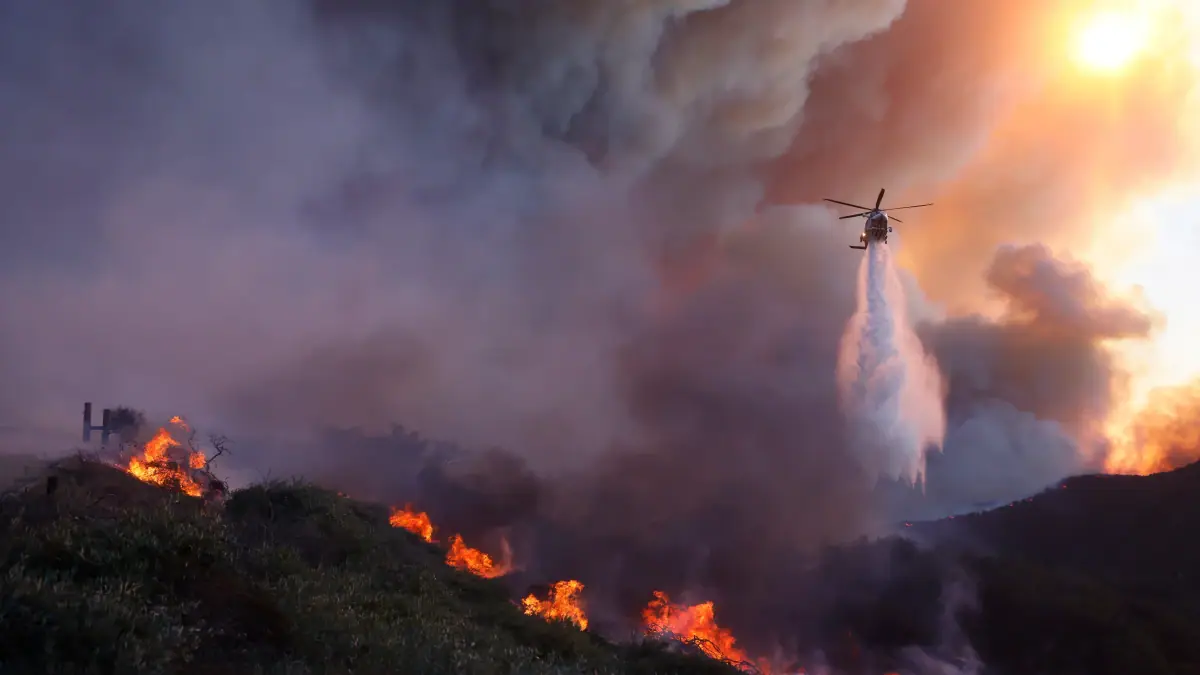
A federal jury has convicted Jonathan Rinderknecht, 30, of lighting a fire on January 1, 2025, that ultimately became one of the most destructive wildfires in California history. The Palisades Fire killed 12 people as it incinerated entire neighborhoods in Los Angeles and Malibu. Rinderknecht was found guilty of federal charges of destruction of property by means of fire and arson. The verdict was delivered on the third day of deliberation.
The case against Rinderknecht was previously tried in June, but the first jury deadlocked 10 to 2 in favor of acquittal. Prosecutors continued to pursue the case, presenting a more tightly organized case in the second trial. They focused on digital forensic data, expert testimony, and Rinderknecht's state of mind in the hours leading up to the fire. The prosecution's case included photographs of Rinderknecht's car parked at the base of a trail leading up to where the fire started and cellphone tower data pointing to his movement on the hill.
Prosecutors established that Rinderknecht was acting erratic and angry in the hours leading up to the fire through the testimony of Uber passengers and texts sent to his girlfriend at the time. Assistant U.S. Attorney Mark Williams said Rinderknecht "was mad at everything, and frustrated." After the fire began, Rinderknecht called 911 multiple times as he walked down the hill. He also screen-recorded a video on his phone while calling and asked ChatGPT about fault in relation to a fire started by cigarettes.
Rinderknecht's attorney, Steve Haney, cast doubt on the government's case, arguing that the fire scene could have been compromised due to public accessibility until the Palisades Fire started on January 7. The defense called their own expert witnesses, including a retired fire investigator for the U.S. Forest Service, who argued the fire origin area was different from the government's conclusion. Prosecutors attacked the fire investigator during cross-examination, accusing him of perjury.
The defense presented an alternate explanation for what ignited the fire — fireworks. Multiple witnesses reported hearing a loud bang or explosion from the direction of the hill where the fire started. However, prosecutors noted that none of the thousands of images collected from cameras in the area showed fireworks in the sky above the hill. Rinderknecht's own testimony was a key factor in the jury's decision, with Juror No. 3 stating that Rinderknecht's claims of not smelling or seeing a fire on the hill were incriminating.
The verdict was welcomed by the top federal prosecutor in Los Angeles, Bill Essayli, who said it was a "testament of the hard work" his team put into the case. Rinderknecht's attorney said they were disappointed in the verdict but respected the jury process. They plan to review all options, including a possible appeal. Rinderknecht is set to be sentenced on March 17, 2027, and faces a mandatory minimum of five years and a maximum of 20 years in federal prison.
The Palisades Fire was a holdover fire from the initial blaze Rinderknecht sparked on January 1, 2025. Fire investigators determined that the fire had burned undetected deep in root systems before flaring back up on January 7. The case highlights the importance of thorough investigations and the impact of wildfires on communities. Rinderknecht's conviction brings closure to the victims' families and the community affected by the fire.
Key points
- Jonathan Rinderknecht was convicted of arson charges in connection with the deadly 2025 Palisades Fire in Los Angeles.
- The Palisades Fire killed 12 people and incinerated entire neighborhoods in Los Angeles and Malibu.
- Rinderknecht faces a mandatory minimum of five years and a maximum of 20 years in federal prison when sentenced on March 17, 2027.