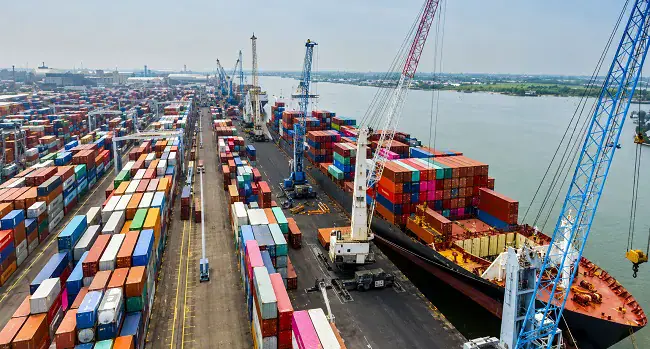
The Federal Government of Nigeria is set to embark on a significant upgrade of its maritime infrastructure, starting with the modernisation of the Lagos Port Complex in Apapa and the Tin-Can Island Port Complex on November 25. This initiative aims to improve port operations, increase efficiency, and enhance the overall maritime experience in the country. The project is part of a broader strategy to modernise and upgrade various seaports across Nigeria.
The Minister of Marine and Blue Economy, Adegboyega Oyetola, stated that the objective of this modernisation is to build a modern, efficient, and interconnected port system that serves every region of the country. He emphasised that while the Apapa and Tin-Can Island ports are critical to Nigeria's international trade, the government cannot afford to concentrate the nation's maritime activities around Lagos alone. This move is expected to distribute maritime activities more evenly across the country.
The two facilities, which jointly handle more than 70 per cent of Nigeria's non-oil export cargo, have not undergone modernisation on this scale in about 50 years. The rehabilitation, described as a historic intervention by Oyetola's special adviser, Bolaji Akinola, aims to address ageing facilities, infrastructure deficits, and operational challenges along the country's busiest port corridors. The projects are expected to increase cargo-handling capacity, reduce vessel turnaround and cargo dwell times, and improve logistics.
The modernisation projects are part of a wider strategy that includes approved modernisations for seaports in Warri, Onne, Calabar, and Rivers. The government stated that the broader programme supports economic diversification, non-oil export growth, and local industries. By integrating seaports with road and rail networks, inland waterways, and dry ports, the government aims to establish an efficient multimodal transport system.
The initiative also intends to reduce transportation costs and boost the competitiveness of Nigerian goods. To support these efforts, Nigeria and the United Kingdom signed a £746 million export finance agreement to modernise the Apapa and Tin-Can Island port complexes. This financial backing will be crucial in ensuring the successful execution of the modernisation projects.
Oyetola will perform the groundbreaking ceremony and official turning of the soil for the projects, according to a statement issued by his special adviser, Bolaji Akinola. The successful implementation of these projects is expected to have a positive impact on Nigeria's maritime sector, enhancing the country's position as a major player in international trade.
The modernisation of the Lagos Port Complex and Tin-Can Island Port Complex is a significant step towards achieving the government's goals in the maritime sector. With the expected increase in cargo-handling capacity and improved logistics, Nigerian businesses are likely to benefit from reduced transportation costs and increased efficiency. The project is a key component of the government's strategy to enhance the competitiveness of Nigerian goods and support economic growth.
Key points
- The modernisation project aims to increase cargo-handling capacity and reduce vessel turnaround and cargo dwell times.
- The project is part of a broader strategy to modernise and upgrade various seaports across Nigeria.
- Nigeria and the UK signed a £746 million export finance agreement to support the modernisation of the Apapa and Tin-Can Island port complexes.