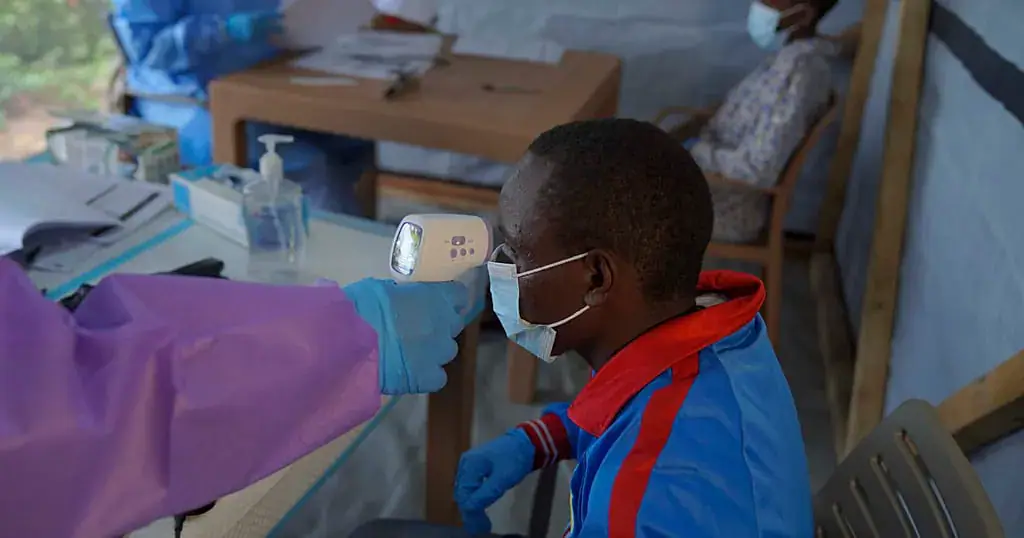
A recent Ebola outbreak in eastern Democratic Republic of Congo has been exacerbated by widespread misinformation and community resistance to health authorities. The outbreak, which began in May, has so far recorded over 9,800 cases and more than 4,700 deaths, making it the deadliest Ebola outbreak in Congo's history. Local communities have been wary of authorities, and traditional healers and medicine clinics have contributed to the confusion by providing unverified explanations for illnesses and deaths.
One family's experience illustrates the challenges faced by health workers in the region. When Zawadi Kavira Musubao's older sister died suddenly in August, a traditional medicine clinic told the family she had been poisoned. Musubao, 27, fell ill during the funeral and was also told she had been poisoned. The family initially refused to seek medical help, fearing that those who went to the hospital never came out alive. It wasn't until Musubao's brother intervened that the family members were taken to the hospital, where more than a dozen of them ended up in Beni's Ebola treatment center.
Musubao's brother, Alphonse bin Kitobi Achou Taibo, is the traditional chief of Bapakombe-Bakondo village on the outskirts of Beni. He played a crucial role in convincing his family members to seek medical help by explaining that people don't always die in the Ebola treatment center, and that sometimes they recover. Achou Taibo also began raising awareness in his village, but faced resistance and accusations of taking people to the Ebola treatment center to die. He persevered, sacrificing his own reputation to spread the truth about Ebola and the importance of seeking medical help.
The outbreak has seen fierce resistance from communities in the region, with several treatment centers and healthcare workers themselves having been attacked. The country's health ministry has reported that the situation is dire, with many communities long neglected by the central government in Kinshasa. This neglect has contributed to the mistrust of authorities and the reliance on traditional healers and unverified information.
The World Health Organization and other health authorities have been working to contain the outbreak, but their efforts have been hindered by the community resistance and misinformation. In response, health workers have been trying to engage with local communities, raise awareness about Ebola, and provide accurate information about the disease and its treatment.
The situation is further complicated by the fact that some communities have been accusing health workers of bringing "evil spirits" into their homes through the decontamination process. This has led to some families being evicted from their homes, as in Musubao's case, where her landlord evicted her after her home was decontaminated. The stigma surrounding Ebola has made it even more challenging for health workers to respond to the outbreak.
Despite the challenges, health authorities continue to work towards containing the outbreak and providing medical help to those affected. The introduction of new Ebola vaccines and the efforts of local leaders like Achou Taibo have been crucial in raising awareness and promoting the importance of seeking medical help. The situation remains dire, but with continued efforts and engagement with local communities, there is hope that the outbreak can be brought under control.
Key points
- Over 4,700 deaths have been recorded in the Ebola outbreak in DR Congo since May.
- Misinformation and community resistance are major challenges to the Ebola response in DR Congo.
- Local leaders and health authorities are working to raise awareness and promote the importance of seeking medical help in affected communities.