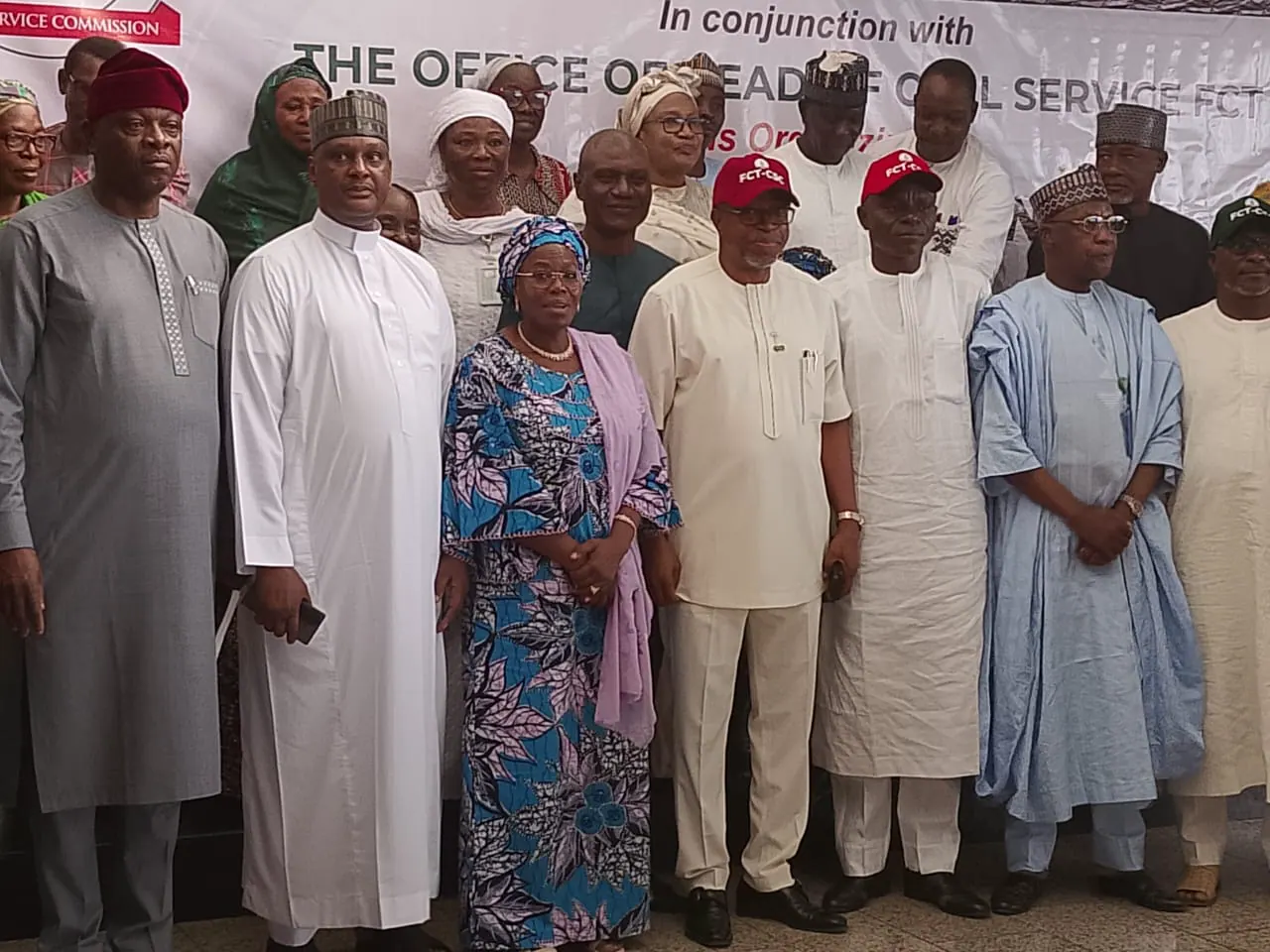
The Federal Capital Territory Administration (FCTA) has taken steps to address the anxiety and financial uncertainty often associated with retirement. Through a one-day workshop organized by the FCT Civil Service Commission (FCT-CSC) and the Office of the Head of the Civil Service, FCTA, outgoing civil servants were equipped with strategies to achieve a productive and fulfilling life after public service. The workshop, themed "How to Triumph in Retirement," aimed to change the perception of retirement from an end to relevance to a new phase of personal productivity, purpose, and community impact.
The Acting Head of the Civil Service, FCTA, Mrs. Nancy Sabanti Nathan, emphasized that retirement should mark a transition into a new phase of life rather than the loss of purpose or relevance. She assured retiring officers that the FCTA remained committed to ensuring the prompt processing of their terminal benefits, stressing that retirees deserved a dignified and financially secure exit from service. Nathan highlighted that true triumph in retirement occurs when purpose replaces routine and fulfillment is measured by personal impact rather than official position.
The workshop focused on four major areas considered critical to successful post-service transition: financial planning and entitlements, entrepreneurship, holistic health management, and legacy and community influence. This initiative is part of the FCTA's efforts to support retiring officers in their transition to a new phase of life. By providing them with the necessary tools and knowledge, the FCTA aims to empower them to make the most of their retirement.
Chairman of the FCT Civil Service Commission, Engr. Emeka Ezeh, stated that preparing workers for retirement was a statutory responsibility of the Commission under Section 7c(ii) of its Establishment Act. Ezeh noted that workers' productivity during their active years was closely linked to their confidence in their post-service welfare and security. He emphasized the importance of creating a conducive environment for workers to transition smoothly into retirement.
The FCT Civil Service Commission has embarked on reforms aimed at eliminating administrative bottlenecks that have affected career progression and retirement processing. Among the measures is the creation of a Unified Personnel Database to harmonize and regularly update FCTA staff records under a single verification system. This move is expected to streamline the retirement process and ensure that officers retire on their appropriate grade levels.
The Commission has also resolved promotion backlogs covering 2023, 2024, and 2025, ensuring that officers retire on their correct grade levels. Additionally, the adoption of Computer-Based Testing (CBT) for merit-based promotions and faster release of results has improved the career advancement process. These reforms, linked to the Renewed Hope Agenda of President Bola Ahmed Tinubu and the support of FCT Minister, Nyesom Wike, have expanded career opportunities within the FCTA.
The workshop is expected to become an annual event on the FCTA calendar, ensuring that serving officers begin preparations for retirement well ahead of their exit dates. The initiative combines psychological preparedness, financial literacy, and administrative support to help retiring officers approach life after public service with greater confidence and a renewed sense of purpose. This move is expected to have a positive impact on the lives of retiring officers and their families.
Key points
- The FCTA and CSC are working together to support retirees' transition to a productive and fulfilling life after service.
- The initiative includes a workshop that focuses on financial planning, entrepreneurship, holistic health management, and legacy and community influence.
- The FCT Civil Service Commission has implemented reforms to eliminate administrative bottlenecks and improve career advancement and retirement processing.