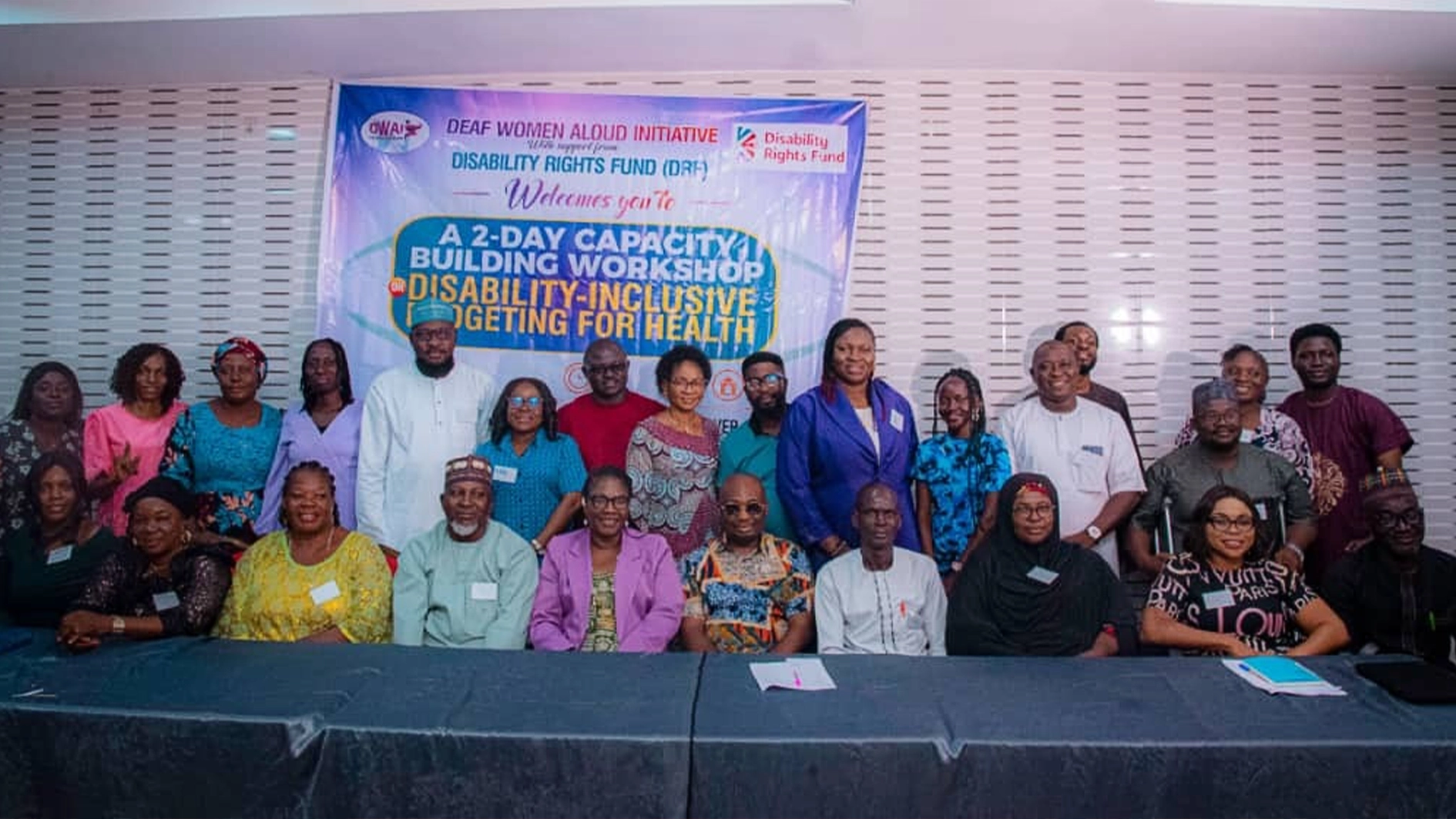
The Federal Capital Territory (FCT) Administration has called for disability inclusion to be mainstreamed into health planning and budgeting. This call was made at a two-day capacity-building workshop on disability-inclusive budgeting for health, organised in Abuja by the Deaf Women Aloud Initiative (DWAI), with support from the Disability Rights Fund (DRF). The workshop aimed to push the six Area Councils to create dedicated budget lines for the healthcare needs of persons with disabilities.
Representing the FCT Mandate Secretary for Health Services and Environment, Dr. Adedopeyin Olanrewaju, Dr. Aderonke Adedeji said the FCT was working to ensure that gender and disability considerations were mainstreamed across health programmes. She noted that primary healthcare facilities were critical because they implement most interventions that directly affect communities. The six Area Councils and their primary healthcare authorities have a major role in translating policies into services.
A baseline assessment conducted by DWAI across the six FCT Area Councils found that none of the councils had a dedicated budget line for disability inclusion in health. The assessment revealed that persons with disabilities constitute about 15 per cent of the FCT population, yet they were often treated as beneficiaries of charity rather than as rights holders whose needs should be systematically provided for through public budgets.
The Executive Director of DWAI, Hellen Beyioku-Alase, said the initiative was aimed at moving public institutions "from charity to rights, and from handouts to budget lines." She disclosed that DWAI had visited Gwagwalada, Abaji, Kwali, Kuje and Bwari Area Councils, where officials expressed varying degrees of commitment to disability-inclusive health planning. Kuje officials pledged to implement key demands presented by the organisation, while Bwari committed to developing a model accessible health facility.
The DWAI Monitoring and Evaluation Officer, Mr Collins Joseph, presented an overview of the project and its findings, which involved interviews and document reviews in the offices of Area Council chairmen, health departments and finance departments. He found significant gaps in budget transparency, disability-specific allocations and the availability of disaggregated data. 67 per cent of the councils assessed had budgets available only on request, while 60 per cent had no specific budget lines for disability.
Dr. Adedeji acknowledged that having a budget line does not necessarily guarantee implementation, as budget implementation across some health programmes remained extremely low. She disclosed that some programmes were unable to implement even five per cent of their approved allocations. She cautioned against excessive dependence on statutory government budgets, urging stakeholders to use evidence from the baseline assessment to attract grants and other resources to support disability-inclusive health interventions.
The stakeholders demanded dedicated allocations for disability health, with the DWAI Executive Director insisting that external funding should complement, rather than replace, government responsibility. The FCT Administration's call for disability inclusion in health planning and budgeting is a step towards ensuring that persons with disabilities receive the healthcare they need.
Key points
- FCT Administration calls for disability inclusion in health planning and budgeting.
- Area Councils urged to create dedicated budget lines for disability health.
- Baseline assessment finds significant gaps in budget transparency and disability-specific allocations.