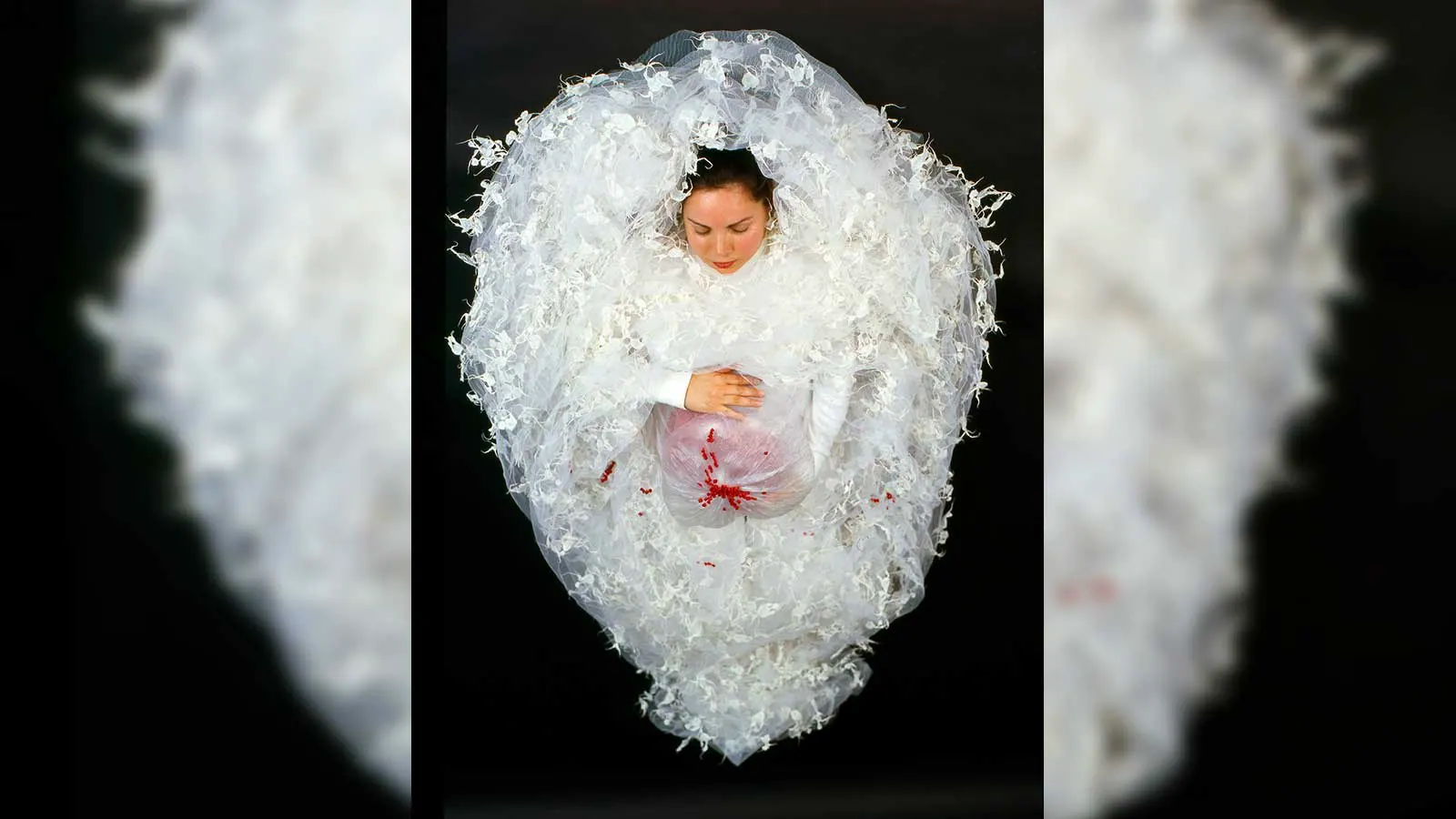
The artistic world is paying tribute to the late Tunisian artist Fatma Charfi, known for her passionate and thought-provoking works that tackled themes of social justice, human vulnerability, and the struggle against violence. Charfi's art is characterized by its emotional intensity, and her unique style has captivated audiences worldwide. Her work continues to inspire and influence a new generation of artists and art enthusiasts.
Charfi's artistic journey was marked by her creation of the iconic character Abrouc, a symbol of resistance and resilience. Abrouc, which translates to "the cunning one" in Tunisian dialect, was born out of Charfi's emotional response to the Gulf War and has since become a recurring motif in her work. Through Abrouc, Charfi explored themes of identity, community, and the human condition.
The exhibition at Galerie Gorgi and Bluewind Project is a collaboration between curators Aïcha Gorgi and Khedija Hamdi, who aim to showcase Charfi's work in a new light. The exhibition features a selection of Charfi's most important pieces, including installations, performances, and sculptures that demonstrate her innovative approach to art. By highlighting Charfi's work, the curators hope to introduce her art to a wider audience and spark a renewed interest in her legacy.
Beya Othmani, a researcher at the Museum of Modern Art (MoMA) in New York, discovered Charfi's work while researching African artists who had received the same prestigious award. Othmani was struck by Charfi's absence from the MoMA collection, despite her significant contributions to the art world. This sparked Othmani's curiosity, and she began to investigate Charfi's life and work, ultimately uncovering a wealth of creative output that continues to inspire and influence artists today.
Charfi's artistic practice was characterized by her use of unconventional materials and techniques, including paper mache, ink, and fabric. Her works often featured intricate textures and patterns, which added depth and complexity to her themes. Through her art, Charfi sought to challenge social norms and conventions, pushing the boundaries of what was considered acceptable in the art world.
The exhibition at Galerie Gorgi and Bluewind Project is a testament to Charfi's enduring legacy and the impact of her art on contemporary culture. By showcasing her work in a new and innovative way, the curators aim to inspire a new generation of artists and art enthusiasts to engage with Charfi's ideas and themes. The exhibition is a celebration of Charfi's life and work, and a reminder of the power of art to challenge, inspire, and transform.
The artistic community in Tunisia and beyond is coming together to celebrate Charfi's life and work. The exhibition at Galerie Gorgi and Bluewind Project is a significant event that highlights the importance of Charfi's contributions to the art world. Her legacy continues to inspire and influence artists, curators, and art enthusiasts, ensuring that her work will remain relevant for years to come.
Key points
- The exhibition at Galerie Gorgi and Bluewind Project showcases the artistic legacy of Fatma Charfi, a Tunisian artist known for her passionate and thought-provoking works.
- Charfi's art tackled themes of social justice, human vulnerability, and the struggle against violence, and her unique style has captivated audiences worldwide.
- The exhibition is a collaboration between curators Aïcha Gorgi and Khedija Hamdi, who aim to introduce Charfi's art to a wider audience and spark a renewed interest in her legacy.