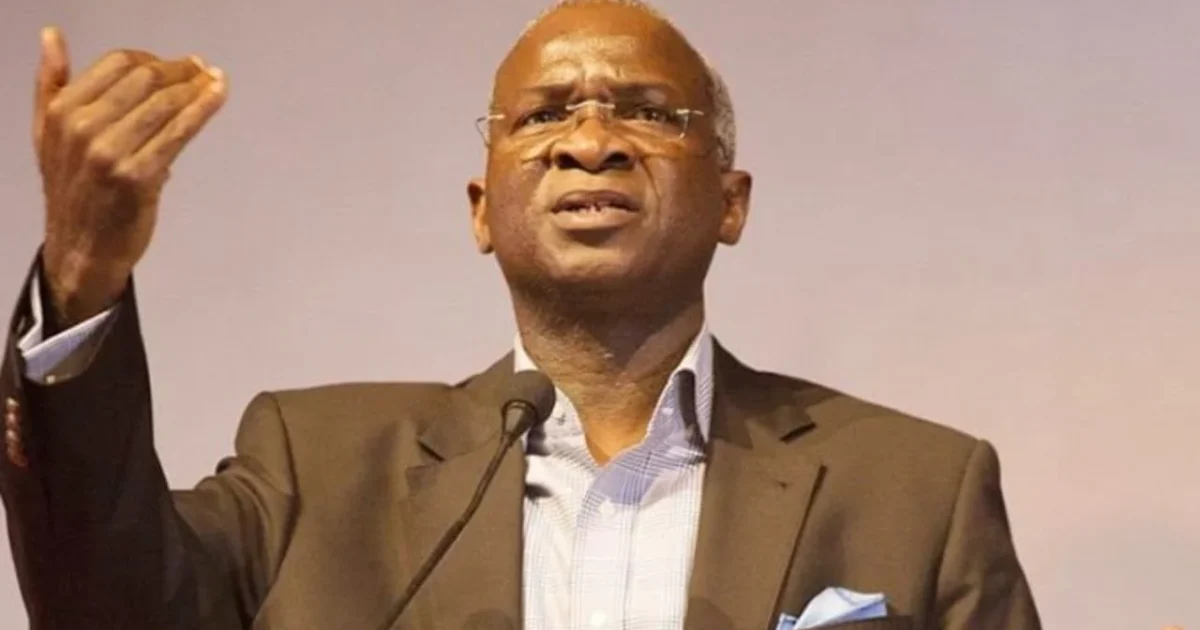
Former Lagos State Governor Babatunde Fashola has proposed the establishment of a judicial ombudsman and a comprehensive survey of court users to evaluate the effectiveness of the state's justice system. The ombudsman would provide citizens and court users with a platform to lodge complaints about their experiences. Fashola made the suggestion during the 2026/2027 Lagos State Judiciary New Legal Year Summit, themed "Justice as an Economic Infrastructure: Strengthening the Judiciary for Africa's Fifth Largest Economy."
Fashola emphasized that the justice system should be assessed beyond legal principles and advocacy by examining the experiences of those who depend on the courts. He urged the Lagos judiciary to commission a professional survey to establish how court users currently experience the justice system. The survey should examine case duration, commercial dispute resolution, and judgment enforcement. Fashola challenged stakeholders to determine the average case duration in Lagos and whether it meets court users' expectations.
The former governor drew attention to land and property disputes, highlighting their importance for capital formation and business activity. He questioned whether the judiciary was sufficiently responsive to disputes affecting businesses, particularly small and medium-sized enterprises. Fashola recalled reforms carried out in the Lagos justice sector during his tenure, including changes to court rules and procedures, alternative dispute resolution, and the recruitment of younger lawyers.
Fashola advocated for greater attention to informal dispute-resolution mechanisms, suggesting that some disputes could be resolved outside conventional court processes. He emphasized that continued development of alternative dispute resolution could help reduce pressure on the formal court system, particularly in disputes involving customary or community-related issues.
Chief Justice of Nigeria, Justice Kudirat Kekere-Ekun, stated that an independent, efficient, and accessible judiciary was critical to Lagos State and Nigerian economic growth. She urged the Lagos judiciary to embrace technology to improve access to justice, strengthen case management, and reduce delays. Kekere-Ekun emphasized that justice should be regarded as critical infrastructure for economic development, like roads, bridges, and electricity.
Kekere-Ekun highlighted the importance of courts in resolving disputes fairly and within a reasonable time, creating certainty, reducing costs, and protecting investments. She noted that the Nigerian judiciary was implementing reforms, including Electronic Filing Practice Directions and the National Case Management System. However, she cautioned that technology must serve the people, as the judiciary remains a human institution.
Lagos State Governor, Babajide Sanwo-Olu, called for continued investment in judicial infrastructure, human capital, and technology. He emphasized that an effective justice system protected property rights, enforced contracts, and provided confidence to citizens, businesses, and investors. Sanwo-Olu advocated for greater use of mediation and arbitration, particularly in commercial disputes.
Key points
- Fashola proposes a judicial ombudsman to address court user complaints.
- A comprehensive survey of court users is suggested to assess the justice system's effectiveness.
- The judiciary is urged to adopt technology to improve access to justice and efficiency.