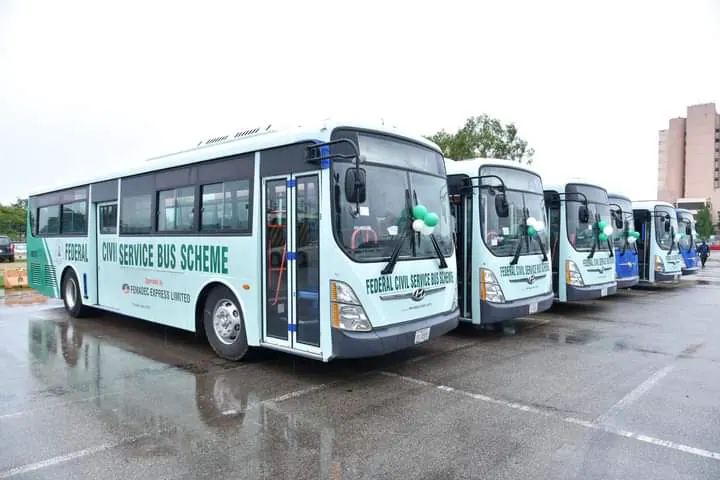
Despite efforts by the federal and state governments to reduce transport fares through CNG-powered buses, commuters in several states are still paying high fares. President Bola Tinubu had directed state governments to ensure that the lower operating costs of CNG-powered transportation translated into reduced fares from October 1. This directive was part of the National Affordable CNG Transit Programme, designed to deliver measurable reductions in transportation costs to Nigerians.
Checks by LEADERSHIP across several states showed that the promised relief has yet to reach many commuters, as CNG buses are either unavailable, not fully operational or insufficient to meet demand. In Kwara State, the government has yet to reduce transport fares, with workers and residents saying they had not experienced any reduction as of yet. Commercial transporters said fares remained largely tied to fuel costs.
The Commissioner for Transport in Kwara State, Aliyu Korasabi, said the government’s transport subsidy scheme had not taken off but that arrangements were underway to reduce fares through CNG buses. He said the state currently had 19 CNG buses, with 10 additional buses ordered by the governor. This development suggests that the state is taking steps to implement the CNG-powered transportation programme.
In Niger State, transport fares have also remained unchanged, with no recent government subsidy announced. A transport worker at Abdulsalami Park, Minna, Idris Mohammed, said passengers still paid between N8,000 and N12,000 for intercity journeys, depending on the vehicle, while intracity fares averaged N500 per stop. The state had purchased 200 CNG buses to ease transportation for workers and students, but the buses remained parked because the state had no CNG refuelling centre.
Transport fares remain high in Delta State, with poor roads compounding the impact of fuel and vehicle maintenance costs. A journey that should take about an hour can now take up to four hours on some routes, while some drivers have abandoned the roads because of vehicle damage. Pius Okonkwo, Unit Chairman of the National Union of Road Transport Workers (NURTW), Asaba/Sapele Road, said fares would remain high because of fuel, diesel and spare-parts costs.
A commuter, Bridget Ofiakode, said transportation costs were putting severe pressure on her family. “My salary is less than N130,000. I spend over N80,000 on transport fare monthly, that is, if I don’t use my car,” she said. This illustrates the significant burden that high transport fares are placing on ordinary Nigerians.
The persistence of high transport fares in several states highlights the challenges in implementing the CNG-powered transportation programme and the need for more effective solutions to address the issue. With many commuters still feeling the pinch of high fares, it remains to be seen how quickly the programme can be rolled out and its intended benefits be realised.
Key points
- High transport fares persist in several Nigerian states despite the government's directive to reduce fares using CNG-powered buses.
- The programme's implementation has been hampered by issues such as a lack of CNG refuelling centres and insufficient CNG buses.
- The high cost of transportation is placing a significant burden on ordinary Nigerians, with many calling for relief.