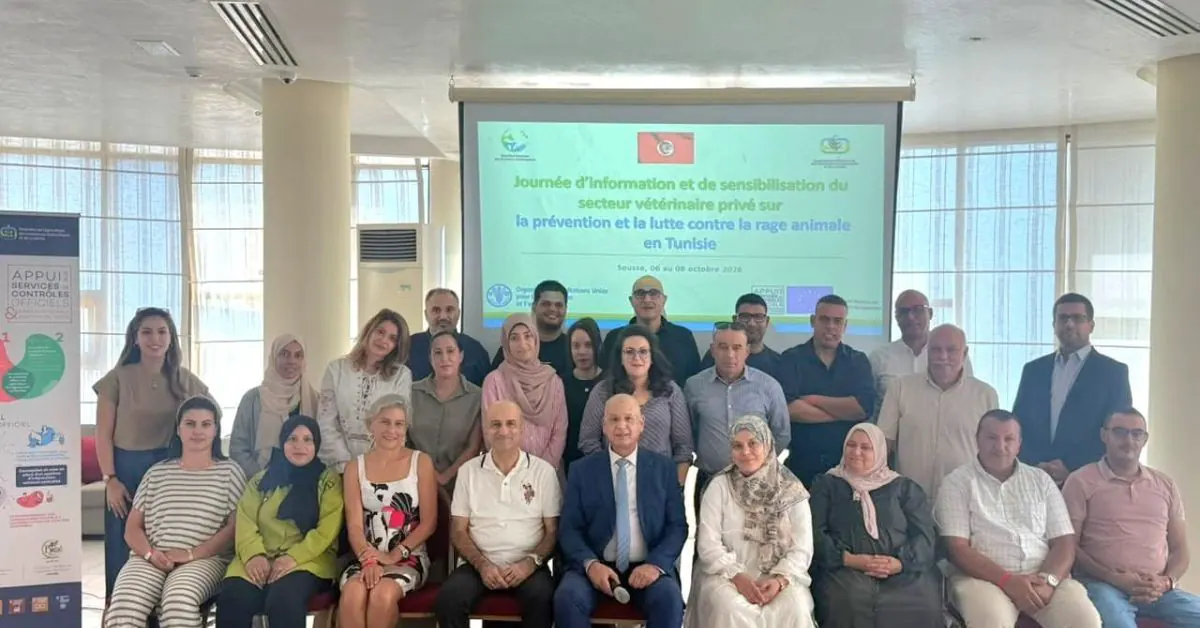
The Food and Agriculture Organization (FAO) of the United Nations has launched an initiative in Tunisia to engage private sector veterinarians in the monitoring and prevention of animal rabies. This effort is part of the "Asco" project, which aims to enhance the role of veterinarians in the country's health surveillance system. The project involves 70 veterinarians from the private sector who will work closely with the General Directorate of Veterinary Services.
The initiative includes a series of informational and awareness-raising sessions aimed at improving the knowledge and skills of veterinarians in detecting and reporting rabies cases. During these sessions, participants were presented with the National Guide for Rabies Control Procedures, which was developed by the General Directorate of Veterinary Services. The guide provides a framework for unified practices and outlines the steps to be taken when suspecting or confirming the disease.
In addition to theoretical knowledge, the sessions included practical exercises and case studies related to the epidemiological situation, monitoring procedures, and reporting suspected cases. The veterinarians also discussed their responsibilities and the importance of rapid information exchange and coordination with relevant authorities. The goal is to establish a proactive and coordinated health monitoring system that supports the "One Health" approach.
The FAO's initiative is a collaborative effort with the Tunisian government's veterinary services to strengthen the country's capacity to prevent and control animal rabies. By engaging private sector veterinarians, the project aims to leverage their expertise and reach in the field to enhance disease surveillance and reporting. This partnership is expected to improve the overall effectiveness of rabies control measures in Tunisia.
The project also focuses on the importance of rapid information exchange and coordination with relevant authorities, as well as the regulations governing the movement of pet animals across borders. By working together, the FAO and the Tunisian government aim to establish a robust and proactive health monitoring system that can detect and respond to potential health threats.
The engagement of private sector veterinarians in the monitoring and prevention of animal rabies is a critical component of the FAO's strategy to support Tunisia's efforts to control the disease. With their expertise and knowledge of animal health, these veterinarians play a vital role in detecting and reporting suspected cases, which is essential for effective disease control.
The FAO's initiative in Tunisia demonstrates the organization's commitment to supporting countries in their efforts to prevent and control animal diseases. By working with governments and other stakeholders, the FAO aims to promote a "One Health" approach that recognizes the interconnectedness of human, animal, and environmental health.
Key points
- The FAO has partnered with Tunisia's veterinary services to engage 70 private sector veterinarians in monitoring and preventing animal rabies.
- The initiative includes a series of informational and awareness-raising sessions aimed at improving the knowledge and skills of veterinarians in detecting and reporting rabies cases.
- The project aims to establish a proactive and coordinated health monitoring system that supports the "One Health" approach.