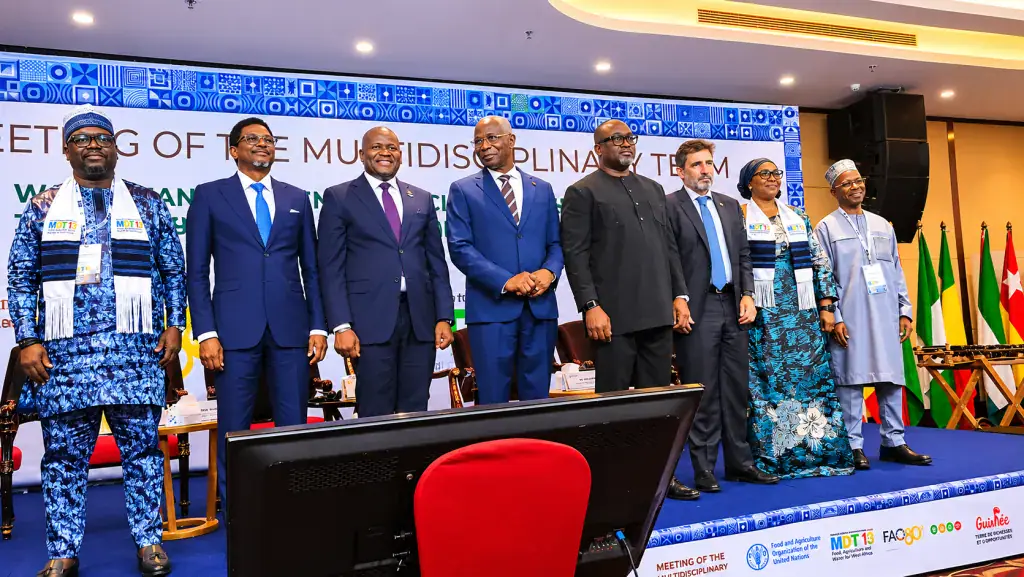
The Food and Agriculture Organization (FAO) is hosting its 18th Multidisciplinary Team Meeting in Conakry, Guinea, from November 23 to 27, 2026. The meeting brings together representatives from West African states, regional organizations, financial institutions, and research institutions. The goal is to develop a roadmap for 2027 to enhance water management and secure agricultural production in the region. Bintia Stephen-Chikaya, FAO's subregional coordinator for West Africa, highlighted the challenges faced by producers, including unpredictable rainfall and water scarcity.
Stephen-Chikaya noted that having access to water does not necessarily mean having control over it. She cited the paradox of floods during the rainy season followed by water shortages a few months later. The coordinator emphasized the need for rapid mobilization of expertise, technical tools, and financing to support producers. She identified development banks, private investors, and climate funds as key partners to engage. Stephen-Chikaya stressed that pilot projects must be scaled up to have a meaningful impact on West African agriculture.
The FAO's subregional office has committed to monitoring the implementation of decisions with country offices. The 2027 action plan will need to outline specific responsibilities, deadlines, necessary resources, and metrics for measuring results. Lionel Gbaguidi, interim FAO representative in Guinea, highlighted the importance of regional cooperation in managing water resources. He noted that several major watercourses originate in the Fouta-Djallon massif, supporting millions of people across national borders.
Diego Zorrilla Orsat, UN Resident Coordinator in Guinea, observed that the Fouta-Djallon region and Guinea's coastal areas have abundant surface water, while Sahelian zones face increasing water scarcity. He emphasized the need for concerted responses, regional solidarity, and a comprehensive approach to water management that integrates agriculture, environment, climate, energy, governance, and territorial development.
Guinea's Prime Minister, Amadou Oury Bah, called for discussions to advance the preparation of a regional investment program focused on the Fouta-Djallon region, in collaboration with the FAO, basin organizations, and financial partners. He stressed that local communities must be fully involved and benefit from the protection of these resources. The Prime Minister also emphasized the importance of creating conditions for agricultural investments to benefit producers, particularly women.
The Prime Minister highlighted the need for producers to have access to land, financing, and decision-making processes related to water. He also underscored the importance of maintenance, advisory services, and favorable market conditions for agricultural investments to be successful. The meeting aims to secure concrete commitments and a clear roadmap for improving water management and agricultural production in West Africa.
The outcome of the meeting is expected to be a set of concrete engagements and a roadmap for 2027. The FAO and its partners hope to translate the discussions into tangible actions that will improve the lives of communities in West Africa. The meeting's success will depend on the level of commitment and cooperation from regional stakeholders.
Key points
- The FAO meeting in Conakry aims to develop a roadmap for 2027 to enhance water management and secure agricultural production in West Africa.
- The meeting brings together representatives from West African states, regional organizations, financial institutions, and research institutions.
- The goal is to address the challenges faced by producers, including unpredictable rainfall and water scarcity.