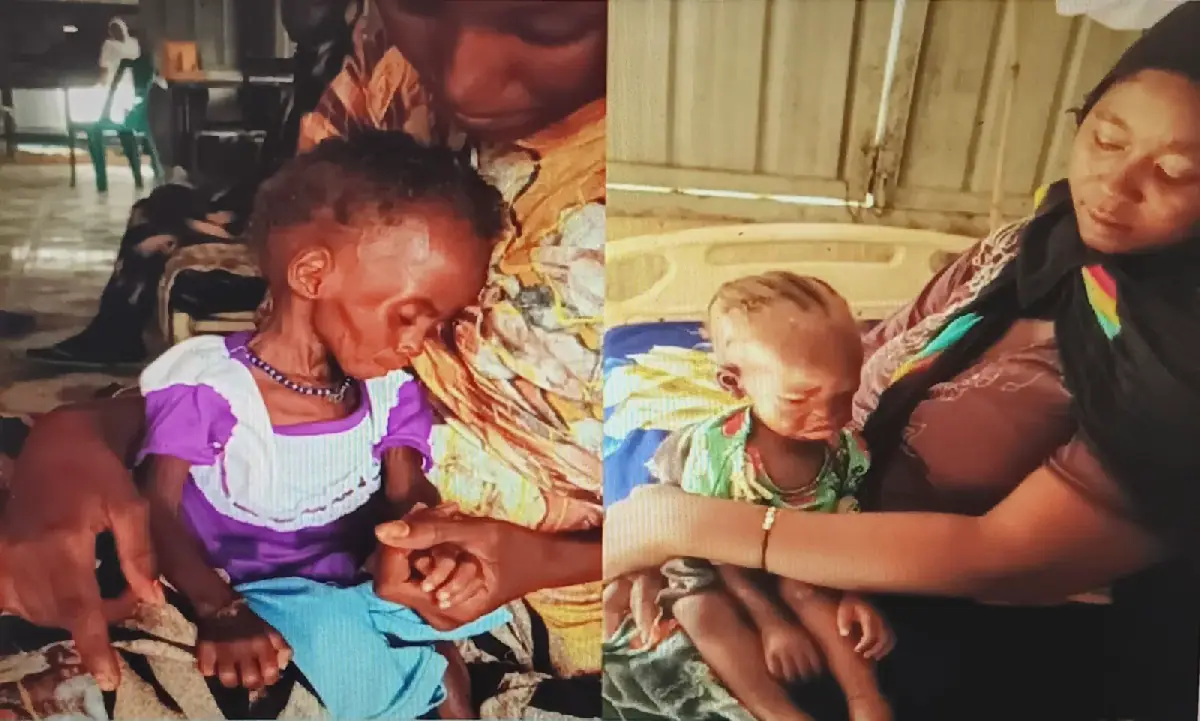
A recent report by the humanitarian working group of the Somoud Alliance has attributed the ongoing famine in Sudan to the continuing war, restrictions on aid, displacement, and the destruction of livelihoods, rather than natural causes. The report highlights that the risk of famine remains a major concern in parts of Sudan, with approximately 19.5 million people facing crisis levels of hunger or worse between February and May 2026. This includes around five million people in the Emergency phase and 135,000 in the Catastrophe phase of food insecurity.
The World Food Programme (WFP) has also expressed concerns about the food security situation in Sudan, with 19.5 million people facing crisis levels of hunger or worse. According to the WFP, households are experiencing severe food shortages or being forced to sell essential possessions and other assets to obtain food. The European Union has separately highlighted Sudan's enormous humanitarian needs, reporting that 33.7 million people require humanitarian assistance, 19.1 million face acute food insecurity, more than nine million are internally displaced, and 4.4 million are living outside the country.
The report identifies children under five, pregnant and breastfeeding women, people with disabilities, displaced people, refugees and returnees, older people, those without an income, farmers and pastoralists, and residents of besieged areas as the groups most severely affected. The World Health Organization (WHO) reports that 37 per cent of health facilities have ceased operating, further exacerbating the crisis. The report also highlights funding shortages and administrative obstacles, with many households receiving only half their food rations due to funding shortages.
The humanitarian working group of the Somoud Alliance estimates that approximately 825,000 children under five are expected to suffer from acute malnutrition during 2026. The report points to WHO warnings in October 2026 of an escalating risk of famine in parts of Greater Darfur and Greater Kordofan. Many households are receiving only half their food rations because of funding shortages, while aid convoys and humanitarian workers are facing attacks and looting.
The report highlights that Greater Darfur and Greater Kordofan are experiencing fighting, sieges, displacement, the closure of markets, and the destruction of crops and livestock. Malnutrition and disease are spreading, while shortages of water and medical treatment, together with the isolation of communities, are worsening conditions. In Khartoum and El Gezira, infrastructure, services, and markets have been damaged, while sources of income have been lost.
The Somoud Alliance has called for an immediate and sustained ceasefire, protection for civilians and humanitarian workers, and the opening of safe humanitarian corridors and border crossings under neutral supervision. The alliance has also urged increased funding and support for local initiatives, as well as the provision of food, therapeutic nutrition, water, healthcare, shelter, and agricultural inputs. The report concludes that saving lives depends on urgent international action to end the war, open access routes, and fund the humanitarian response.
The United Nations launched a Humanitarian Response Plan worth USD 2.87 billion in February 2026, but funding remains severely inadequate. By 31 July 2026, UNICEF had secured only USD 352.2 million of its USD 962.9 million funding requirement, leaving a 63 per cent shortfall. The report emphasizes that famine hotspots include 14 locations and displacement settlements in North Darfur and South Kordofan, and calls for transparency in data reporting, an end to the use of starvation as a weapon, and accountability for those responsible for violations.
Key points
- 19.5 million people face crisis levels of hunger or worse in Sudan
- Famine in Sudan is linked to the continuation of the war, not natural causes
- Urgent international action is needed to end the war, open access routes, and fund the humanitarian response