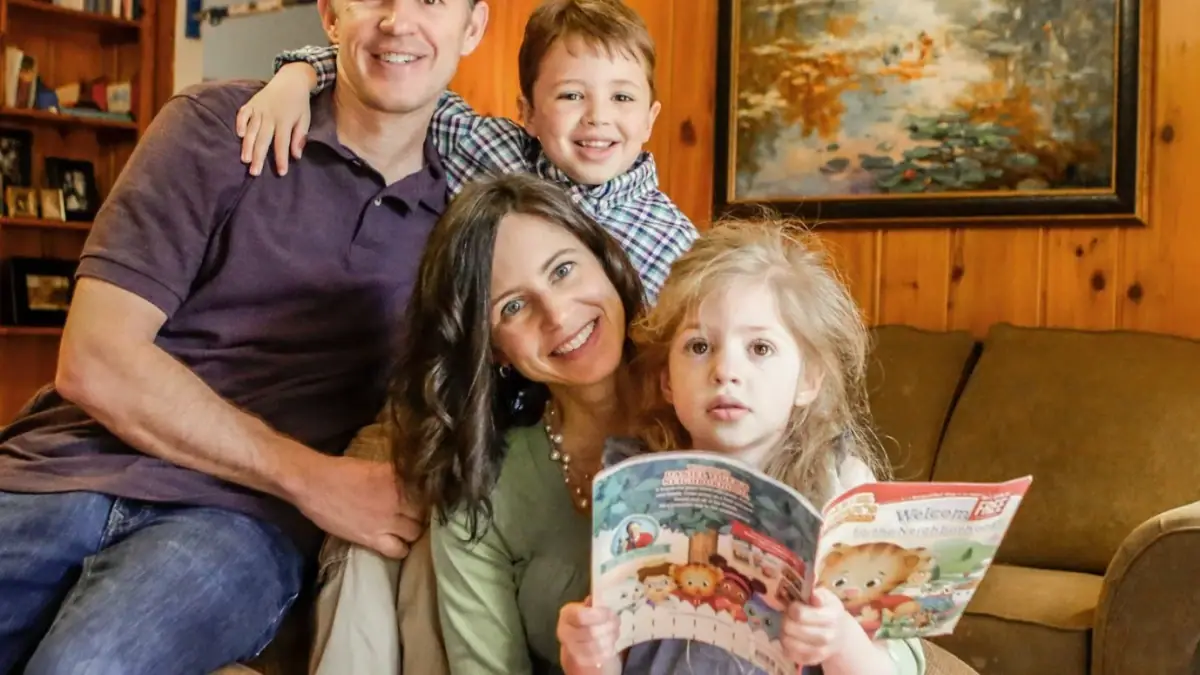
In 2013, Cara O'Neill, a pediatrician in Columbia, S.C., and her husband Glenn, discovered their daughter Eliza had Sanfilippo syndrome, a rare inherited disease that affects a child's ability to break down a critical molecule, leading to severe complications. The diagnosis was a shock, and the family was determined to find a treatment. Sanfilippo syndrome is characterized by a faulty gene that causes heparin sulfate to build up in the body, resulting in the loss of speech and walking abilities, seizures, and a short life expectancy.
The O'Neills soon learned that researcher Haiyan Fu at Nationwide Children's Hospital in Columbus, Ohio, had been working on a gene therapy for Sanfilippo syndrome since the late 1990s. Fu's experimental therapy used a modified virus to deliver a working copy of the broken gene to patients' cells. The O'Neills and other families of children with Sanfilippo syndrome rallied behind Fu, providing funding to keep her research going. Eight patient foundations, including Ben's Dream and a Cure for Kirby, supported Fu's work until it was ready for the first human trial.
However, a clinical trial would be expensive, and the O'Neills needed to raise a significant amount of money. Glenn O'Neill came up with an idea to create a viral video to raise funds on GoFundMe. In 2014, filmmaker Benjamin Von Wong created the Saving Eliza video, which helped the O'Neills break GoFundMe's record at the time, raising $1 million in a few weeks, and eventually reaching $2 million. This money helped fund the first human trial, which started in May 2016.
The experiments were promising, and the biotech industry took notice. In 2022, a biotech company called Ultragenyx acquired the rights to the gene therapy and continued studying it. The company submitted data to the Food and Drug Administration for review, and in September, the FDA approved the gene therapy, called Fayuvi. The treatment is a one-time infusion that works best when administered to young children, as it can help prevent further brain damage.
Ultragenyx set the price for the treatment at nearly $4 million, making it one of the most expensive gene therapies ever. However, CEO Emil Kakkis stated that the company is committed to ensuring every patient receives treatment, regardless of the price. The approval of Fayuvi brings hope to families affected by Sanfilippo syndrome, but also mixed emotions for Fu, who wishes it hadn't taken so long to develop.
Eliza, now almost 17, was the first patient to receive the gene therapy as part of a clinical trial in 2016. Although she was 6 years old when treated and had already lost her ability to speak, she can communicate using picture cards and devices. Eliza attends school and has made progress, such as learning to float on a pool noodle. Her parents are proud of her and acknowledge that she is lucky to have received the treatment.
The O'Neill family's journey highlights the importance of funding and supporting medical research. Their efforts, along with those of other families and foundations, have led to a groundbreaking treatment for Sanfilippo syndrome. As research continues, there is hope for a better future for children affected by this rare genetic disorder.
Key points
- The FDA approval of Fayuvi marks a significant milestone in the fight against Sanfilippo syndrome.
- The O'Neill family's efforts, including the viral Saving Eliza video, helped raise crucial funds for the gene therapy research.
- The gene therapy treatment, Fayuvi, is priced at nearly $4 million, but Ultragenyx is committed to making it accessible to all patients.