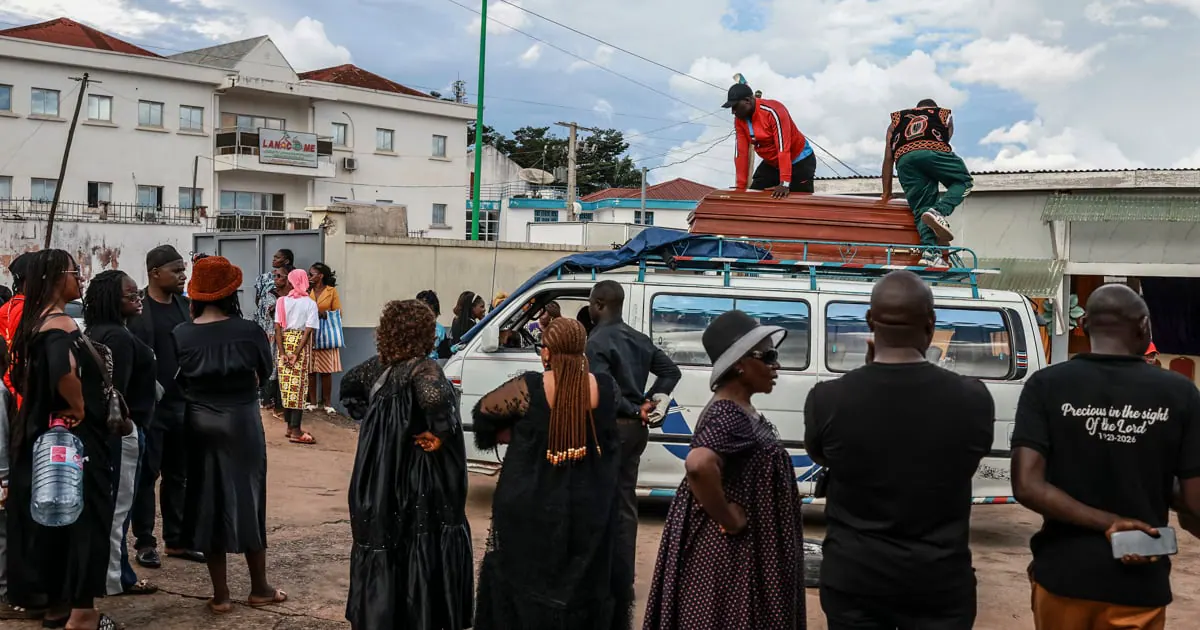
Cameroonian families are demanding justice for their loved ones after a wave of femicides swept the country. Geraldine Achia, a 30s-year-old teacher, was beaten to death by her husband, who is the prime suspect. Her son, Courage Anushuni, 18, described the pain of losing his mother as a nightmare. Achia's sister, Regina Mbatiabuh Ngukum, recalled finding her sister's body with a disfigured face, covered in bruises, at the hospital.
The number of femicides in Cameroon has been rising alarmingly. According to the ministry for women and the family, around 50 femicides were recorded between January and April, matching the total for the whole of 2023. The figure climbed to 67 in 2024 and 77 in 2025. In August alone, nearly 10 women were killed, according to the Stop Feminicides 237 organisation. This surge has sparked anger from rights groups and the opposition.
Rights groups and opposition parties are accusing the government of inaction. They point to the growing toll of femicides and the lack of effective measures to prevent them. Even prominent figures, such as Ajara Nchout Njoya, star striker of the Cameroon national women's football team, have spoken out against the "tragic wave" of femicides. Njoya wrote that being a woman in Cameroon should never be a risk.
Experts point to various factors contributing to the rise in femicides. Senator Francoise Puene cited the economic crisis and the COVID-19 pandemic as factors that have escalated violence. She also mentioned that women are speaking out more, but the patriarchal society and violent education system perpetuate the problem. Psychiatrist Laure Justine Menguene attributed the issue to a patriarchal society where men grow up with the idea that they are superior to women.
The issue of femicide is also linked to the way perpetrators are tried in Cameroonian courts. The law currently does not recognise femicide as a separate crime from murder. Investigating magistrate Martine Ahanda Tana argued that a specific law defining femicide would allow for more effective punishment. The government has announced plans to consider a bill on the issue in November.
Human rights groups have criticised the government's response as inadequate. Human Rights Watch accused the government of making promises to women without keeping them. The organisation stated that women in Cameroon, including domestic violence victims and survivors, have little protection or access to justice. The African continent has the highest femicide rate in the world, according to the United Nations.
The families of the victims are demanding justice. Anushuni, Achia's son, said his only wish is that justice be done. Achia's husband, who denies killing his wife, was arrested and remains in detention. The opposition MRC party has criticised the government's "criminal passivity" in addressing the issue.
Key points
- Cameroon's femicide rate has surged, with 77 reported in 2025 and 50 recorded between January and April 2026.
- Experts cite factors such as economic crisis, COVID-19 pandemic, patriarchal society, and lack of effective laws.
- Human rights groups have criticised the government's response as inadequate, calling for more action to protect women.