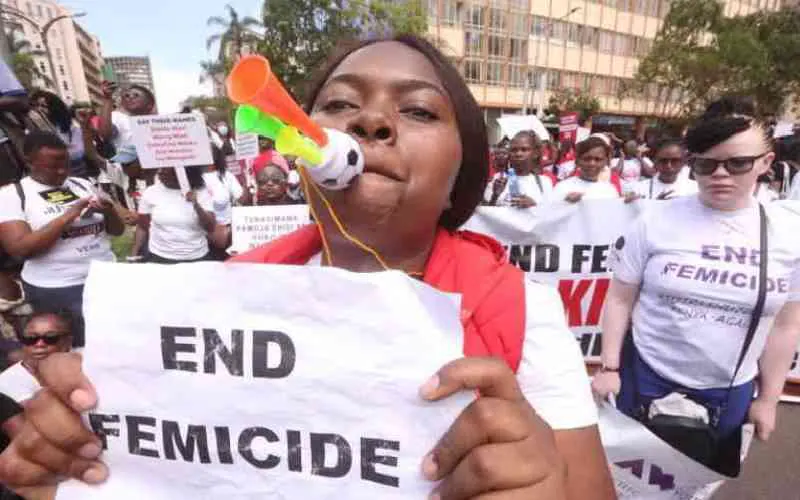
The family of Geraldine Achia, a Cameroonian teacher brutally murdered by her husband, is still reeling from the shock. Achia's 18-year-old son, Anushuni, described the pain of losing his mother as a nightmare. The incident is part of a disturbing trend in Cameroon, where gender-based violence is on the rise. According to the ministry for women and the family, around 50 femicides were recorded in the country between January and April this year.
The number of femicides in Cameroon has been increasing steadily, with 67 reported in 2024 and 77 last year. In just one month, nearly 10 women were killed, according to the Stop Feminicides 237 organisation. This surge in violence has sparked outrage from rights groups and the opposition, who accuse the government of inaction. They point to the lack of effective measures to prevent and prosecute these crimes.
Rights groups and opposition parties are criticising the government for its handling of the situation. They argue that the authorities have failed to take adequate measures to prevent and prosecute femicides. Even prominent figures, such as Ajara Nchout Njoya, star striker of the Cameroon national women's football team, have spoken out against the "tragic wave" of femicides.
The victims' families are also speaking out, sharing their stories of pain and loss. Regina Mbatiabuh Ngukum, Achia's sister, described the moment she saw her sister's disfigured body at the hospital. She disputed the husband's account of the events leading to Achia's death, saying she did not go out drinking. The police recovered Achia's phone, which contained photos of her with bruises on her face.
Experts point to various factors contributing to the rise in femicides, including economic crisis, patriarchal society, and a culture of violence. Senator Francoise Puene, who has worked on women's rights for years, said several issues are behind the increase in murders. She mentioned that women are speaking out more, but the economic crisis and the Covid-19 pandemic have exacerbated the problem.
There are also concerns about the way woman-killers are tried in Cameroonian courts. The law currently does not recognise femicide as a separate crime from murder. Investigating magistrate Martine Ahanda Tana argued that a specific law defining femicide would allow for more effective prosecution. The government has announced plans to consider a bill on the issue in November.
Human rights organisations are urging the government to take immediate action against gender-based violence. Human Rights Watch accused the government of having "made a lot of promises to women" without keeping them. The organisation said women in Cameroon have little protection or access to justice, and that the killings are a sign of a broader problem that needs to be addressed.
Key points
- Cameroon's femicide rate is rising, with 50 cases recorded between January and April this year.
- Experts blame a combination of factors, including economic crisis, patriarchal society, and a culture of violence.
- Human rights groups are calling for the government to take immediate action to address the issue.