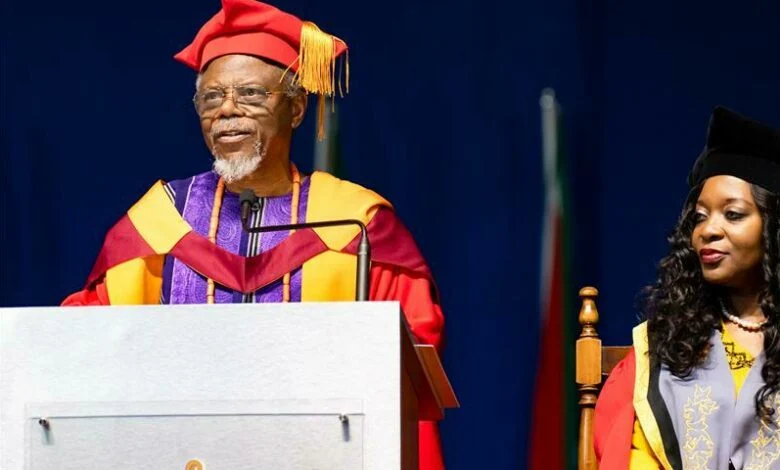
Professor Toyin Falola and the Olowu of Owu Kingdom, Oba Prof Saka Matemilola, have expressed concerns over the increasing monetization of traditional titles and chieftaincy in Nigeria. They made these remarks during The Toyin Falola Interview, which focused on "Indigenous Education, Character Formation and the Making of Citizens." The discussion highlighted the growing practice of linking chieftaincy titles to financial contributions, a trend that both Falola and Matemilola find disturbing.
Falola, who led the discussion, questioned the practice of buying traditional titles, noting that he had received such titles in the past without making any financial payments. Matemilola acknowledged that money had become a significant factor in the conferment of traditional titles, stating that the process had been turned into a matter of who can pay the most. This, according to the monarch, was not the original intention of traditional leadership.
Matemilola emphasized that traditional leadership should be based on service to the community rather than wealth. He argued that becoming a traditional ruler or chief should be about serving the community, not about personal gain. The Olowu of Owu Kingdom noted that his kingdom insists on seeing tangible contributions from individuals before recognizing them with traditional titles. This approach, he believes, ensures that titles are given to those who have added value to the community.
The Olowu of Owu Kingdom also spoke about the Olowu Hope Initiative, an effort aimed at supporting education, healthcare, skills acquisition, women empowerment, environmental sustainability, and climate action. The initiative has provided interest-free loans to over 300 women without recording a single default. Matemilola explained that the initiative's approach is to start helping those in need immediately, rather than waiting for elaborate structures or funding.
The interview featured other notable scholars, including Prof Gabriel Babawale, Prof Bridget Awosika, and Dr Olabimpe Olori Adeyemi. They joined Falola and Matemilola in discussing various topics related to indigenous education and character formation. The discussion underscored the importance of reevaluating traditional practices and ensuring they align with the needs and values of the community.
Falola described Matemilola as a rare example of traditional leadership combined with global academic experience. Matemilola's background includes training in Mechanical Engineering at the University of Ibadan and Applied Mechanics at the University of Cambridge, as well as professional experience in engineering and the energy sector. This unique blend of traditional and modern knowledge, Falola noted, makes Matemilola an exemplary leader.
The conversation highlighted the need for a shift in how traditional titles are awarded and perceived. Both Falola and Matemilola reiterated that traditional titles should recognize individuals who have made meaningful contributions to their communities, rather than those who can simply afford to buy them. This approach, they believe, will help restore the dignity and true purpose of traditional leadership in Nigeria.
Key points
- Scholars and monarchs in Nigeria are criticizing the growing trend of monetizing traditional titles and chieftaincy.
- The Olowu of Owu Kingdom, Oba Prof Saka Matemilola, emphasizes that traditional leadership should be based on service to the community, not wealth.
- The Olowu Hope Initiative has provided interest-free loans to over 300 women, supporting education, healthcare, and other community development efforts.