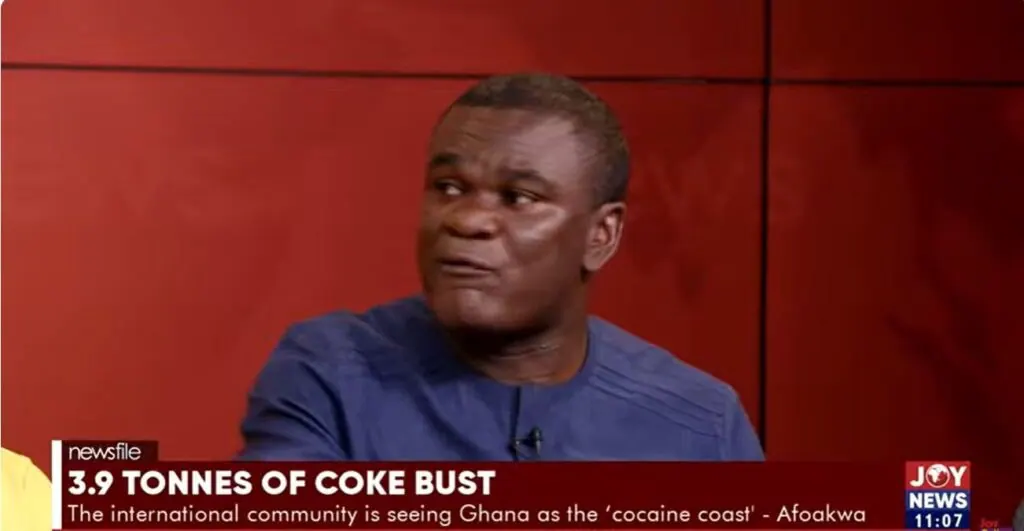
A recent Global Organised Crime Index report warns that Ghana's decreasing cocaine seizures could be masking a more concerning issue: political protection of illicit markets. According to the report, law enforcement officials and civil society stakeholders believe the drop in visible cocaine trafficking is not a sign of success, but rather a symptom of protection extended to illicit markets by sections of the government. This has raised concerns about the effectiveness of Ghana's anti-narcotics efforts.
The report states that Brazil remains the primary source country for cocaine arriving in Ghana by sea, often concealed in sugar containers and routed through trans-shipment points such as Spain or Turkey before reaching Ghana's ports, principally Tema and Takoradi. Ghanaian organised crime groups have grown into significant players in the global cocaine trade, actively shaping trafficking networks that stretch from South America into West Africa and beyond.
The index also reveals a parallel heroin pipeline running through Ghana, with the drug originating mostly from Afghanistan. Seizures of both inbound and outbound shipments suggest that the heroin is typically imported by East African nationals, part of which is consumed domestically, while the bulk is repackaged and exported to the United States by Ghanaian nationals. Corrupt officials are allegedly involved in facilitating the movement of heroin through the country's seaports and airports.
The report alleges that heroin distribution and consumption, once concentrated in Accra and Tema, has spread into rural communities in northern Ghana, widening the public health and security footprint of the trade. This development raises concerns about the integrity of Ghana's drug interdiction infrastructure and the potential for compromised anti-narcotics agencies.
For ordinary Ghanaians, the implications go beyond headline-grabbing seizure statistics. If political protection is indeed shielding trafficking networks, it suggests that the country's formal anti-narcotics apparatus may be compromised from within. This has consequences for public trust in institutions meant to protect communities from the social harms of drug trafficking.
The index's findings have sparked concerns among lawmakers, with NPP MPs pushing for a parliamentary probe into Ghana-linked drug seizures. This move reflects unease within Parliament over the frequency and scale of narcotics cases tied to the country, even as official seizure numbers have fallen. The story has also taken on a religious and political dimension, with Pastor Kofi Oduro warning the NDC over the Hartog drug case.
The Global Organised Crime Index does not name specific officials, agencies, or political figures allegedly involved in protecting trafficking networks. No official Ghanaian government response to the index's allegations of political protection or corrupt facilitation of heroin trafficking has been reported. The push for a parliamentary probe suggests that lawmakers may seek further scrutiny, though no date for such a probe has been confirmed.
Key points
- The report alleges that political protection is shielding Ghana's cocaine trade from view.
- Ghanaian organised crime groups are actively shaping trafficking networks that stretch from South America into West Africa and beyond.
- Heroin distribution and consumption have spread into rural communities in northern Ghana.