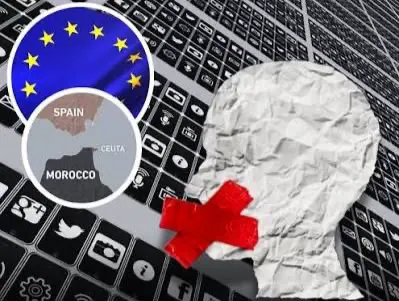
A recent report by the Spanish fact-checking websites Newtral and Maldita.es has revealed that numerous false reports, images, and videos circulated online following the mass entry of migrants into Ceuta on July 30 and 31. The incident was marked by a large influx of migrants, which led to widespread misinformation. Many of these false reports attempted to link the events to alleged Moroccan involvement.
The report highlighted several instances of misinformation, including a video from Turkey and another from Murcia, which were presented as evidence of Moroccan involvement. Images from the Moroccan cities of Kenitra and Nador were also mislabeled as being related to the Ceuta incident. Furthermore, artificially generated images were spread online, purporting to show events related to the mass entry of migrants.
One of the most alarming false reports claimed that 68 Moroccan girls, aged between 10 and 14, were forcibly taken from an orphanage and transported to Ceuta by the Moroccan military. This story was widely reported in Spanish media, including on television programs. However, an investigation by EFE Verifica found no evidence to support this claim.
The original source of the story was a resident of Ceuta, who claimed to have been informed about the alleged incident by an unnamed employee. However, no direct testimony from the girls or concrete evidence was provided to support the claim. This example illustrates how quickly misinformation can spread and become entrenched as "facts."
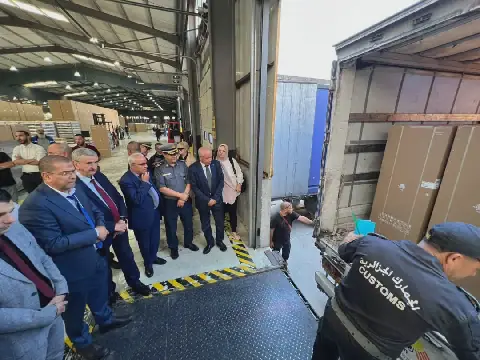
Another instance of misinformation involved a video showing Moroccan security forces handling food items in Marrakech, which was presented as evidence of preparations for migrant feeding centers. However, further investigation revealed that the operation was actually related to the fight against spoiled food.
Videos of trucks transporting young men from northern Morocco were also mislabeled as evidence of Moroccan authorities directing migrants to Ceuta. However, fact-checking efforts failed to verify these claims. A video of a truck, which was presented as evidence of migrant transportation to Ceuta, was actually shown to be traveling in the opposite direction, carrying migrants returning from Ceuta.
The spread of misinformation surrounding the Ceuta incident highlights the challenges of verifying information in the digital age. While it is essential to investigate possible Moroccan involvement, it is crucial to rely on concrete evidence, documents, and direct testimony rather than unverified reports and images.
Key points
- The incident highlights the need for fact-checking and verification in the face of widespread misinformation.
- False reports and images spread rapidly online, often with little basis in fact.
- The spread of misinformation can have serious consequences, including damaging international relations and fueling public misconceptions.