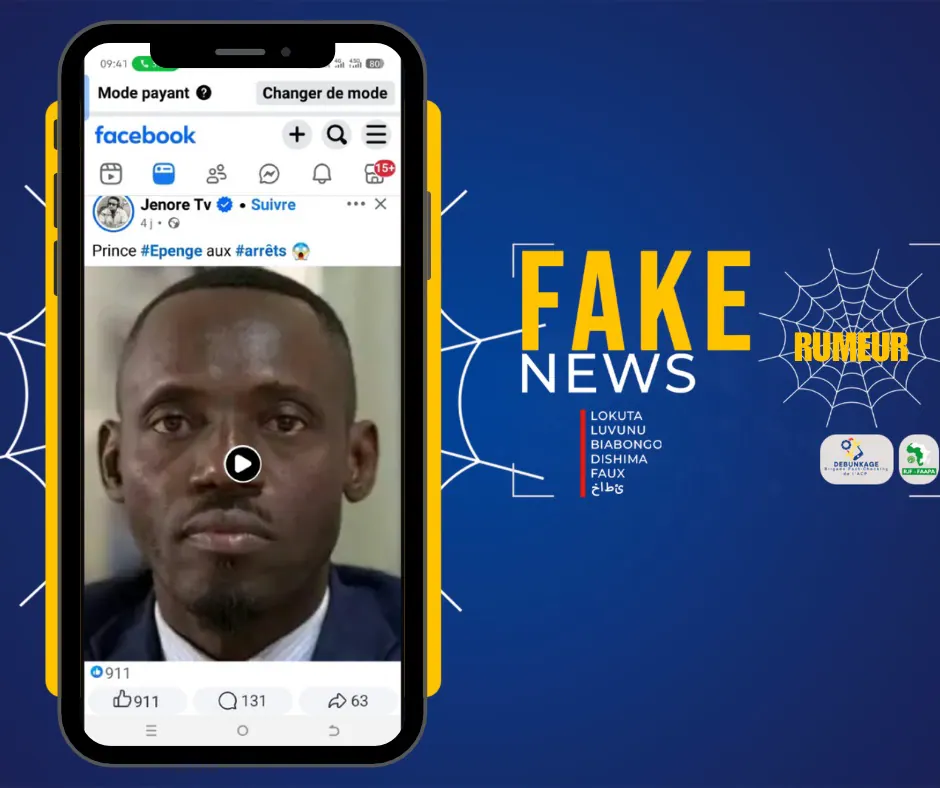
A recent social media post circulating in the Democratic Republic of the Congo has sparked concern among followers and fans of Prince Epenge, the national president of the Action for Democracy and Development in Congo (ADD Congo) party and spokesperson for the Lamuka coalition. The post, which originated from a Facebook account named "Jenore TV", falsely claimed that Epenge had been arrested. The post garnered significant attention, with 911 likes, 131 comments, and 63 shares.
The Congolese Press Agency's fact-checking service, ACP_Debunkage, quickly moved to verify the claim. Upon contacting Prince Epenge, he denied the allegations, stating that he was not under arrest and had no idea why such rumors would be spread. Epenge expressed his nonchalance towards such speculations, emphasizing that he does not engage with rumors or unverified information.
The origin of the rumor is unclear, but it is attributed to "Jenore TV", a Facebook account that appears to be spreading misinformation. The rapid spread of such false news highlights the challenges faced in combating fake news, especially on digital platforms. This incident underscores the importance of verifying information through official channels before sharing.
In response to the proliferation of fake news, the Congolese Press Agency has urged the public to exercise caution and verify information through reputable sources before dissemination. The agency continues to play a critical role in debunking false information, thereby contributing to a more informed public discourse.
Prince Epenge's denial of his arrest comes at a time when the Democratic Republic of the Congo is experiencing heightened political tensions. As a prominent opposition figure, Epenge's activities and statements are closely monitored by both his supporters and the government. The spread of false information about his arrest could potentially destabilize the political climate further.
The incident highlights the critical need for media literacy and critical thinking among social media users. With the ease of sharing information online, false news can spread rapidly, causing unnecessary panic and confusion. Efforts by fact-checking agencies and responsible media outlets are crucial in mitigating the impact of such misinformation.
In conclusion, the claim that Prince Epenge is under arrest is false. The Congolese Press Agency's fact-checking service has confirmed that Epenge is at large and continues to be active in his political endeavors. The public is reminded to verify information through credible sources to avoid spreading false news.
Key points
- The claim that Prince Epenge has been arrested is false.
- The rumor originated from a Facebook account named "Jenore TV".
- The incident highlights the importance of verifying information through official channels to combat the spread of fake news.