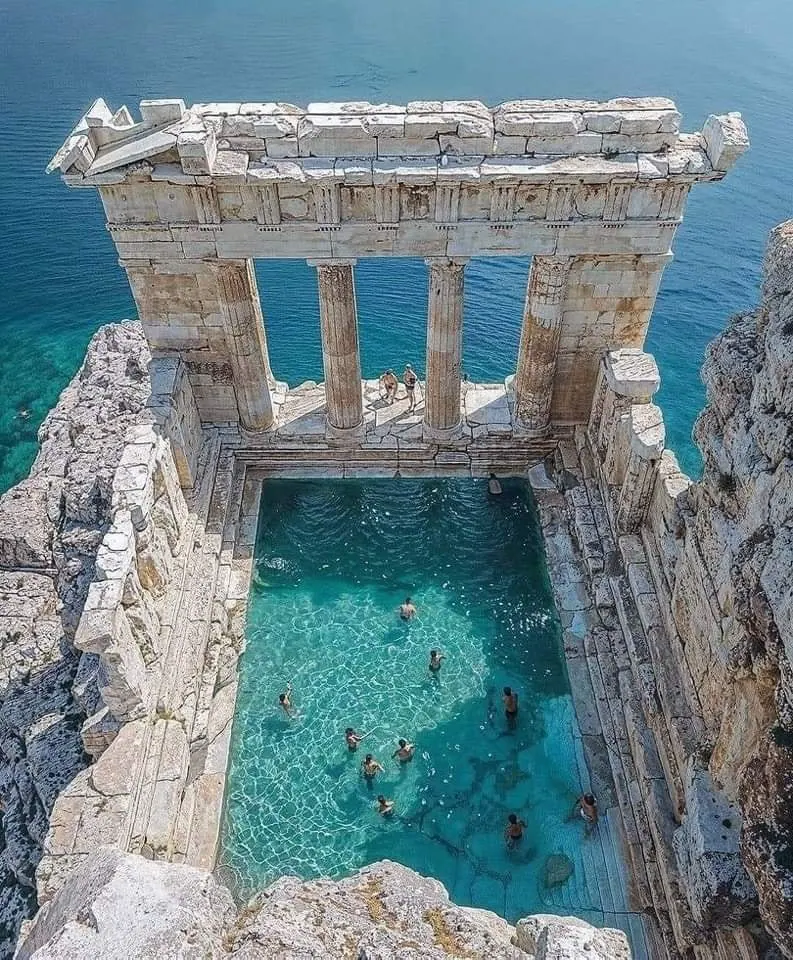
A Facebook post published on August 31, 2024, at 6:31 PM Libya time, claims to show one of Libya's most beautiful tourist landmarks. The post, which garnered around 850 interactions and 54 comments by September 7, 2024, features a photo that it suggests is of a historic site in Labdah. The post expresses admiration for the alleged Libyan landmark, using hashtags that translate to "#Libya's ancient Lebdah #Western Libya's charm."
The claim was further investigated by Annir, a fact-checking organization, after it was found to be circulating on multiple social media platforms. Annir conducted a thorough examination of the image and its origins. The investigation involved a reverse image search on Google, which revealed that the photo was first published on August 4, 2024, on a platform called "X," known for sharing manipulated or AI-generated images.
Upon closer inspection, several anomalies in the image suggest it is not a genuine photograph of a Libyan landmark. Visible distortions include incomplete limbs of people in the water feature, asymmetrical columns in the building's facade, and a general blurriness in the background sea waves. These inconsistencies indicate that the image has been digitally altered or generated.
Libya does have a natural water basin in the city of Susah, located in the Green Mountains in the east of the country. One of Susah's notable landmarks is its port or "Opolonia basin," locally known as "Al-Qolibah." However, the image in question does not match known photographs of these real locations.
Based on the evidence, Annir concluded that the claim is false and that the image is indeed AI-generated. This conclusion was reached after verifying the image's source and identifying clear signs of digital manipulation. The organization specializes in debunking misleading claims circulating on social media.
The incident highlights the growing challenge of identifying genuine images and information online, particularly with the advancement of AI technology. It underscores the importance of fact-checking and verifying information before sharing to prevent the spread of misinformation.
Annir's findings were part of a broader effort to combat fake news and ensure the accuracy of information shared online. The organization continues to monitor social media platforms for misleading claims and works to educate the public about the importance of verifying information.
Key points
- The image in question was first published on August 4, 2024, on a platform known for sharing manipulated or AI-generated images.
- The image shows clear signs of digital manipulation, including distorted features and asymmetrical elements.
- Libya's real landmarks, such as the natural water basin in Susah, do not match the AI-generated image.