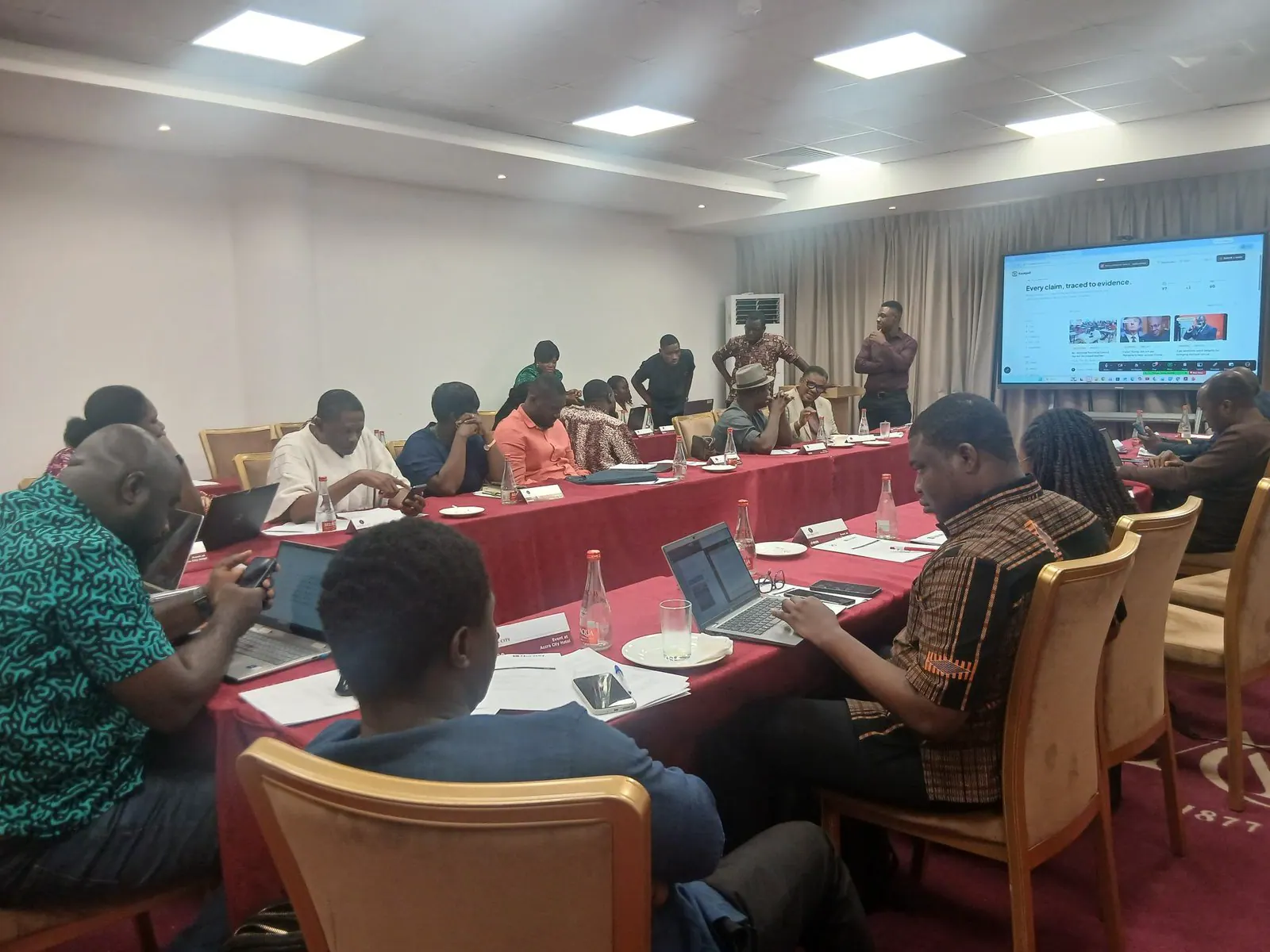
A recent study by Penplusbytes has highlighted a significant gap between the languages Ghanaians use to consume information and the languages in which verification and AI-based fact-checking tools operate. The nationwide study surveyed 469 respondents using a 68-question questionnaire administered face-to-face across the country. Its findings were presented and validated at a workshop in Accra attended by stakeholders from media, technology, academia, and civil society. The study's lead researcher, Kwami Ahiagbene, emphasized that technology alone is not enough to tackle disinformation, and that language must be prioritized.
The study found that 91% of respondents communicate in local languages daily, while 71% said information presented in local languages feels more credible to them. However, more than 55% admitted to having shared false or misleading content at some point, and many respondents said they remain reluctant or unable to verify information even when they suspect it might be false. According to the study, this verification gap is not simply a matter of digital illiteracy but reflects a structural mismatch between Ghanaians' linguistic identity, how they consume information, and the verification systems currently available to them.
The research also found that 67% of respondents either do not know or are uncertain how AI can help detect misinformation and disinformation. While about 70% of respondents consider AI-based detection tools useful, only 22.2% said they actually use AI for fact-checking. Separately, 57% said they are able to identify AI-generated content on their own. The study flagged health, religion, and politics as the topics most associated with disinformation narratives in Ghana.
The study noted the growing role of TikTok as a source of news for many Ghanaians, and Ahiagbene warned that the rise of short-form content poses an added challenge, as such formats often lack the context audiences need to properly assess claims. With the vast majority of Ghanaians consuming news in local languages rather than English, the study suggests that most existing verification tools are simply not built to serve them.
This leaves a large share of the population without accessible ways to check claims circulating on WhatsApp, radio, TikTok, and other platforms in languages such as Twi, Ewe, Ga, Dagbani, and others, particularly on sensitive topics like health and politics where false information can carry real consequences. The study recommends investment in local-language AI models, speech-to-text systems, and verification mechanisms designed with communities rather than imposed on them.
The study also calls for expanded AI literacy efforts focused on practical uses of AI in verification, fact-checking, and digital safety, along with pressure on media organizations and fact-checking bodies to broaden their local-language programming. Technology companies were urged to improve access to platform data and support the responsible development of AI tools suited to Ghana's linguistic diversity. Ahiagbene cautioned that AI should support rather than replace human judgment in verification.
Penplusbytes has called for sustained collaboration among researchers, policymakers, media houses, technology companies, civil society groups, and communities to build responses tailored to Ghana's disinformation landscape. However, no specific program, funding commitment, or date for rollout has been announced. The study's findings and recommendations were reported by the Ghana News Agency (gna.org.gh).
Key points
- Most fact-checking and AI verification tools operate in English, leaving Ghanaians who consume news in local languages more vulnerable to disinformation.
- The study recommends investment in local-language AI models, speech-to-text systems, and verification mechanisms designed with communities rather than imposed on them.
- 91% of respondents communicate in local languages daily, while 71% said information presented in local languages feels more credible to them.