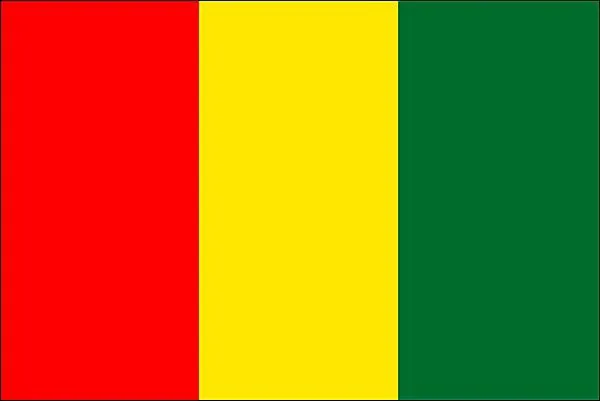
Guinea commemorates its independence with great fervor, symbolized by its national colors - red, yellow, and green. These colors were not chosen randomly, but rather they represent significant aspects of the country's history and identity. Red signifies the blood shed during the struggle for freedom, while yellow represents the sun and the country's rich mineral resources, including gold, diamonds, bauxite, and iron. Green embodies the lush vegetation and natural resources found in the southern forests and northern savannas.
The red in Guinea's national colors serves as a reminder of the country's commitment to the liberation of colonized peoples worldwide. Guinea has made significant sacrifices, with hundreds of its sons and daughters contributing to the fight for independence in various countries across Africa and beyond. The country's efforts have been instrumental in helping nations such as Guinea-Bissau, Angola, and Mozambique gain their sovereignty. This unwavering dedication to the cause of freedom has earned Guinea a reputation as a champion of liberation.
Guinea's mineral resources, including gold, diamonds, bauxite, and iron, constitute an invaluable patrimony that has been bestowed upon the nation. These resources are scattered throughout the country, making Guinea a geological wonder. The diverse distribution of these resources has the potential to improve the well-being of the Guinean population. Furthermore, the country's rich mineral deposits have the capacity to drive economic growth and development.
In addition to its mineral wealth, Guinea is also endowed with vast forest reserves and a rich biodiversity. These natural resources have both economic and environmental significance, providing a solid foundation for sustainable development. The UNESCO-classified biosphere reserve in the Nimba Mountains is another valuable asset that can be leveraged to boost Guinea's tourism industry. By preserving and harnessing these resources, Guinea can create new opportunities for economic growth and environmental conservation.
The red, yellow, and green colors of Guinea's national flag are also found in the flags of other African nations, including Ethiopia, which was the first African country to gain independence. These pan-African colors have become a symbol of unity and emancipation for the African continent. The shared colors serve as a reminder of the common struggles and aspirations of African nations, as well as their collective commitment to freedom and self-determination.
As Guinea celebrates its independence, it is reminded of the significance of its national colors and the values they represent. The country's history, rich natural resources, and commitment to liberation are all reflected in its flag. By embracing its heritage and honoring its past, Guinea can continue to build a brighter future for its people. The nation's independence serves as a testament to the power of resilience and determination in the face of adversity.
On this momentous occasion, Guineans reflect on their country's journey towards independence and the role it has played in shaping the destiny of Africa. As the nation looks to the future, it is poised to build on its strengths, harness its resources, and continue its pursuit of progress and prosperity. With its rich history, diverse culture, and resilient people, Guinea is well-equipped to face the challenges of the future and emerge as a beacon of hope for generations to come.
Key points
- The Guinean national colors - red, yellow, and green - symbolize the country's struggle for freedom, rich mineral resources, and lush vegetation.
- Guinea has made significant contributions to the liberation of colonized peoples worldwide, with many of its citizens sacrificing their lives for the cause of freedom.
- The country's rich natural resources, including mineral deposits and forest reserves, provide a solid foundation for sustainable development and economic growth.