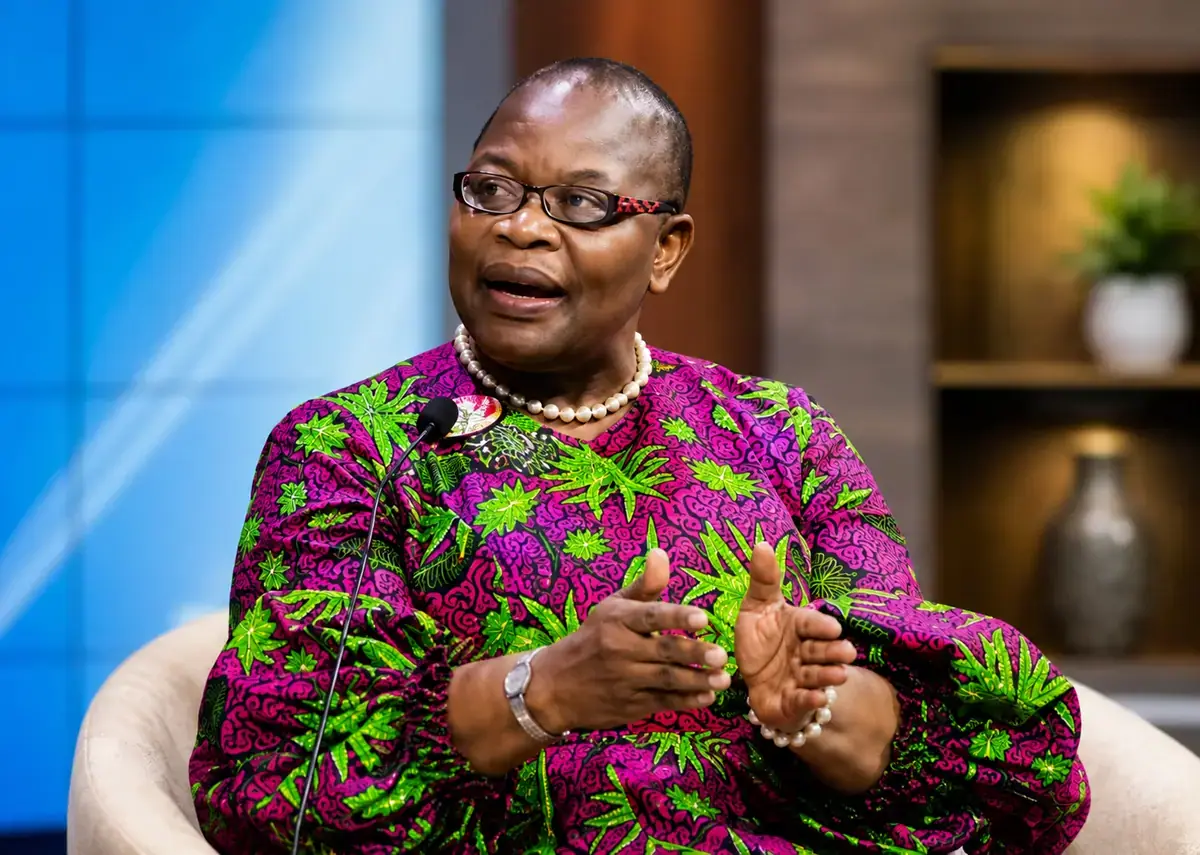
Former Minister of Education, Dr. Obiageli Ezekwesili, has expressed concerns that Nigeria cannot conduct a credible 2027 election under the leadership of the Independent National Electoral Commission (INEC), led by Prof. Joash Amupitan. Ezekwesili's comments come in the wake of allegations of corruption involving the voter register through the use of artificial intelligence. According to INEC's Director of Information and Communication Technology, Dr. Lawrence Bayode, INEC registration officers used their official login credentials to inject AI-generated photographs, duplicate records, and other fabricated entries into the preliminary register of voters.
The alleged corruption was found across many states, and INEC has admitted that it knows who was responsible and how it was done. Ezekwesili described the situation as sabotage from within the institution, stating that the people paid to protect the list of citizens manufactured phantom citizens. With the 2027 general elections just months away, Ezekwesili emphasized that the foundational document of those elections has been compromised. She stressed that the register of voters belongs to the citizens of Nigeria and not to INEC or the Federal Government.
Ezekwesili argued that INEC cannot investigate itself, adding that no institution that has confessed to corrupting a national asset can then ask the nation to trust it alone to repair the damage. She emphasized that it is a basic principle of accountability that the accused does not sit as judge. Ezekwesili also criticized INEC's response to the allegations, stating that the commission's statement on October 27 did not provide any cause for the corruption, and it was not until three days later that its Director of ICT provided more information.
Ezekwesili expressed concerns that INEC's defence that the register was only preliminary offered no comfort, as the final register would be certified from it. She warned that if the preliminary register is poisoned and the investigation is conducted in secret by the poisoned institution, then the certified register will carry the poison into polling day. Ezekwesili also recalled that INEC's conduct of the 2023 elections collapsed public trust among most Nigerians who were told then to trust the institution.
To restore credibility to the voter register ahead of the 2027 elections, Ezekwesili called for the immediate constitution of a caretaker rescue team comprising independent citizens, eminent non-partisan Nigerians, and technical experts. She emphasized that this team should take custody of the voter register clean-up and oversee the conduct of the 2027 elections at every stage. Ezekwesili argued that this is not a radical demand, but rather a proportionate one, citing the example of a bank's staff being found to have forged its ledger.
Ezekwesili's proposal has been echoed by some Nigerians who are calling for a thorough investigation into the allegations of corruption. The situation has also raised concerns about the use of technology in the electoral process and the need for greater transparency and accountability. As the 2027 elections approach, it remains to be seen how INEC will respond to the allegations and whether the commission will take steps to restore public trust.
The allegations of corruption have also raised concerns about the potential impact on the credibility of the electoral process. Ezekwesili emphasized that citizens are being told again to trust INEC in the face of colossal corruption of the voter register, but trust is not restored by the repetition of the word; it is restored by the removal of the substantial conflict of interest of allowing INEC to carry on with 'cleaning up' the massively corrupted voters register.
Key points
- Dr. Obiageli Ezekwesili calls for a caretaker rescue team to restore credibility to the voter register ahead of the 2027 elections.
- INEC has admitted to the corruption of the voter register, with AI-generated photographs and duplicate records found across many states.
- Ezekwesili argues that INEC cannot investigate itself and that the commission's response to the allegations has been inadequate.