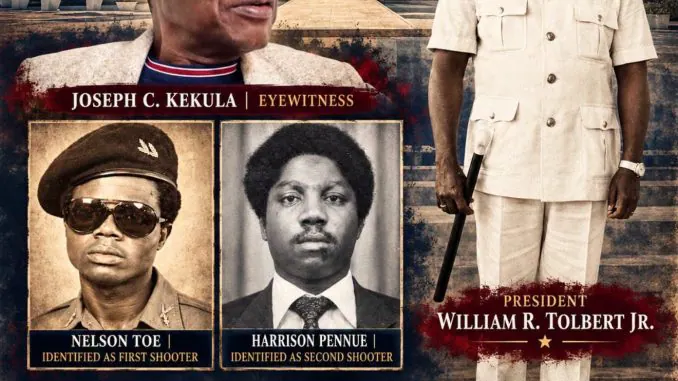
Joseph C. Kekula, a former member of President William R. Tolbert Jr.'s Special Security Service, recently shared his personal experiences of the morning of Liberia's coup d'état in 1980. Kekula's account provides a unique perspective from inside the Executive Mansion, shedding new light on the events of April 12, 1980. He recalled receiving a warning about a coup shortly before the attack, but Tolbert dismissed it, believing his soldiers would not harm him. Kekula's brother had warned him not to attend work that day, but he fulfilled his duty to protect the president.
Kekula was on communications duty when gunfire erupted, and he witnessed armed soldiers taking security officers captive via the mansion's surveillance system. He later saw a long-time bodyguard being shot and described the chilling atmosphere as Tolbert's children were brought into a hallway. When soldiers stormed Tolbert's private quarters, Kekula reported the president appeared dressed in white and carrying a cane. The armed men were members of the Armed Forces of Liberia, challenging the longstanding belief that "white men" were responsible for Tolbert's assassination.
In the moments that followed, Tolbert was fatally shot by the soldiers, who celebrated their success with the words "Mission accomplished." Kekula helped transport some injured soldiers away from the scene, eventually managing to escape himself. His account does not mention Samuel K. Doe, who later became chairman of the People's Redemption Council. The aftermath of the coup saw many involved face violent ends, including Nelson Toe and Harrison Pennue.
Kekula's testimony directly disputes the myth of foreign involvement and highlights the stark reality of internal conflict within Liberia. He expressed remorse for not heeding his brother's warning, and despite years passing, the pain of witnessing Tolbert's assassination remains vivid. Kekula survived the turmoil and later headed the Liberia National Police in the post-war period.
The events of April 12, 1980, marked a significant turning point in Liberia's history, leading to a period of instability and violence. Kekula's account provides a valuable insight into the events leading up to and during the coup, and serves as a reminder of the human cost of conflict. The impact of the coup was felt for years to come, with many individuals facing violent ends.
Kekula's story serves as a testament to the bravery and resilience of those who witnessed the events of that fateful morning. His decision to share his account years later provides a unique perspective on a pivotal moment in Liberian history. The story also highlights the importance of preserving historical records and sharing personal experiences to gain a deeper understanding of the past.
The significance of Kekula's testimony cannot be overstated, as it provides a firsthand account of a pivotal moment in Liberian history. His story serves as a reminder of the importance of understanding the complexities of conflict and the human cost of violence. By sharing his experiences, Kekula has contributed to a greater understanding of Liberia's past and its ongoing impact on the country today.
Key points
- Joseph C. Kekula's eyewitness account disputes the myth of foreign involvement in President William Tolbert's assassination.
- Kekula's testimony provides a unique perspective on the events leading up to and during the 1980 coup d'état.
- The aftermath of the coup saw many individuals face violent ends, including those involved in the coup itself.