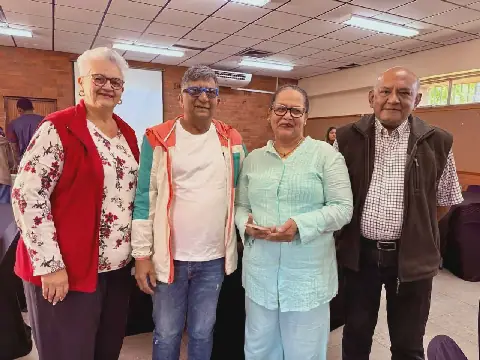
Dr. Gladys Fordjour, a Consultant Ophthalmologist and Cornea Surgeon, has emphasized the need to integrate eye health into universal health coverage and national development programmes in Ghana. She made this call at the launch of the 2026 World Sight Day celebration, organised by the Maamobi General Hospital in Accra. The theme of the celebration was “Love Your Eyes at Work.” Dr. Fordjour stressed that eye health is not a luxury but an essential component of public health, education, occupational safety, productivity, and sustainable development.
Dr. Fordjour highlighted that protecting sight requires collective efforts from various stakeholders, including government, health institutions, schools, employers, communities, traditional and religious leaders, development partners, and the private sector. She emphasized the need to move beyond hospital-based services and extend preventive and essential eye care to communities, schools, workplaces, markets, churches, and homes. According to Dr. Fordjour, good vision is fundamental to children’s learning and development, and uncorrected refractive errors can affect academic performance.
Dr. Fordjour, representing the Ophthalmological Society of Ghana, called for stronger collaboration between the health and education sectors. She suggested regular vision screening in schools, timely provision of spectacles, and effective referral systems for children requiring further assessment and treatment. Dr. Fordjour emphasized that no child should be disadvantaged in school due to uncorrected visual impairment. She also highlighted the importance of good vision to workplace safety, productivity, and livelihoods.
Dr. Fordjour urged employers to support regular eye screening, injury prevention, and access to appropriate eye care. She also emphasized the need to address barriers to eye care, including the cost of spectacles, medicines, surgery, and follow-up treatment, particularly for vulnerable communities. According to Dr. Fordjour, Ghana must make eye care accessible and affordable for all.
Dr. Abdul Razak Quao, Medical Superintendent of the Maamobi General Hospital, also spoke at the event. He emphasized the need for eye health interventions to target Ghana’s large informal sector, where workers often lack access to routine screening and workplace health programmes. Dr. Quao cited market women, commercial drivers, welders, mechanics, carpenters, hairdressers, and barbers as groups whose livelihoods depend heavily on good vision.
Dr. Quao urged workers, particularly those exposed to eye injuries, to use appropriate personal protective equipment, such as protective goggles. He also cautioned the public against using unprescribed substances or inappropriate eye drops. Additionally, Dr. Quao advised people who spend long hours on phones and computers to practise the 20-20-20 rule by looking at an object about 20 feet away for 20 seconds after every 20 minutes of screen use.
Dr. Edem Lodoh, Municipal Director of Health Service, Ayawaso North, representing the Regional Health Director, commended stakeholders for supporting the celebration and community eye screening activities. She urged the public to prioritize eye health by undertaking regular eye examinations and seeking early treatment when necessary. Dr. Lodoh also reaffirmed the Directorate’s commitment to integrating eye health into public health interventions.
Key points
- Dr. Gladys Fordjour calls for integration of eye health into universal health coverage to reduce avoidable vision loss in Ghana.
- Eye health is essential for public health, education, occupational safety, productivity, and sustainable development.
- Collective efforts are required to protect sight and make eye care accessible and affordable for all.