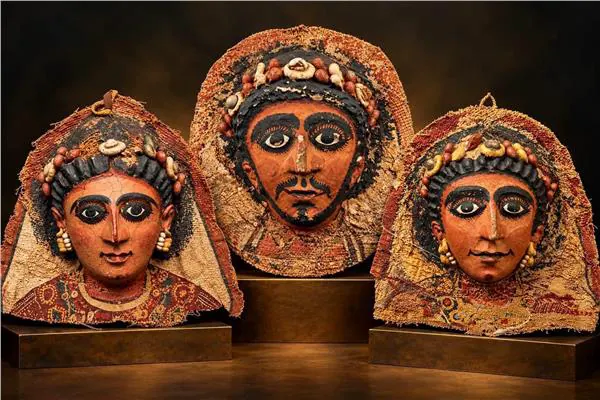
Cartonnage masks were a crucial part of ancient Egyptian burial practices, serving as more than just a decorative element for mummies. These masks were designed to replicate the deceased person's features, ensuring their identity and individuality in the afterlife. This practice was rooted in the Egyptian belief in the continuation of life after death. The use of cartonnage masks dates back to the First Intermediate Period and continued through various historical periods, including the Roman era.
The production of cartonnage masks involved layering linen or papyrus, which was then bound with adhesive materials such as plaster or resin. Once prepared, the surface was painted and decorated with vibrant colors and various ornaments. Some masks were further embellished with gilding or inlays of precious materials, giving them a striking appearance that combined beauty with symbolic value. This painstaking process transformed simple layers of material into a lifelike face that would accompany the deceased on their journey to the afterlife.
The significance of cartonnage masks extends beyond their artistic value, as they also serve as important historical documents for studying ancient materials and texts. Research has revealed that some cartonnage masks were made using recycled papyri and texts, which provides valuable insights into the history of writing and the materials used in ancient Egypt. This dual role of cartonnage masks – as both artistic pieces and historical documents – underscores their importance in understanding ancient Egyptian culture.
The Egyptian Museum in Cairo houses a collection of cartonnage masks, including three notable examples from the Roman era, depicting a man and two women. Discovered in the Saqqara archaeological site, these masks exemplify the artistic techniques used during this period and reflect the transformations in funerary arts that occurred during the Greek and Roman periods in Egypt. These masks represent a unique intersection of traditional Egyptian practices and new artistic developments.
Cartonnage masks offer a glimpse into the ancient Egyptian perception of death, which was not seen as the end of existence but as a transition to another stage of life. The face depicted on the mask, along with the materials and decorations used, reveals a complex interplay of faith, art, and identity. These masks demonstrate the advanced capabilities of Egyptian funerary arts in preserving the deceased person's identity and accompanying them on their journey to the afterlife.
The evolution of cartonnage masks is closely tied to the development of other funerary practices, such as the use of anthropomorphic coffins. As Egyptian art and burial customs progressed, cartonnage masks became increasingly sophisticated, incorporating a range of artistic and symbolic elements. This progression underscores the resourcefulness and creativity of ancient Egyptian artisans in addressing the spiritual needs of the deceased.
The study of cartonnage masks continues to provide valuable insights into ancient Egyptian civilization, shedding light on their beliefs, artistic techniques, and cultural practices. As a testament to the ingenuity and artistry of ancient Egyptians, these masks remain an essential part of Egypt's rich cultural heritage, offering a fascinating glimpse into the country's storied past.
Key points
- Cartonnage masks were used in ancient Egyptian burial practices to replicate the deceased person's features, ensuring their identity in the afterlife.
- The production of cartonnage masks involved layering linen or papyrus and decorating them with vibrant colors and ornaments.
- Cartonnage masks serve as important historical documents for studying ancient materials and texts, providing insights into the history of writing and materials used in ancient Egypt.