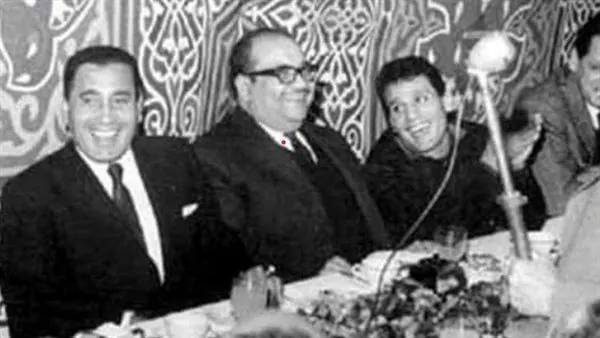
Egyptian journalist Mohamed Hassanein Heikal, born on September 23, 1923, led a life that went beyond his role as a journalist. Heikal's interactions with famous Egyptian artists reveal a unique side of his personality. His first encounter with the artistic world was in 1943 when he interviewed Naguib El-Rihani, a comedy legend, and actress Mimi Shakib. Heikal was initially intimidated by Shakib but went on to develop a deep appreciation for the arts.
Heikal's relationship with legendary singer Umm Kulthum exemplifies his connection with Egyptian artists. Their bond began when President Gamal Abdel Nasser introduced them, as Nasser was a huge fan of Umm Kulthum's music. Heikal and Umm Kulthum's relationship evolved into a close friendship, with Heikal even hosting her on his radio show in 1955. Their discussions covered topics such as the Non-Aligned Movement and the Arab League.
Heikal also had a close relationship with singer Abdel Halim Hafez. Hafez looked up to Heikal as a mentor and often sought his advice. Heikal's office at "Akhir Sa'a" magazine was the setting for a pivotal meeting between Hafez and writer Gillel El-Bandari. This encounter, facilitated by Heikal, led to a lasting friendship and Heikal's journalistic writing indirectly influencing Hafez's music.
Heikal was not afraid to express his opinions on the arts, even if it meant criticizing prominent figures. He wrote an article in "Akhbar Al-Yawm" criticizing the promotion of singer Kamal Hosny, warning against attempts to undermine the genuine artistic experience of Hafez's music. This demonstrates Heikal's commitment to supporting talented artists and his willingness to speak out against what he saw as unjust.
Heikal's relationships with other notable Egyptian artists, such as poet Abdel Rahman El-Abnoudi and playwright Tawfiq El-Hakim, showcase his empathetic nature. Heikal saw El-Abnoudi as a poet who understood the struggles of the common man, while his friendship with El-Hakim was marked by periods of intense debate, particularly after El-Hakim's book "Oadat Al-Wai" was published in 1972.
Heikal's interactions with comedians and actors also reveal his appreciation for the arts. His friendship with actor Adel Imam began with a simple statement: "If you have a list of admirers, I'm at the top of it." Heikal attended the 1992 film screening of "Al-Irhab wa Al-Kabab," showcasing his admiration for Imam's work and the power of comedy to challenge authority.
Through his relationships with Egyptian artists, Heikal demonstrated his profound understanding of the country's cultural landscape. His legacy as a journalist and writer continues to inspire new generations, offering a unique perspective on Egypt's artistic and cultural heritage. Heikal's story serves as a testament to the enduring power of art to bring people together and transcend boundaries.
Key points
- Heikal's relationships with Egyptian artists reveal a unique side of his personality beyond his role as a journalist.
- Heikal's interactions with artists such as Umm Kulthum, Abdel Halim Hafez, and Adel Imam demonstrate his deep appreciation for the arts.
- Heikal's legacy continues to inspire new generations, offering a perspective on Egypt's artistic and cultural heritage.