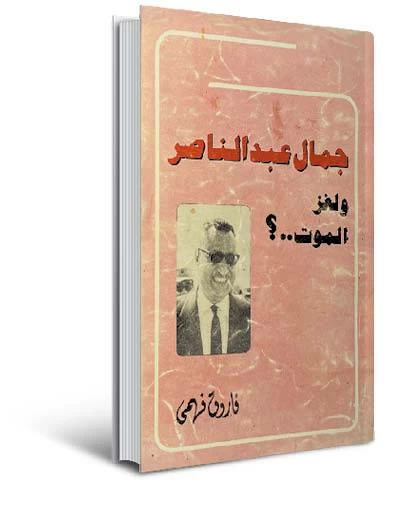
In commemoration of the anniversary of Gamal Abdel Nasser's passing on September 28, 1970, a book titled "Gamal Abdel Nasser and the Puzzle of Death" by Farouk Fahmy sheds light on a lesser-known aspect of the former Egyptian president's life. The book explores Nasser's alleged involvement in spirit sessions, which took place at his home in Abbasiya, Cairo. According to Fahmy, these sessions were not isolated incidents but rather a recurring practice that continued until shortly before Nasser's death.
The book's release coincides with a tumultuous period in Egyptian history, marked by a power struggle following Nasser's death. The new president, Anwar El-Sadat, faced opposition from prominent figures of the Nasser era, leading to a series of arrests in May 1971. Fahmy's account of Nasser's spirit sessions has sparked debate, with some sources close to the former president denying the allegations. Nasser's sons have stated that they never witnessed their father engaging in such activities, suggesting that the sessions may have been related to the planning of the Free Officers' Movement, which led to the overthrow of the monarchy.
The controversy surrounding Nasser's alleged involvement in spirit sessions gained momentum in April and May 1971, when prominent journalist Mohamed Hassanein Heikal published an article in Al-Ahram detailing the sessions. Heikal claimed that he had personally listened to recordings of the sessions, which featured prominent figures such as Sami Sharaf, Field Marshal Mohamed Fawzi, and Shaarawi Gomaa. The article sparked a heated debate, with some viewing the sessions as a genuine attempt to communicate with the dead, while others saw them as a manifestation of the power struggle within the Egyptian government.
Fahmy's book presents a nuanced portrayal of Nasser, one that diverges from the traditional narrative of the former president as a statesman and national leader. Instead, the book reveals a more human side of Nasser, marked by fears of death and a desire to understand the unknown. This portrayal is reinforced by accounts from other sources, including Ahmed Hamroush's book "The Society of Gamal Abdel Nasser," which describes similar sessions attended by members of the Free Officers' Movement.
Historians have approached these allegations with skepticism, citing a lack of concrete evidence to support the claims. Some have argued that the sessions may have been exaggerated or fabricated as part of the power struggle within the Egyptian government. Despite these reservations, Fahmy's book remains a significant contribution to the historical record, offering a fresh perspective on Nasser's life and legacy.
The book also explores the broader context of Nasser's death, which occurred at the age of 52 amidst a period of great turmoil in the Arab world. The circumstances surrounding his death have been the subject of much speculation and debate, with some sources suggesting that his health had been declining in the months leading up to his passing. Fahmy's account provides a nuanced understanding of the complex interplay between politics, history, and personal experience that defined Nasser's life and legacy.
Ultimately, "Gamal Abdel Nasser and the Puzzle of Death" is a thought-provoking book that challenges readers to reexamine their assumptions about one of Egypt's most iconic leaders. By exploring the complexities and contradictions of Nasser's life, Fahmy's book offers a rich and nuanced portrait of a man who continues to fascinate and inspire Egyptians to this day.
Key points
- The book "Gamal Abdel Nasser and the Puzzle of Death" explores Nasser's alleged involvement in spirit sessions and the mystery surrounding his death.
- The book presents a nuanced portrayal of Nasser, revealing a more human side of the former president marked by fears of death and a desire to understand the unknown.
- Historians have approached the allegations with skepticism, citing a lack of concrete evidence to support the claims.