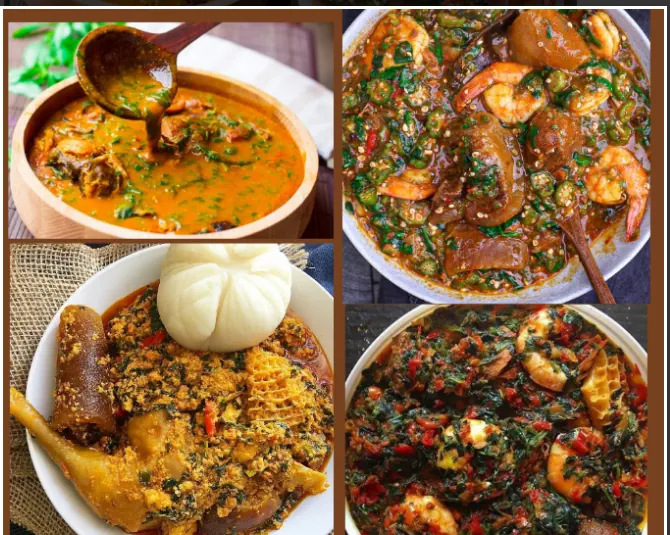
As Nigeria celebrates its 66th anniversary, its culinary landscape stands out as a testament to the nation's rich cultural diversity. Nigerian food does not have a single defining taste; instead, it encompasses a wide range of flavors, from the smoky and intensely savory to the spicy, earthy, rich, sweet, and fermented. This diversity is a result of the country's varied geography, agriculture, ethnicity, religion, and migration patterns. With no single Nigerian culinary tradition, the country's food has been shaped by the unique characteristics of its different regions.
Nigeria's geography, which spans from the dry savannah in the north to the humid forests and coastline in the south, has significantly influenced the crops communities have historically grown and the ingredients they have had access to. In the northern savannah, cereal cultivation, including millet and sorghum, has been prevalent, while the more humid southern regions have been associated with crops such as yam, plantain, and cassava. These differences eventually make their way into the flavor profiles of various Nigerian dishes. For instance, grains and cereals play a crucial role in many Northern Nigerian food traditions, while yam, cassava, plantain, and cocoyam feature prominently in southern cuisine.
The combination of ingredients and cooking techniques has been refined over generations, with communities developing their own ways of preparing traditional dishes. Recipes are passed down, and certain ingredients become associated with particular dishes, occasions, and memories. This is where geography begins to become culture, with Northern Nigerian food having its own culinary vocabulary, distinct from Yoruba, Igbo, and other regional cuisines. Even within each region and ethnic group, there are further differences between communities and families, highlighting the complexity of Nigerian food culture.
The movement of people, trade, and cultural exchange have also played a significant role in shaping Nigerian cuisine. As people migrate, they take their recipes with them, adapting to new ingredients and preferences. Suya, a popular street food widely associated with Hausa culinary traditions, has become a recognizable dish across Nigeria, with variations in spice blends, meat, and preparation appearing in different places. Jollof rice, another popular dish, belongs to a wider West African food tradition, with Nigerian jollof developing its own character and becoming closely associated with celebrations and home cooking.
Cities, particularly Lagos, have become melting pots for different culinary traditions. The city's food culture reflects the movement of people from across Nigeria, with various culinary traditions existing within walking distance of one another. A person can easily sample food from different parts of the country, from Northern snacks to suya and pepper soup, without finding the combination strange. Cities create their own kind of culinary exchange, with restaurants, markets, street vendors, and home kitchens becoming places where traditions meet, borrow from one another, and sometimes become something new.
The diversity of Nigerian cuisine is also reflected in its adaptability. Nigerians have always adapted food to circumstance, with younger cooks reinterpreting traditional dishes and restaurants giving familiar foods a modern twist. The recipe passed from a grandmother to a daughter, the food carried by someone who moved from Kano to Lagos, and the dish introduced to a new community through marriage all contribute to the evolution of Nigerian cuisine.
In essence, Nigerian cuisine is an umbrella for many culinary traditions, encompassing the grain cultivated in the North, the yam grown in the South, and the various ingredients that give different regions their distinctive tastes. It is the relationship between these ingredients, dishes, and traditions that defines Nigerian cuisine, making it a vibrant and dynamic reflection of the country's history, culture, and people.
Key points
- Nigerian cuisine is characterized by its diversity, with various flavors and ingredients reflecting the country's geography, culture, and history.
- The movement of people and cultural exchange have significantly influenced the development of Nigerian cuisine.
- Nigerian cuisine is adaptable, with traditions evolving over time through reinterpretation and innovation.