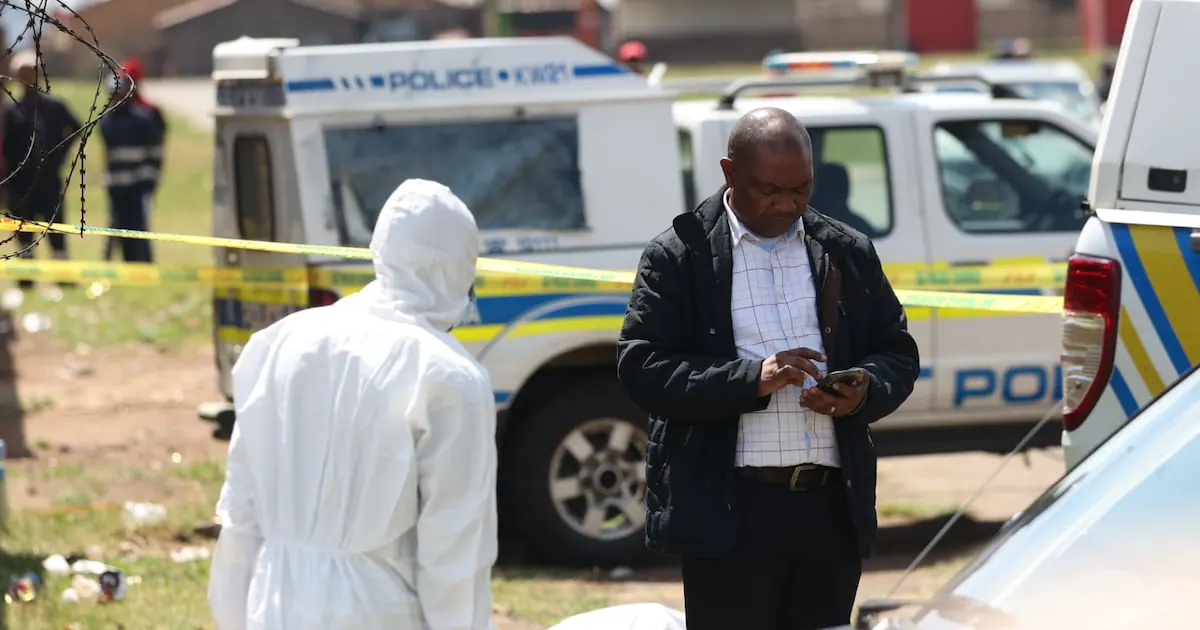
Police in South Africa have intensified investigations into the killing of nine women whose bodies were found in different locations in Ekurhuleni. The murders have sparked debate among investigators and criminologists over whether they can be linked to a single perpetrator. The bodies were discovered in various areas, including Brakpan, Boksburg, and Kempton Park. Criminologists have urged caution, stressing that only forensic evidence and established case linkage can confirm the presence of a serial killer.
Chris Craucamp, a seasoned private investigator, believes the pattern of killings suggests a mobile and calculating offender. He thinks the suspect may be driven by deep-seated trauma or a hatred of women and may be stalking victims before disposing of their bodies in remote locations. Craucamp's experience in solving the case of the Pretoria serial killer has informed his views on the Ekurhuleni murders. He notes that the suspect could be familiar with the area and deliberately chooses locations with limited visibility and CCTV coverage.
However, leading criminologists have called for caution before drawing conclusions. Prof Christiaan Bezuidenhout of the University of Pretoria stresses that only forensic evidence and established case linkage, such as DNA, can confirm the presence of a serial killer. Bezuidenhout notes that South Africa's high murder rate means multiple bodies discovered in close proximity are not unprecedented, though it is unusual. He emphasizes that investigators need sufficient evidence to establish whether the cases are connected before referring to a single offender or a serial killer.
Dr Gerard Labuschagne, former head of the South African Police Service Investigative Psychology Section, echoes calls for a focused police response. He argues that the similarities in victim profiles and geographic clustering justify treating the cases as potentially linked, at least until evidence proves otherwise. Labuschagne believes that even if the cases prove to be the work of separate offenders, they will get far more attention as part of a dedicated task team focusing on them.
Bezuidenhout notes that there are many bodies found in various locations across South Africa, including shallow graves, bushes, dams, and rivers. However, he acknowledges that the discovery of several women's bodies in relatively close proximity is a distinctive aspect requiring attention. Bezuidenhout emphasizes that investigators must establish whether the crimes share behavioural patterns, what the evidence reveals about the possible offender, and whether forensic evidence links the cases to the same person.
Craucamp suggests that the perpetrator may be killing women at another location before dumping their bodies in different areas. He also raises the possibility that the suspect may have stalked or followed potential victims before attacking them. Craucamp emphasizes that these are theories that require further investigation and cannot yet be confirmed by evidence. He has called for police stations across Ekurhuleni to improve communication and share information to identify possible links between cases with similar characteristics.
The investigation into the Ekurhuleni murders is ongoing, with police working to gather evidence and establish links between the cases. Labuschagne believes that the geographical proximity, timeframe, and similarities in the victims' profiles warrant the activation of the SAPS Policy on Serial Murder Investigation. The policy, approved by the minister of police in 2016, aims to provide a coordinated response to serial murder cases.
Key points
- Police in South Africa are investigating the killing of nine women in Ekurhuleni.
- Criminologists have urged caution, stressing that only forensic evidence can confirm the presence of a serial killer.
- Investigators are working to gather evidence and establish links between the cases.