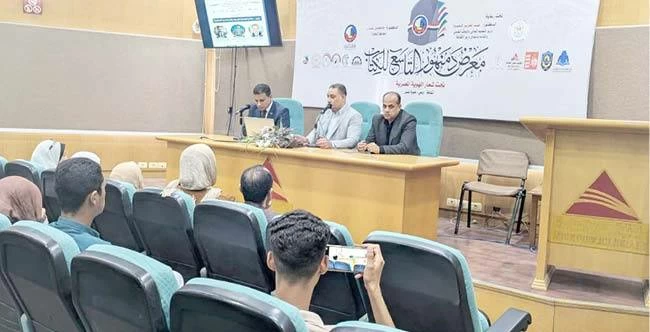
A panel discussion titled "Rosetta: The Key to Egyptian Civilization and the Treasure of Islamic Architecture" was held on the sidelines of the 9th Damanhour Book Fair. The event was organized in collaboration with the Egyptian General Book Authority, the Lake Manzala Antiquities Inspectorate, Damanhour University, and the Rashid Islamic Antiquities Area. Dr. Hamada Mansi Ashour, a professor of Egyptian antiquities at Damanhour University, emphasized the importance of the Rosetta Stone as a key archaeological discovery.
The Rosetta Stone, discovered in July 1799 by French officer Pierre Francois Bouchard, is a granodiorite stele inscribed with a royal decree issued in 196 BC. The stone, which weighs around 760 kilograms, features three lines of text in hieroglyphics, demotic script, and ancient Greek. This trilingual inscription enabled scholars to compare the texts and decipher the Egyptian language. Dr. Ashour highlighted that the stone's discovery and deciphering played a crucial role in establishing modern Egyptology.
The panel discussion also featured Ahmed Habala, director of the Rashid Antiquities Area, who reviewed the history of the city of Rashid and its development over the centuries. He pointed out that Rashid boasts a unique architectural heritage, including 22 historical houses, 11 mosques, and a number of Islamic monuments. The city's strategic location on the Mediterranean coast made it an important center for trade and culture.
Dr. Alaa Rajab al-Nahas, director of the Lake Manzala Antiquities Inspectorate, discussed the evolution of Egyptian legislation related to antiquities protection. He highlighted the efforts of the Egyptian state to combat antiquities trafficking and protect its cultural heritage. The laws and regulations have been updated over the years to address new challenges and ensure the preservation of Egypt's rich history.
The discussion also touched on the importance of preserving the architectural character of Rashid and transforming it into an open-air museum of Islamic architecture. The city's historic buildings and monuments are a testament to its rich history, and efforts are being made to promote its cultural significance and protect its heritage.
The panelists emphasized the need for a comprehensive approach to protect Egypt's cultural heritage, including the preservation of its architectural treasures and the prevention of antiquities trafficking. They also highlighted the importance of raising awareness about the significance of Egypt's history and culture among the public and future generations.
The event concluded with a call to action to promote the preservation of Egypt's cultural heritage and to support efforts to protect its historical treasures. The discussion highlighted the importance of collaboration between experts, authorities, and the public to ensure the safeguarding of Egypt's rich history and cultural identity.
Key points
- The Rosetta Stone played a crucial role in deciphering the Egyptian language and establishing modern Egyptology.
- The city of Rashid boasts a unique architectural heritage, including 22 historical houses and 11 mosques.
- Egyptian legislation related to antiquities protection has evolved over the years to address new challenges and ensure the preservation of Egypt's cultural heritage.