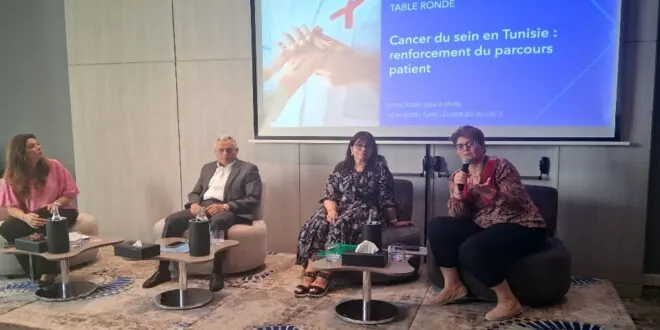
The first edition of the Roche Health Dialogue Series was held in Tunisia, focusing on breast cancer awareness and care. The event brought together specialists in oncology and medical imaging to discuss the current state of breast cancer in Tunisia. They emphasized the importance of early detection and the role of technology and associations in supporting patients throughout their treatment journey. This initiative coincides with Breast Cancer Awareness Month.
According to Dr. Henda Rais, head of the Oncology Department at the Salah Azouz Institute, breast cancer is the most common cancer among women in Tunisia and worldwide, accounting for approximately 30% of all female cancer cases. More than 4,000 new cases are registered annually in Tunisia, with expectations of an increase by 2030. Factors contributing to this rise include increased life expectancy, genetic mutations, changes in lifestyle, reduced physical activity, obesity, and continuous psychological stress.
Dr. Rais highlighted a unique epidemiological aspect in Tunisia, where the disease affects younger age groups compared to Western societies, typically between 35 and 50 years old, and sometimes under 30. She stressed that early detection of small tumors increases the chances of complete recovery and allows for breast preservation, avoiding heavy treatments. The specialists emphasized the need for awareness and early detection to improve treatment outcomes.
Dr. Habiba Mizonni, a medical imaging specialist, presented a model project that uses "remote radiology" and artificial intelligence to facilitate breast cancer screening in remote areas. This project aims to connect regional hospitals with university hospitals to reduce waiting times for mammography and biopsy results, enabling treatment to begin within a week or 10 days. The project has already shown promising results in reducing wait times and improving access to care.
The project also includes a digital awareness platform, "Sahatna," which provides patients with their medical files, appointment schedules, and test results via their smartphones. Additionally, it offers educational content to help women understand their condition and become active participants in their treatment plan. This initiative aims to bridge the gap in healthcare access and improve patient outcomes.
Professor Jamal Daoud, deputy head of the "Dar Al-Aml" association, discussed the organization's role in supporting patients from disadvantaged backgrounds and those traveling from southern and northwestern regions. The association's "Dar Al-Aml" center in Sfax provides accommodation for patients undergoing chemotherapy and radiation therapy, with a capacity of 20 beds. Since 2001, the center has hosted around 7,500 patients and companions.
The participants concluded that concerted efforts from all stakeholders in the healthcare and associative sectors are crucial to developing care pathways and expanding remote medicine for early detection across Tunisia. The event highlighted the importance of collaboration and innovation in addressing the challenges of breast cancer in Tunisia. Key developments, such as remote radiology and digital platforms, are expected to improve patient outcomes and access to care.
Key points
- Over 4,000 new breast cancer cases are registered annually in Tunisia, with numbers expected to rise by 2030.
- Early detection of breast cancer significantly increases the chances of complete recovery and allows for breast preservation.
- Technology, such as remote radiology and digital platforms, plays a vital role in improving access to care and patient outcomes in Tunisia.