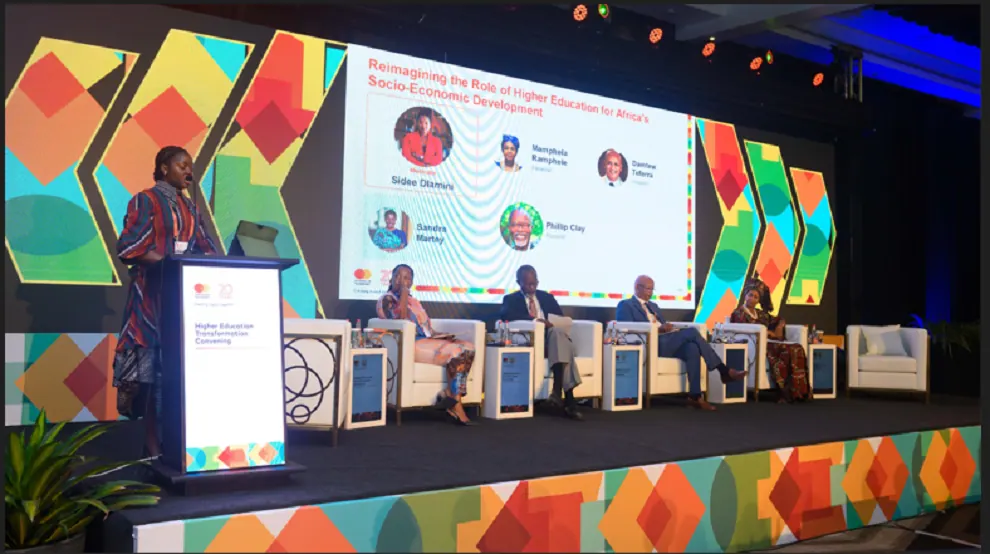
Africa's higher education sector is set for a significant overhaul as leaders, governments, industry players, and financial institutions push for a unified approach to skills development and job creation. The call was made at the inaugural Higher Education Transformation Convening in Accra, Ghana, hosted by the Mastercard Foundation. The event brought together stakeholders to discuss how universities can prepare young people for a rapidly changing job market and drive innovation-led economic growth.
The discussions were held against the backdrop of Africa's growing youth population and the challenges of converting educational attainment into productive employment. President and Chief Executive of the Mastercard Foundation, Sewit Ahderom, emphasized that transformation is not just about improving universities but making the entire economy work better for young people. She outlined key areas for reform, including curricula development with employers, credentials that demonstrate graduate capabilities, technology-focused learning, and research that translates into enterprise, public policy, and employment.
Ahderom highlighted that four key elements are crucial for making this transformation a reality. These include curricula built with employers to ensure that what is taught meets the country's needs, learning that leads to employment, credentials that demonstrate what graduates can do, and technology-focused learning. She also emphasized that institutions should equip young people to lead emerging technologies while moving university research beyond campuses into industry, government, and communities.
The African Union's Department of Education, Science, Technology, and Innovation noted that the transformation agenda faces constraints, including limited investment in higher education and research. Director of the department, Prof Saidou Madougou, emphasized that higher education spending averages less than 0.8 percent of GDP, while research and development receive less than 0.5 percent of national budgets. He called for greater investment and collaboration among countries and institutions to strengthen faculty and student mobility and build systems that enable talent, knowledge, and innovation to flow across borders.
Dr. John Nkengasong, Executive Director of Higher Education and Strategic Initiatives at the Mastercard Foundation, described higher education transformation as an economic imperative rather than solely an education issue. He emphasized that Africa's young and growing population presents a significant opportunity, and realizing this opportunity will depend on higher education institutions that can develop and retain talent, drive innovation, and create stronger pathways to dignified and fulfilling work.
The convening also featured the inaugural Africa Higher Education for Transformation (AHEFT) Prize, which recognizes universities implementing sustained, institution-wide reforms in teaching and learning, research and innovation, student transitions to employment, and health outcomes. Five institutions emerged as the 2026 laureates, including Addis Ababa University, Ethiopia; International Institute for Water and Environmental Engineering, Burkina Faso; Kwame Nkrumah University of Science and Technology, Ghana; Muni University, Uganda; and the University of Rwanda. Each winning institution will receive $3 million to scale initiatives designed to expand educational opportunities for young people.
The AHEFT Prize is backed by a $500 million commitment and is expected to recognize at least 150 institutions across Africa over the next decade. Chair of the AHEFT Jury, Susan Chomba, noted that the applications demonstrated growing interest among African universities in restructuring their institutions around emerging economic and social needs. She emphasized that the inaugural laureates demonstrated different approaches to institutional transformation that could provide lessons for other universities across the continent.
Key points
- The Mastercard Foundation is driving a continent-wide transformation of universities to bridge the gap between education, employment, research, and economic development.
- The African Union's Department of Education, Science, Technology, and Innovation is calling for greater investment and collaboration to strengthen faculty and student mobility.
- The AHEFT Prize is recognizing universities implementing sustained, institution-wide reforms in teaching and learning, research and innovation, and student transitions to employment.