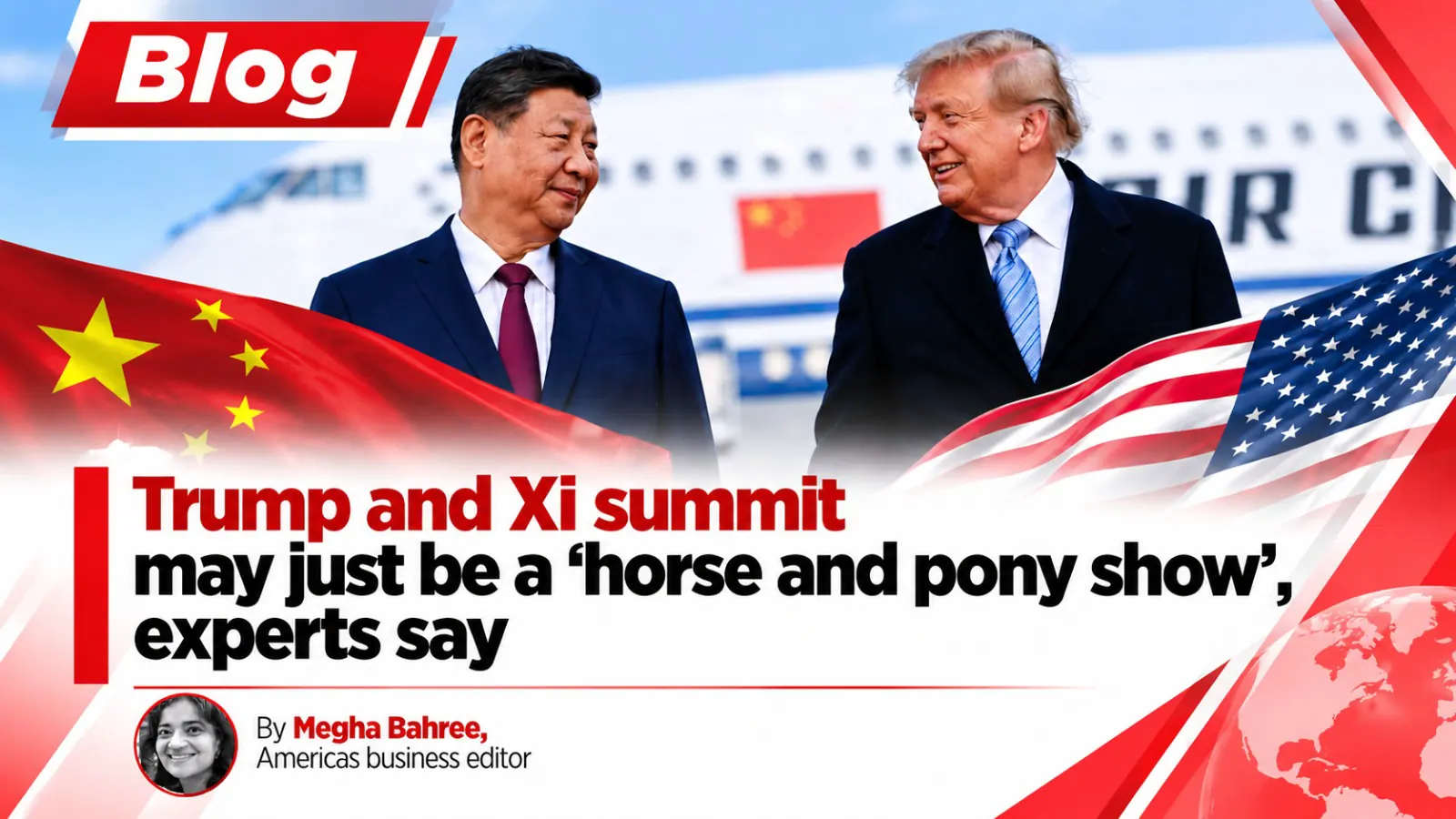
The highly anticipated summit between US President Donald Trump and Chinese President Xi Jinping has begun, with both leaders engaging in a rare personal welcome at the airport, a state banquet, and a military flyover. Despite the pomp and circumstance, experts are cautioning that expectations for the summit should be tempered. According to Reza Hasmath, academic faculty adviser at The China Institute at the University of Alberta, the summit is more focused on "re-establishing trust" rather than having any meaningful deals announced.
The US and China have been locked in a trade war since Trump's first term as president, with both sides imposing levies on imports of certain industrial goods. The trade tensions escalated during Trump's second term, with the US imposing new tariffs on China, including threatening levies of 200 percent at one point last year. China retaliated by promising to hit back at similar levels and throttling exports of critical minerals used in manufacturing a range of products.
Despite the tensions, both sides have since stepped back from the brink after the two leaders met in late October in Busan on the sidelines of the APEC summit in South Korea. US tariffs are still at a hefty average of 36.5 percent, while China's tariffs on US goods average out to 31 percent. The agenda for the summit includes cooperation on artificial intelligence safety, Iran, and Taiwan, but experts warn that these issues will be difficult to resolve.
According to Mary E Lovely, senior fellow at the Peterson Institute of International Economics, the point of the summit is to set up a continuation of the truce that was arrived at in Busan. One possible announcement from the summit could be the establishment of a Board of Trade mechanism, where both sides would reduce their respective tariffs on $30bn worth of goods each. Lovely notes that the best-case scenario from the summit would be the two countries beginning to liberalize trade of some non-sensitive goods and speeding up the flow of critical minerals.
However, experts agree that tricky areas such as safety rules around AI and a coordinated slowdown in that sector could be challenging topics. The lack of mutual trust between the two nations will limit any real deliverables in this area, according to Dexter Tiff Roberts, nonresident senior fellow at the Atlantic Council's Global China Hub. The US restrictions on the sale of advanced chips to China have also fueled distrust.
The summit also comes at a critical time for both leaders, with Trump heading into the US midterm elections and China facing economic challenges. According to Tiff Roberts, Trump "wants a big state visit to show he's an international leader of standing and wants the bright lights of TV on him to show him as a leader", while China needs a better trade relationship. Despite the challenges, experts agree that it is essential for the two leaders to meet.
In conclusion, while the summit between Trump and Xi is unlikely to yield any significant deals, it is crucial for re-establishing trust and maintaining a dialogue between the two nations. As Hasmath notes, "it will be a horse and pony show, with a few not very meaningful announcements. But it will be about re-establishing trust". The meeting will be closely watched, not just by the two nations but also by the rest of the world, given the significant trade relationship between the US and China.
Key points
- The summit is more focused on re-establishing trust rather than having any meaningful deals announced.