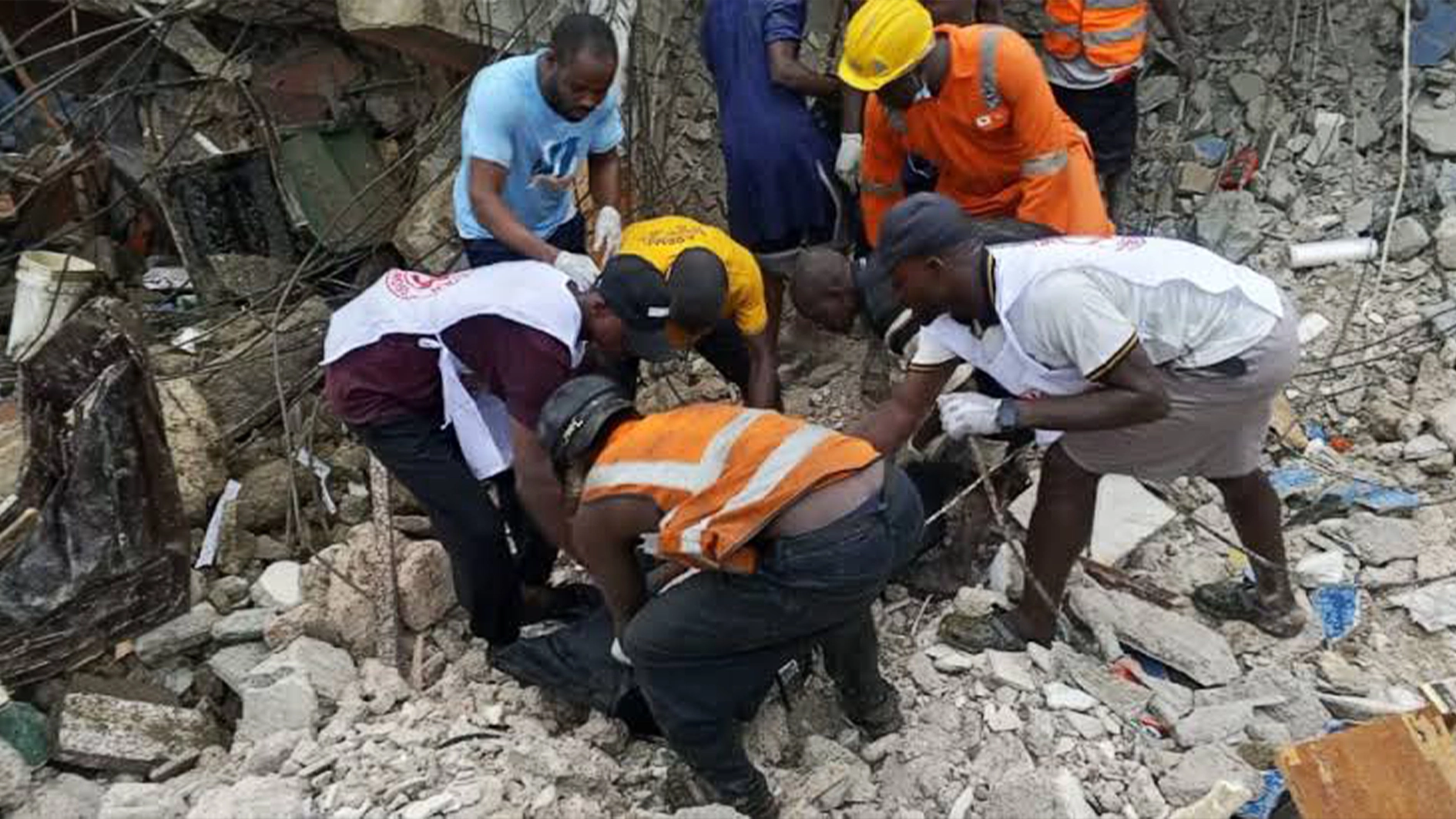
A recent building collapse in Lagos, Nigeria, has sparked renewed concerns about the enforcement of building regulations and emergency response in the country. The four-storey building, located on Old Ojo Road in Satellite Town, collapsed on June 25, 2026, resulting in the deaths of eight people and the rescue of 26 others. The incident has prompted built-environment experts to demand tougher enforcement, regular inspections, and earlier action to prevent further tragedies.
The experts, who spoke at a conference organised by the Building Collapse Prevention Guild (BCPG), Amuwo-Odofin Cell, in Satellite Town, Lagos, stressed the need for competent professionals, quality materials, and proper monitoring of buildings from construction through occupancy and maintenance. They highlighted the consequences of poor construction practices and weak oversight, which can lead to devastating consequences like the Alakija building collapse.
According to Chubike Okafor, Coordinator of the BCPG Amuwo-Odofin Cell, the Alakija collapse exposed weaknesses in emergency coordination and highlighted the need for better early-warning systems. He urged residents, property owners, and community leaders to report structural cracks, flooding, settlement, tilting, spalling concrete, persistent water damage, and other signs of building distress to qualified professionals or relevant authorities before they develop into emergencies.
Dr Austin Otuoke, Chairman of the conference, emphasised that building safety cannot be guaranteed by one profession or institution alone, particularly in a rapidly growing city like Lagos. He stressed that professionals and regulatory agencies must ensure that buildings are properly planned, approved, constructed, and maintained, with clear responsibility at every stage. Florence Gbaye, General Manager of the Lagos State Building Control Agency (LASBCA), warned against the use of substandard materials and unqualified workers for critical construction activities.
Experts also highlighted the importance of proper checks on soil and ground conditions before construction to prevent structural failures. Dr Sebastian Ozoamalu, Vice President, Africa, International Society for Soil Mechanics and Geotechnical Engineering, warned that neighbouring properties can have different ground conditions, making it unsafe to copy a foundation design simply because it had worked on another property. Agwu Ogonna Roberts emphasised the need for accurate information about land levels and proper drainage planning to prevent flooding and damage to buildings.
The conference also raised concerns about poor-quality construction materials, inadequate site investigations, poor workmanship, and weak supervision. Participants warned against hiring professionals only to obtain building approval and then excluding them from the actual construction work. They stressed that supervision was particularly important during foundation work, reinforcement, concrete work, and other critical stages. Oluwatomi Ogundare, a quantity surveyor, called for a shift from investigating building collapses after they occur to identifying and managing risks before failure.
According to BCPG records, Nigeria recorded 817 building-collapse incidents between October 1971 and July 27, 2026, including 477 in Lagos. The stakeholders concluded that building safety requires more than regulations and approvals, calling for tougher enforcement, ethical professional practice, quality materials, competent supervision, regular inspections, effective maintenance, and timely intervention. They urged residents to adopt a “See Something, Say Something” approach by reporting unsafe buildings and unauthorised construction.
Key points
- Experts demand tougher enforcement and regular inspections to prevent building collapses in Lagos.
- The Alakija building collapse killed eight people and rescued 26 others, prompting renewed concerns about building regulation and emergency response.
- Building safety requires competent professionals, quality materials, and proper monitoring of buildings from construction through occupancy and maintenance.