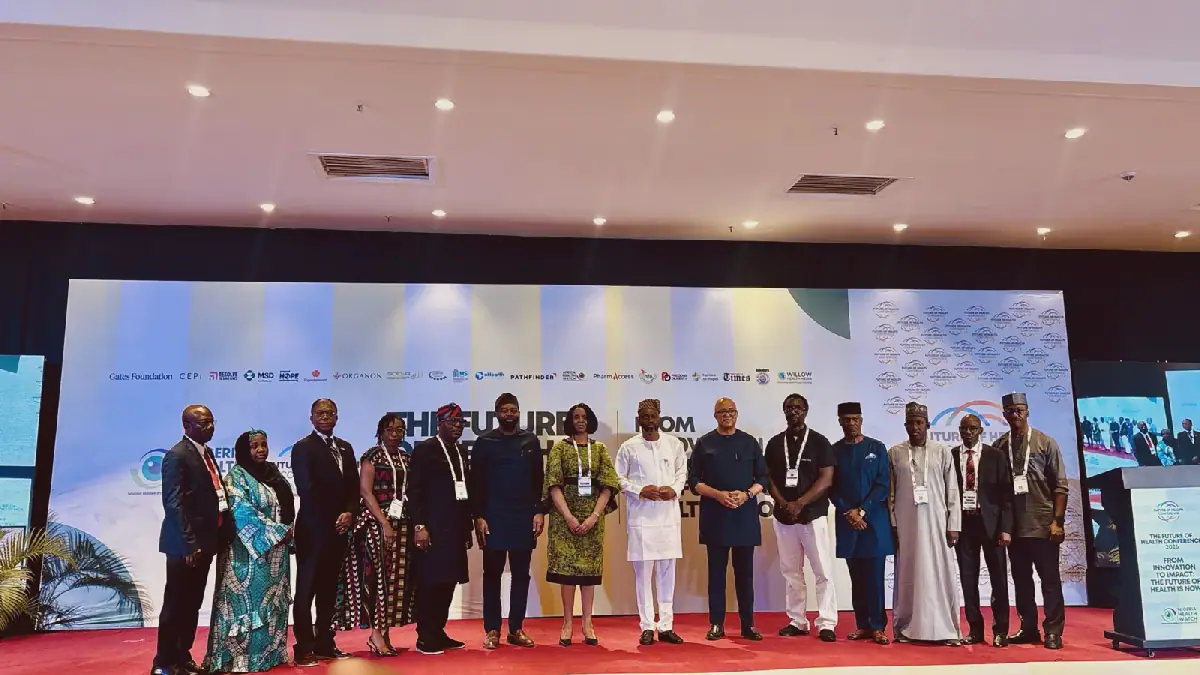
Health experts have called for effective health innovations to be scaled up and integrated into existing health systems in Nigeria to improve healthcare delivery and expand access to essential services. The call was made at the 11th edition of the Future of Health Conference in Abuja, organised by Nigeria Health Watch. The conference brought together policymakers, health professionals, researchers, innovators, and development partners to address persistent challenges in Nigeria's health system.
The conference, themed "From Innovation to Impact: The Future of Health is Now", highlighted the importance of evidence, political leadership, community participation, and sustainable financing in translating innovations into measurable health outcomes. Managing Director of Nigeria Health Watch, Vivianne Ihekweazu, said the focus must shift from developing promising solutions to ensuring they reach more people and produce lasting improvements in healthcare. The conference has provided a platform for discussions on universal health coverage, health financing, private-sector participation, technology, and health workforce challenges since its inception in 2015.
In her remarks, Mrs. Ihekweazu said the current edition of the conference was an opportunity to examine the barriers preventing effective innovations from being adopted at scale and how partnerships could help overcome them. She emphasised that innovations must move beyond discussions and isolated interventions to deliver practical benefits to the population. The Managing Director also highlighted the conference's role in promoting discussions on health-related issues.
Director-General of the National Health Insurance Authority (NHIA), Kelechi Ohiri, said health innovations must address practical problems, generate evidence, remain financially sustainable, and become integrated into existing systems to achieve impact at scale. He noted that the authority's reforms were aimed at building a health financing system that protects Nigerians from financial hardship while improving access to healthcare. Mr. Ohiri emphasised the importance of strategic purchasing, rigorous evidence, and commitment to equity in achieving the future of health.
Erasmus Morah, a senior adviser at the Africa Centres for Disease Control and Prevention (Africa CDC), said scientific breakthroughs alone would not transform healthcare without political commitment, effective leadership, and the involvement of affected communities. He drew on his experience in Nigeria and other African countries, noting that successful implementation of health interventions depended on translating evidence into policies and practices that respond to people's needs. Mr. Morah cited Nigeria's progress in HIV treatment coverage, which improved after a national survey helped revise estimates of the number of people living with HIV.
Ifeyinwa Rhodes-Vivour, founder of AfroScientric, highlighted the potential of malaria genomics to help Nigeria develop more targeted interventions against the disease. She noted that conventional epidemiological approaches alone might not provide sufficient information about the genetic characteristics of malaria parasites, particularly as drug resistance threatens the effectiveness of existing treatments. Mrs. Rhodes-Vivour said research conducted by her team had identified differences in drug-resistance profiles between malaria parasites in northern and southern Nigeria.
The research team has collected about 32,000 parasite samples, providing data to support the development of targeted malaria interventions. Mrs. Rhodes-Vivour also highlighted efforts to reduce the cost of genomic sequencing and make the resulting information more accessible to policymakers through digital tools. The work demonstrates how research and technology can be adapted to local conditions and made more useful to decision-makers.
Key points
- Health experts call for effective health innovations to be scaled up in Nigeria.
- Conference highlights importance of evidence, leadership, community participation, and financing.
- Research shows potential of malaria genomics for targeted interventions.