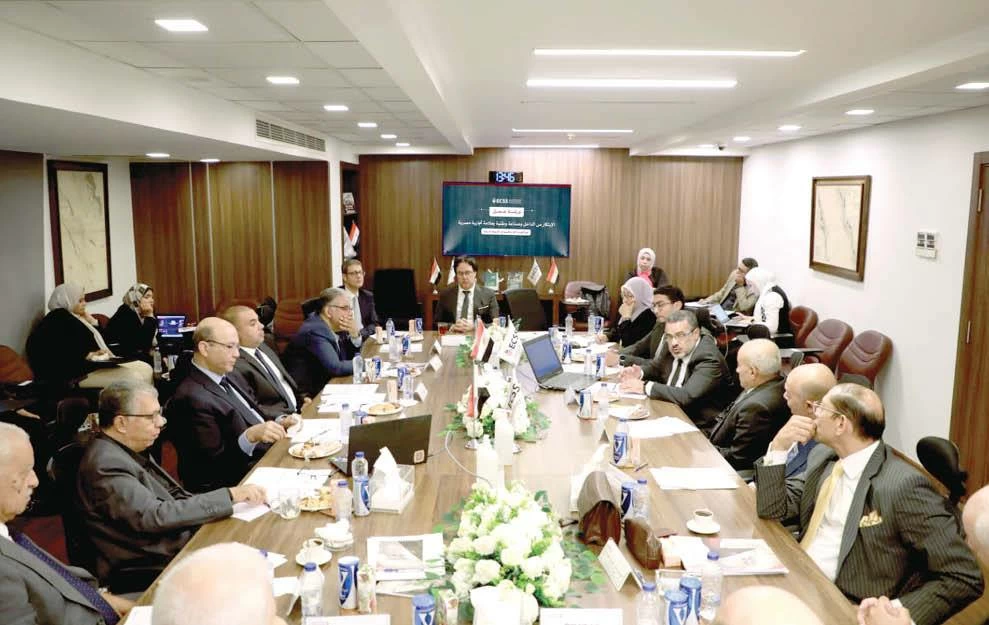
Egyptian experts and officials stress that transitioning the country's economy from consuming technology to producing knowledge and innovation is crucial for enhancing industrial competitiveness and increasing exports. This was highlighted during a recent symposium titled "Innovation from Within: A National Industry with an Egyptian Brand," organized by the Egyptian Center for Thought and Strategic Studies. The event brought together experts, academics, officials, and industry representatives to discuss the readiness of the national innovation system and the legislative framework for intellectual property and patents.
The symposium's attendees emphasized the importance of creating a more effective link between universities, research centers, and factories to convert research results into manufacturable and marketable products. They noted that Egypt needs to move faster in this direction, citing the experiences of countries like South Korea, China, and Japan, which have successfully transitioned from adopting technology to developing and producing it. According to the World Bank, Egypt currently ranks 76th globally in the Economic Complexity Index, with high-tech exports accounting for only 3.8% of total Egyptian exports.
The Egyptian government has taken steps to promote innovation, including the announcement of a National Economic Transformation Program by the Prime Minister, which focuses on industry and innovation. The program aims to enhance the competitiveness of Egyptian industry and increase its exports. Additionally, the government has established the Egyptian Center for Thought and Strategic Studies to support the development of a national innovation system.
Symposium participants discussed the need for a supportive legislative framework to protect intellectual property and patents. They also emphasized the importance of applying digital transformation and establishing an electronic platform to facilitate the registration of research and innovation. Furthermore, they suggested creating a database of Egyptian scientists and researchers to identify and utilize scientific capabilities in serving national priorities.
The participants also highlighted the role of funding in supporting innovation. They noted that the Egyptian government has allocated additional funding for companies that innovate and develop their own brands and penetrate new markets. Moreover, the government has established a program to support the development of small and medium-sized enterprises, which is expected to enhance innovation and entrepreneurship in the country.
The symposium also addressed the challenges of integrating industry and scientific research. Participants emphasized the need for a closer relationship between academia and industry to ensure that research is relevant and applicable to industrial needs. They suggested that the government should provide incentives for companies to invest in research and development, such as tax breaks and funding for research projects.
Finally, the experts called for a more comprehensive approach to promoting innovation in Egypt, including the development of a national innovation strategy and the establishment of a supportive ecosystem for entrepreneurship and innovation. They emphasized that this would require collaboration between government, industry, and academia to ensure that Egypt can compete in the global economy.
Key points
- Egypt needs to enhance its innovation ecosystem to boost industrial competitiveness and increase exports.
- A supportive legislative framework and funding are crucial for promoting innovation in Egyptian factories.
- Collaboration between academia, industry, and government is essential for developing a national innovation strategy.