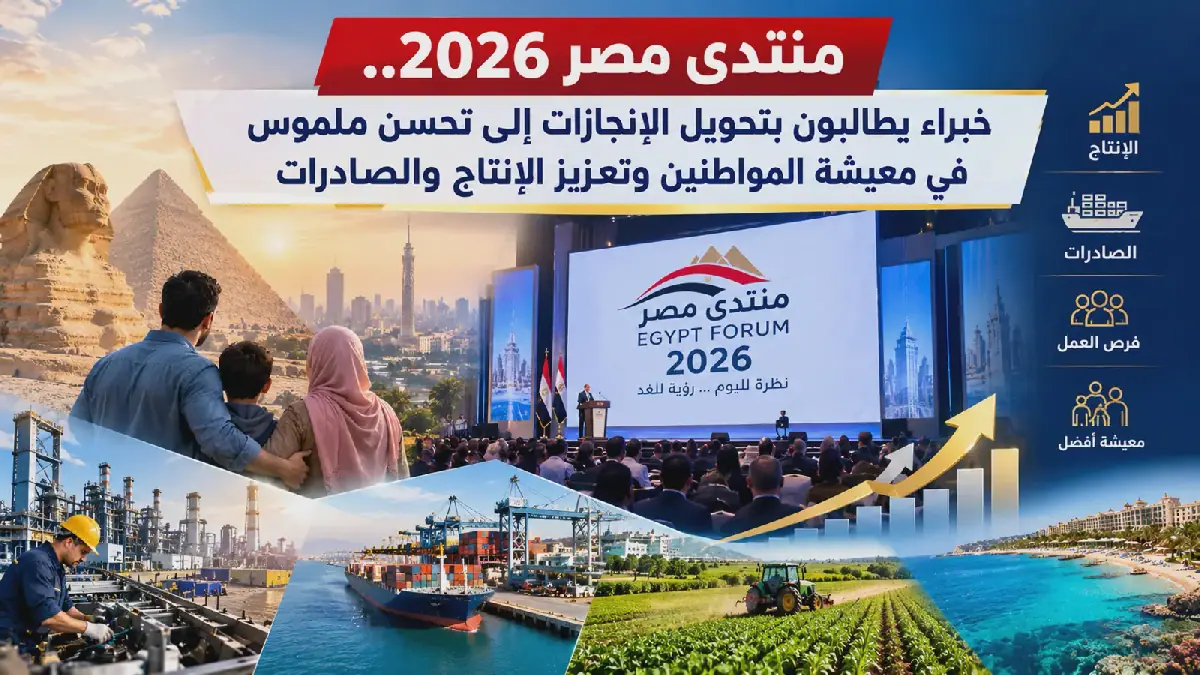
The "Egypt 2026" forum, held under the slogan "A Glimpse of Today.. A Vision for Tomorrow," brought together President Abdel Fattah El-Sisi, officials, experts, and citizens to discuss Egypt's economic development path. The forum aimed to evaluate past achievements, address current challenges, and prioritize future steps. Dr. Sherine Al-Shawarby, Dean of the College of Politics, Economics, and Business Administration at the University of Mayo in Cairo, emphasized the need for a national program to translate economic projects into sustainable job opportunities and better incomes for citizens.
Al-Shawarby highlighted that while Egypt has made significant achievements, it is crucial to assess their impact on citizens' living standards, service quality, and job opportunities. She stressed that the next phase requires moving beyond showcasing accomplishments to formulating a national economic transformation program with clear priorities, measurable goals, and defined responsibilities. This program should focus on key sectors such as industry, agriculture, tourism, technology, and communications to ensure a diversified production base.
The industrial sector faces challenges, including high production costs and financing difficulties, according to Mohamed Al-Behi, an industrial expert. He emphasized the need for modernizing production tools and providing support for small and medium-sized enterprises. Al-Behi suggested focusing on specific industries with high export potential, such as pharmaceuticals and food supplements, to maximize returns and enhance Egypt's competitiveness in local and international markets.
Al-Shawarby also pointed out that increasing productivity requires addressing challenges faced by investors and manufacturers, including complex procedures and high administrative costs. She called for simplifying procedures, improving the business environment, and ensuring a level playing field for companies. This, she believes, will help stimulate investment, increase production, and create jobs.
The tourism sector is also seeking incentives to boost investments and revenues. Majdi Sadek, a member of the Chamber of Tourism Companies, reported that Egypt received around 18 million tourists in the first nine months of the year, generating approximately $18 billion in revenue. He suggested offering tax and customs exemptions to encourage investment in hotel facilities and improve the quality of services provided to visitors.
Effective management of public debt is crucial, with Al-Shawarby emphasizing the need to evaluate projects financed through borrowing based on their economic and social returns. She advocated for directing new borrowing towards projects with clear returns and improving debt management by diversifying funding sources and extending repayment periods.
Experts agree that a comprehensive approach is necessary for sustainable economic growth. This includes enhancing the business environment, supporting the private sector, and implementing policies that promote production, exports, and job creation. By addressing these challenges and priorities, Egypt can achieve a more robust and sustainable economic future.
Key points
- Experts call for a national program to transform Egypt's economy, focusing on sustainable jobs and increased production and exports.
- The industrial sector faces challenges, including high production costs and financing difficulties.
- Effective management of public debt and improvement of the business environment are crucial for sustainable economic growth.