The Alexandria Library recently hosted the third discussion session titled "National Identity and Socioeconomic Challenges," as part of the conference "National Identity: Rooted and Renewed," under the auspices of President Abdel Fattah El-Sisi. The session was moderated by Dr. Ahmed Jalal, a former economic expert at the World Bank and coordinator of the specialized council for economic development. Dr. Jalal emphasized the importance of integrating growth indicators with policies that promote distributive justice and support citizens' ability to improve their living conditions.
Dr. Ahmed Jalal highlighted the need to continue developing basic services, particularly education and healthcare, to empower individuals and enhance the integration of state and private sector roles in providing these services. He also discussed monetary policy, stressing the importance of maintaining price stability and protecting citizens' purchasing power through comprehensive economic and monetary policies. This approach aims to stimulate production and direct investments to productive sectors, such as agriculture and industry, to support sustainable growth.
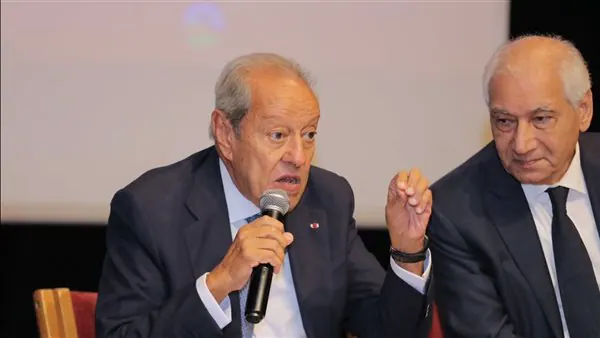
Dr. Monir Fakhry Abdel Nour, former Minister of Trade, Industry, and Investment, asserted that there is a direct link between improving living conditions and enhancing national identity. He emphasized that a strong domestic front is associated with citizens' sense of full partnership in their country and equal opportunities. Abdel Nour identified five key areas for action, including promoting social justice, protecting the middle class and low-income groups from erosion of purchasing power, and supporting freedom of expression and constructive criticism.
Dr. Niveen Masoud, a professor of political science at Cairo University, presented an analysis of recent social transformations in Egyptian society, citing studies by prominent researchers. She outlined seven manifestations, including consumerism, apparent religiosity, and a decline in the value of work. Dr. Masoud attributed these changes to shifts in interactions with educational, cultural, and media institutions, as well as evolving patterns of partisan and union participation, which have expanded the influence of social media and artificial intelligence applications.
Dr. Ayman Abdel Wahab, director of the Ahram Center for Political and Strategic Studies, noted that Egyptian society is undergoing a transitional phase, requiring in-depth study of areas of dysfunction. He highlighted the intersection of inherited cultural and social elements with modern patterns of interaction, amidst changes in the roles of traditional institutions. Abdel Wahab pointed to a gap in concepts between older generations and younger generations, emphasizing the need to measure the relative weights of these factors when formulating policies.
Dr. Ahmed Hassan, representative of the Ministry of Youth and Sports, presented the perspective of young people, emphasizing that their national identity is linked to future opportunities and access to basic needs like work and marriage. He called for supporting entrepreneurship to help young people establish their own projects, given the challenges of saving and the reliance on consumption. Dr. Hassan also stressed the importance of comprehensive empowerment for young people, encompassing economic, political, and social aspects.
The discussion session concluded with a call to consider national identity as a comprehensive issue linked to economic, social, and cultural dimensions. The experts emphasized the importance of enhancing the role of educational institutions and community participation to support values of belonging and citizenship, and to provide young people with broader opportunities to participate in shaping the future. The session also highlighted the need for clear and integrated performance indicators for institutions and expanded spaces for public work and expression.
Key points
- The conference aimed to promote national identity and address socioeconomic challenges in Egypt.
- Experts emphasized the importance of community partnership and social justice in enhancing national identity.
- The discussion highlighted the need for comprehensive empowerment of young people to support their participation in shaping the future.