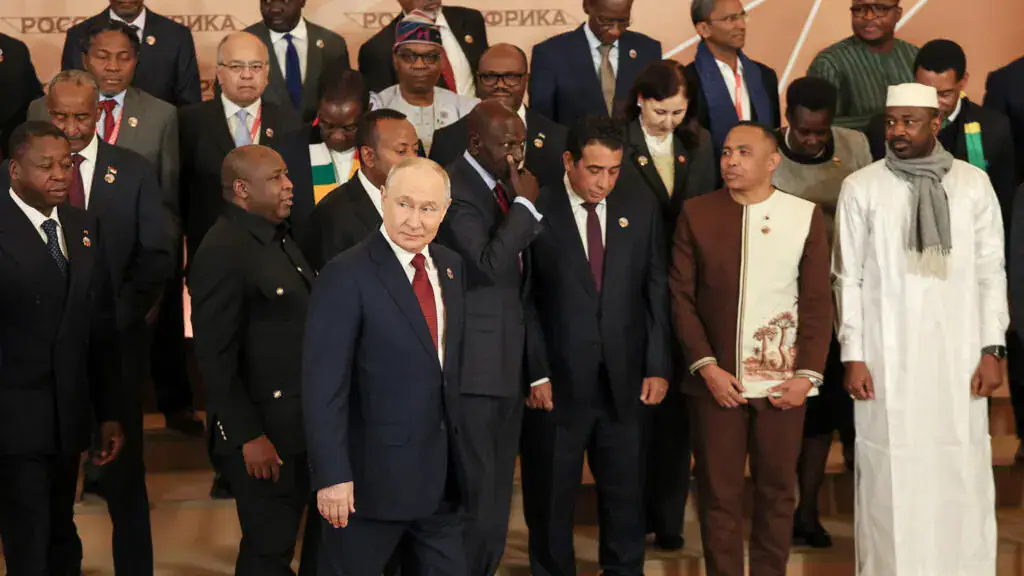
As Russia strengthens its presence in Africa, the tangible outcomes of its cooperation with African nations are under scrutiny. According to Régis Hounkpè, a senior geopolitics analyst and executive director of InterGlobe Conseils, the recent Russia-Africa summit in Moscow showcased the country's ambition to expand its influence on the continent. The summit drew over 48 African delegations, with Russia aiming to demonstrate its diplomatic capabilities and strategic partnerships. However, Hounkpè notes that the success of the summit should be evaluated based on concrete actions and results.
The Russia-Africa summit resulted in numerous declarations of intent, focusing on areas such as artificial intelligence, agriculture, food security, and counter-terrorism. While these areas align with Africa's needs, Hounkpè stresses that it is crucial to translate these commitments into funded programs, identifiable investments, and tangible achievements. The 2027-2029 action plan will be closely monitored, as its relatively short timeframe should yield measurable results. Hounkpè emphasizes that Africa should prioritize diversified partnerships, avoiding exclusivity and automatic alignment with any particular bloc.
The current state of Russia-Africa economic relations is characterized by a significant gap between diplomatic ambitions and actual results. Despite Russia's efforts to strengthen its presence, trade between Russia and Africa remains modest compared to other partners like the European Union and China. Hounkpè attributes this disparity to the substantial differences in economic and financial capacities between Russia and other major players. Russia's economy is currently constrained by the ongoing conflict in Ukraine, limiting its ability to deploy significant financial resources in Africa.
Russia's economic interests in Africa are primarily concentrated in countries such as Egypt, Algeria, Morocco, and South Africa. However, Hounkpè notes that Russia's presence in Africa is more pronounced in diplomatic, military, and strategic spheres than in investment and economic transformation. While there are commercial, energy, agricultural, and mining interests, they do not yet constitute a comprehensive framework to address Africa's financing, industrialization, and job creation needs.
The analyst emphasizes the need to distinguish between a strong diplomatic presence and substantial economic contributions. Africa requires partners capable of contributing effectively to its development, and Russia's ability to meet these expectations remains uncertain. Hounkpè advises against confusing diplomatic and economic influence, highlighting that Russia's current capabilities do not match those of other major partners.
When evaluating Russian investments in Africa, Hounkpè stresses the importance of rigor and scrutiny. It is essential to assess actual investments made, jobs created, infrastructure delivered, and the impact on local economies, rather than just focusing on announced projects or signed agreements. The cooperation between Russia and Africa takes various forms, with some countries like Algeria, Morocco, and South Africa maintaining stronger economic ties with Moscow.
As Russia seeks to consolidate its international influence, African nations must carefully consider the benefits and drawbacks of this partnership. The question remains whether the Russia-Africa relationship will yield tangible development outcomes for the continent. While intentions are plentiful, concrete results are yet to be demonstrated, and Africa's development needs require careful evaluation of the partnership's potential and limitations.
Key points
- Russia's economic influence in Africa is currently limited compared to other major partners.
- The Russia-Africa partnership has the potential to contribute to Africa's development, but tangible results are yet to be demonstrated.
- Africa should prioritize diversified partnerships to avoid exclusivity and automatic alignment with any particular bloc.