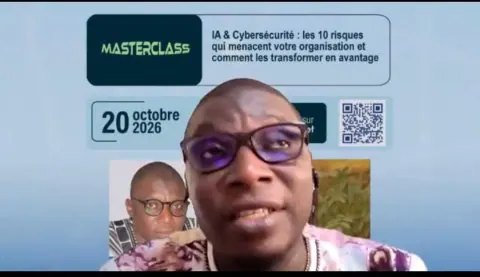
Dr Zakaria Sawadogo, a renowned expert in artificial intelligence and cybersecurity, recently conducted a masterclass titled "AI & Cybersecurity: The 10 Risks That Threaten Your Organization and How to Turn Them into an Advantage" as part of Le Faso Digital 2026. The event aimed to educate participants on the potential risks associated with AI and how to mitigate them. Sawadogo emphasized that while AI offers numerous benefits, it also poses significant threats to organizations, including compromised data, finances, and reputation.
During the masterclass, Sawadogo used real-life scenarios to illustrate the new types of cyber threats that organizations face. He discussed the rise of deepfakes and CEO scams, where cybercriminals use AI to convincingly imitate a person's voice, image, or writing style. This can lead to employees receiving messages that appear to come from their superiors, requesting urgent actions. Sawadogo noted that these types of threats are not limited to messaging apps but can also occur through emails.
The expert highlighted phishing, or hameçonnage, as another significant threat that has become more effective with the help of AI and social engineering techniques. Cybercriminals can analyze their targets' behavior, exploit publicly available information on social media, and craft personalized messages that are difficult to distinguish from genuine ones. Sawadogo recommended that organizations implement robust authentication mechanisms, double-validate sensitive operations, and conduct regular phishing simulations to mitigate these risks.
Sawadogo also emphasized the risk of data leaks through AI assistants. Many professionals use these tools to draft emails, analyze documents, and prepare reports, often without realizing the sensitivity of the information they share. The expert stressed that organizations must define clear guidelines on the types of data that can be used with AI and those that must remain protected.
Another risk discussed was data and model poisoning, where malicious actors introduce false or misleading information to compromise AI systems. Sawadogo urged organizations to be aware of these threats and take proactive measures to prevent them. He also highlighted the importance of human vigilance in cybersecurity, emphasizing that technical measures alone are not sufficient.
The masterclass, moderated by Clémence Tuina, a journalist and producer, provided a platform for participants to engage with Sawadogo and discuss the challenges and opportunities presented by AI. The event aimed to promote a better understanding of AI and its implications for organizations in Burkina Faso.
Sawadogo's work focuses on the intersection of technology, public policy, and digital governance in Africa. His presentation underscored the need for organizations to adopt a comprehensive approach to AI, one that balances the benefits of the technology with the need for security, responsibility, and human oversight.
Key points
- Dr Zakaria Sawadogo identifies 10 risks linked to AI that threaten organizations in Burkina Faso.
- The expert recommends implementing robust authentication mechanisms and conducting regular phishing simulations to mitigate AI-related risks.
- Sawadogo emphasizes the importance of human vigilance in cybersecurity, highlighting that technical measures alone are not sufficient.